
| Section 02 | |||
| 9/03 - 12/11 | T TH | 12:00 pm - 2:15 pm | C46 |
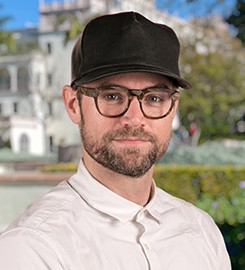
Associate Professor, Architecture
- PhD, Architecture, University of California, Los Angeles
- B.Arch, Wentworth Institute of Technology
Shannon Starkey is an architect, curator, and architectural historian. He teaches history/theory seminars and design studios. He holds a professional Bachelor’s of Architecture from Wentworth Institute of Technology and a PhD from the Department of Architecture and Urban Design at UCLA.
Scholarly Work
Starkey’s work bridges architecture, finance, art history and geography. His current research, entitled “The Suspension of Disbelief,” looks at the role of speculation in architecture through the failed postwar development of California City in the Mojave desert.
Starkey is a founding member and lead researcher on the Future Living Project, an initiative that investigates the future of our domestic environment. He is co-author of the upcoming book based on that research entitled The New Domesticity, published by A+U.
In addition to his teaching and written production, Starkey has worked on several exhibitions - at the Japanese American National Museum, the MAK Center, the Graham Foundation, and the Chicago Design Museum - on topics including the cross-connections between art and architecture in LA in the 1970s, the development of supergraphics, and the role of video in contemporary practice. He is currently researching an upcoming show on the history of creativity to open at the University of Michigan Museum of Art in 2016.
Areas of Interest
Starkey teaches history/theory seminars and design studios. In seminars and lectures, he focuses on the relations between architecture as a cultural practice and as a capitalist endeavor. Most recently, he developed a course on the relationships between architecture and media that examines the history of architecture from the late 19th century forward through the lens of media studies to reveal how architecture and architectural ideas are circulated, processed, and stored.
In lower-division studios, Starkey teaches formal manipulation and modes of representation. In upper level studios, he looks at the interrelationships between design and economics, specifically the way in which systems of land management influence architectural design. His broader approach to studio involves bridging research and design while maintaining a balance between the exterior realities of practice and internal questions of the discipline.
Office Hours
| Section 01 | |||
| 9/03 - 12/11 | T TH | 12:00 pm - 2:15 pm | C46 |
| T TH | 12:00 pm - 2:15 pm | C46 | |