
Reference your catalog year
2026-27
Explore industrial and systems engineering courses currently offered
- Industrial and Systems Engineering Courses
- Engineering Courses
- Major Requirements
ISYE 200
Data Science Foundations for Engineers
Units: 3
This introductory course forms the foundations of a modern industrial engineer’s world—statistical inference, computational thinking, and social context. The main objective of the course is to learn these fundamentals while gaining hands-on computer programming skills. Students perform data analysis and basic statistical inference on real-world data using Python. The course will provide engineering students the foundational thinking on how a data-driven engineer makes sense of the world around us. Prior completion of COMP 110 recommended. Prerequisites: MATH 151, ISYE 330 (Can be taken concurrently)
ISYE 220
Engineering Economics
Units: 3
Principles of financial analysis appropriate for evaluating the economic impact of engineering projects. Three hours lecture weekly. Prerequisites: ISYE 330.
ISYE 294
Special Topics in Industrial and Systems Engineering
Units: 1 TO 4
Special topics seminar in areas of special interest to Industrial & Systems Engineering. May be repeated for credit with a different topic. Upper division standing in the ISYE major.
ISYE 299
Independent Study
Units: 1 TO 3
Individual project in creative design and synthesis under the general supervision of a participating professor. Project proposal must be submitted and approved prior to enrollment. May be repeated for credit.
ISYE 305
Industrial and Systems Engineering Professional Practice
Units: 3
An introduction to professional skills needed for success in industry including written communication, oral communication, teamwork, leadership skills, and career management. Topics and projects include iterative writing process, literature reviews, technical reports, peer review techniques, self-awareness, emotional intelligence, personal branding, and global/intercultural awareness. Three hours lecture weekly. Prerequisites: FYW 150, ISYE 310.
ISYE 310
Work Analysis and Design
Units: 4
Introduction to the fundamental methods for analyzing and designing procedures to perform operations in the workplace. Includes time and motion study, methods improvement and workplace design. Three hours lecture and one three-hour laboratory weekly. Junior standing in engineering. Fall semester. Prerequisites: ISYE 330 (can be taken concurrently).
ISYE 320
Introduction to Systems Engineering
Units: 3
This course introduces the theory and methods used to design and analyze systems. System life-cycle principle and different stages of the system development process are examined, practiced and applied to create integrated solutions to an engineering problem. Prerequisites: ISYE 220; and ISYE 330 with grade of C- or better; and ISYE 305.
ISYE 330
Engineering Probability and Statistics
Units: 3
Introduction to probability and applied statistics within an engineering context. Topics include probability, discrete and continuous probability distributions, and statistical tests and confidence intervals for one and two samples. Three hours lecture weekly. Fall and Spring semesters. Prerequisites: MATH 151.
ISYE 335
Six Sigma - Process Improvement Methods
Units: 4
Application of statistics to improving quality and productivity. Introduction to Six Sigma quality methodology and the DMAIC (define, measure, analyze, improve, and control) problem-solving strategy for continuous quality improvement. Three hours lecture and one three-hour laboratory weekly. Spring semester.Prerequisites: ISYE 310; ISYE 330 with a grade of C- or better.
ISYE 340
Operations Research I
Units: 3
Deterministic models and methods in operations research. Simplex method, sensitivity analysis, integer programming and network algorithms. Emphasis on modeling and interpreting solutions to problems encountered by industrial and systems engineers. Three hours lecture weekly. Prerequisites: MATH 310 or MATH 320.
ISYE 350
Manufacturing Processes
Units: 3
Description, classification and analysis of manufacturing processes used in the transformation of different raw materials (e.g. metals, polymers, composites, etc.) into consumer or capital goods. Topics include: analysis of variables that affect process operations, performance, quality, cost, sustainability and the design of process plans. Prerequisites: ENGR 311 or MENG 311, and MENG 210.
ISYE 350L
Manufacturing Processes Laboratory
Units: 1
Applications of theoretical concepts learned in the Manufacturing Processes lecture class to design products, develop computer codes for machining, and produce parts out of various starting materials such as metals and plastics while considering quality, cost and sustainability implications. Manufacturing methods include, but not limited to: computer numerical control (CNC) machining, computer-aided manufacturing (CAM), welding, plastics forming, and design for manufacturing and assembly.
ISYE 355
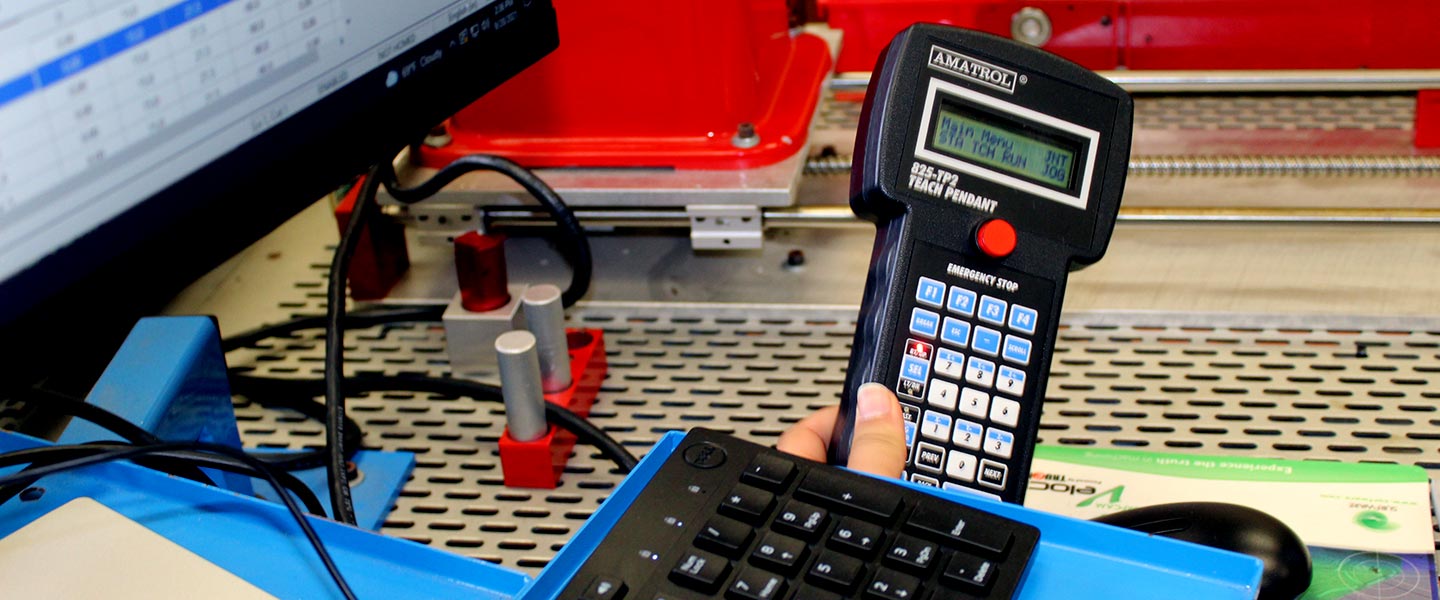
Smart Manufacturing: Processes, Logic and Automation
Units: 3
This comprehensive course explores the integration of automation technologies in modern manufacturing environments, covering industrial control systems, robotics, programmable logic controllers (PLCs), and computer numerical control (CNC) systems. Students will examine diverse manufacturing processes including CNC machining, additive manufacturing, welding, metal forming, and plastics processing, as well as supporting technologies such as automated material handling, inspection systems, and data capture methods. Prerequisites: (ENGR 311 or MENG 311) and MENG 210 and COMP 110 and ISYE 355L (Can be taken concurrently)
ISYE 355L
Smart Manufacturing Laboratory
Units: 1
Applications of theoretical concepts learned in the Smart Manufacturing lecture class to design products, develop computer codes for automation. Laboratory sessions provide hands-on experience with both simulated and physical robotic systems, PLCs, CNC machines, computer-aided manufacturing (CAM), welding, plastic forming, and machine vision systems. Prerequisite: ISYE 355 (Can be taken concurrently)
ISYE 380
Sustainability and Engineering
Units: 3
The course provides an interdisciplinary overview of the engineering roles and opportunities to improve the sustainability of engineering products, processes and systems. Topics include carbon footprint, life cycle assessment, design for sustainability, wastes and recycling, energy and water. Prerequisites: Junior standing.
ISYE 385
Technology, Environment and Society
Units: 3
An interdisciplinary course that evaluates options for improving energy and resource productivity from the perspective of technology, economics, natural ecosystems, and public policy. Course covers methods for analyzing the environmental impacts of industrial and consumer activities. Topics include industrial ecosystems, life cycle assessments, and policy options for environmental sustainability. Analysis of the balance between resource availability and demand, and the relationship between energy use and technology will be explored. Prior completion of ISYE 380 recommended. Prerequisites: ISYE 380 or ISYE 330 or instructor’s approval.
ISYE 410
Human Factors
Units: 3
An introduction to the field of ergonomics/human factors engineering. Principles of workplace and environmental design to conform to the physical and mental abilities and limitations of people are presented. Prerequisites: ISYE 330 or PSYC 260.
ISYE 420
Simulation of Production and Service Systems
Units: 4
Modeling and analysis of systems using computer-based discrete event simulation. Principles of modeling, validation, and output analysis are developed using high-level simulation languages. Three hours lecture and one three-hour laboratory weekly. Fall semester. Prerequisite: (ENGR 121 or COMP 110) and ISYE 440.
ISYE 430
Design and Analysis of Engineering Experiments
Units: 3
Systematic application of statistical techniques to the design and analysis of engineering experiments. Application of experimental design to develop models and improve quality and performance of products, processes, and services. Topics will include analysis of variance, single factor experiments, factorial and fractional factorial experimental designs, screening designs, optimality designs, and response surface designs. Fall semester. Prerequisites: ISYE 335.
ISYE 440
Operations Research II
Units: 3
Methods for developing and analyzing stochastic operations research models. Topics include Poisson processes, Markov processes, queuing, and decision theory. Three hours lecture weekly. Spring semester. Prerequisites: ISYE 330 with a grade of C- or better; ISYE 340; MATH 310 or MATH 320
ISYE 450
Manufacturing Systems
Units: 3
Introduction to principles of manufacturing automation and analysis of automated systems. Topics include process and machine control, control systems, programmable logic controllers, robotics, computer vision and material handling systems. Two hours lecture and one two-hour laboratory weekly. Fall semester. Prerequisites: ISYE 350, and (ENGR 121 or COMP 110).
ISYE 460
Operations and Supply Chain Management
Units: 3
Concepts in planning, controlling, and managing the operations function of manufacturing and service firms. Topics include operations strategy, forecasting, capacity, production planning and control, and trends in operations and supply chain management. Emphasis on the development and use of mathematical models and algorithms used to analyze and improve the use of material, labor and information in various processes. Three hours lecture weekly. Spring semester. Prerequisites: ISYE 220, 340.
ISYE 470
Facilities Planning
Units: 3
Analysis and design of production and service facilities. Analytical and computer-based techniques to assist with strategic planning, process design, material handling and flow, layout and facility location. Three hours lecture weekly. Fall semester. Prerequisites: ISYE 310 and ISYE 340.
ISYE 480
Data Science and Analytics
Units: 3
Course explores different types of statistical methods for analyzing data. The course begins with a focus on measurement, inferential statistics, and causal inference. Then different techniques are applied for analyzing and viewing data with a strong focus on applying this knowledge to real-world data problems. Topics in quantitative techniques include descriptive and inferential statistics, regression, classification, clustering, and machine learning (ML) algorithms. Three hours of lecture weekly. Prerequisites: ISYE 330 and ENGR 121 or COMP 110.
ISYE 491
ISyE Senior Design Preparation
Units: 1
In this course, students will complete preliminary work to prepare for ISYE 492 Senior Design Project. This includes project sponsor onboarding logistics/paperwork and drafting preliminary project charter including problem statement and Gantt chart. Prerequisites: ISYE 220 and ISYE 310 and ISYE 335 and ISYE 430 and ISYE 470 (Can be taken concurrently) and (ISYE 420 (Can be taken concurrently) or ISYE 350 or ISYE 355)
ISYE 492
Industrial and Systems Engineering Design Project
Units: 3
This is the industrial and systems engineering capstone senior design course in which students work in teams in collaboration with a faculty mentor and project sponsor on an open-ended design project. Students will apply various principles of industrial and systems engineering, knowledge and skills acquired throughout the curriculum to develop a sustainable and implementable solution to a real-world problem while considering design constraints. Written and oral reports, design reviews, final project report and presentation are expected as part of students’ deliverables in this course. Prerequisites: ISYE 220 and ISYE 310 and ISYE 320 and ISYE 335 and ISYE 470 and ISYE 491 and ((ISYE 350 or ISYE 355 or ISYE 420) and (ISYE 355 (can be taken concurrently) or ISYE 350 (can be taken concurrently)) and ISYE 440 (can be taken concurrently))
ISYE 494
Special Topics in Industrial and Systems Engineering
Units: 0.5 TO 4
Special topics seminar in areas of special interest to Industrial & Systems Engineering. May be repeated for credit with a different topic. Upper division standing in the ISYE major.
ISYE 496
ISyE Undergraduate Research
Units: 1 TO 3
A faculty-directed research project supervised by a faculty mentor in the Industrial and Systems Engineering department. Project deliverables could include (but are not limited to) literature research, project planning, experimental designs and execution, data collection/analysis, hypothesis testing, model validation, and report writing. Course may be taken pass/fail or for letter grade, 1 – 3 semester units, and may be repeated for credits with a maximum of 3 units counted towards ISyE program elective requirement (with letter grade only). Requires departmental approval of Undergraduate Research form prior to registration. Prerequisites: Junior level standing. Additional pre-requisites may be imposed by the faculty research mentor.
ISYE 498
Internship/Co-op Experience
Units: 1 TO 3
Directed upper division level internship/ co-operative experience in engineering research, design, development, manufacturing, or the engineering activity. Written report required. Credit not applicable to minimum program graduation requirement. Placement contingent upon approval of participating organization. May be repeated for credit.
ISYE 499
Independent Study
Units: 1 TO 3
Individual project in creative design and synthesis under the general supervision of a participating professor. Project proposal must be submitted and approved prior to enrollment. May be repeated for credit. Prerequisites: Second semester junior standing in the ISyE major or approval of instructor.