
| Section 01 | |||
| 9/01 - 12/11 | W | 2:00 am - 5:00 am | S432 |
| 9/01 - 12/11 | F | 2:00 am - 4:00 am | |
| Section 02 | |||
| 9/01 - 12/11 | W | 2:00 am - 5:00 am | |
| 9/01 - 12/11 | F | 2:00 am - 4:00 am | |
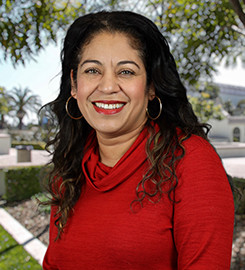
Associate Professor, Biology
- Postdoctoral Scholar, Biology Department, Massachusetts Institute of Technology, 2008-2012
- PhD Cell Biology, University of California, San Francisco, 2002-2008
- MS in Biology, San Francisco State University, 2000-2002
- BA in Molecular and Cell Biology, University of California, Berkeley, 2000
Dr. Carla Bonilla is interested in bacterial genetics and promoting inclusive science classrooms. Her lab studies the Gram positive bacterium Bacillus subtilis and its responses to environmental stressors. She also studies the implementation of critical pedagogy in STEM education specifically in the college classroom using a social justice lens while promoting critical consciousness. She has over ten years of faculty experience, teaching molecular biology and genetics at Gonzaga University and now teaching microbiology at USD. She is interested in all things molecular biology and loves teaching students the power of bacterial genetics to answer cool questions. Dr. Bonilla believes strongly in the power of mentoring and tries to be a collaborative and supportive mentor with her research students. The support she received during her training is the reason she is a faculty member now. Read more about her mentoring story here.
Areas of Interest
Dr. Bonilla's research program aims to understand the bacterial response to environmental and oxidative stress while engaging undergraduate students in research that answers basic scientific questions using molecular biology. She has two main research projects: to characterize the environmental stress cross-protection through, SigB; and to understand the molecular mechanisms of synthesis and regulation of the antioxidant Bacillithiol during oxidative and antibiotic stress. Understanding the bacterial oxidative stress responses is an important question with medical consequences since pathogenic bacteria constantly adapt to changing environments evading the host immune response. While B. subtilis is non-pathogenic, it is the perfect model to study this phenomenon with undergraduate students because it shares the transcriptional pathways used by Gram-positive pathogens and is genetically tractable.
Office Hours
| Section 01 | |||
| 9/01 - 12/11 | W | 2:00 am - 5:00 am | |
| 9/01 - 12/11 | F | 2:00 am - 4:00 am | |