
A Conversation with Bobby Morales ’24 (MSRE) Finding Opportunity and Creating Impact
How a Marine Special Ops Vet Built a Career in Real Estate
A Conversation with Bobby Morales ’24 (MSRE)—Finding Opportunity and Creating Impact; How a Marine Special Ops Vet Built a Career in Real Estate
We recently interviewed Bobby Morales’24 (MSRE) to gain insights into his journey pivoting into commercial real estate. Bobby is a 23-year Marine Corps Veteran. He currently serves as a project manager for Lowe in San Diego. Lowe is a real estate investment, development and management firm specializing in creating commercial, hotel, multifamily and retail properties. Lowe also focuses on infill multifamily development, particularly on sites with good access to amenities and transit. Bobby graduated from the Master of Science in Real Estate (MSRE) program at the University of San Diego Knauss School of Business in 2024. He currently serves as a liaison and facilitator for the Burnham-Moores Center for Real Estate’s (BMC) Real Estate Awareness and Discovery Initiative (READI) program. He is also actively engaged with the San Diego chapter of NAIOP and serves on the NAIOP San Diego Foundation Board.
Read the interview below.
Q: Where did you grow up and what was your educational background prior to the MSRE program?
A: I grew up in New York City. My mom was a single parent, so I was a ‘latchkey’ kid. My mom is from Colombia and worked in maintenance in the evenings, so when I got home from school, if something happened, I would have to figure it out on my own. I joined the military because I couldn’t imagine paying my way through college and I was honestly bored in school. Because of my career in Special Operations, you go through a lot of schooling, and training on new equipment. I earned my bachelor’s in international relations in 2020— a little later in life while I was still deployed—from New England College.
Q: What was your military background?
A: I didn’t know much about the military, I didn’t know you could choose different jobs. I scored really high on the entrance exam, so the recruiter said he was going to “hook me up” with a computer job because that was the future. There was no hook up, I was a radio operator. Being from NYC and having worked in the Twin Towers, 9/11 was a bit personal. I was part of a school program where you go to school one week and work one week. I was doing janitorial and maintenance work in that program. Coincidentally, I joined the Marines on September 11, 2000—I thought I would just serve my time and get money for school, but 9/11 changed everything. I became a Recon Marine and then a Marine Raider and served for 23 years. The military took me overseas to the Middle East, Central America, the Pacific, Australia and Africa—Europe whenever the plane would break on our way back from a deployment.
Q: What did you enjoy most about serving in the Marine Corps Special Operations Unit?
A: I'd say the people you work with, especially being in Special Operations, it's not easy to get there. There are plenty of opportunities for people to quit and not want to do it anymore because a lot is asked of you, a lot of cold, wet, and miserable moments carrying heavy things for a long time. Everyone that you're working with shows up every day ready to get after it and everyone wants to be better—it’s very competitive, a lot of smart individuals - so that’s what I enjoyed most.
Q: What made you decide to pivot into real estate?
A: I was stationed in San Diego, and I got involved with NAIOP because they sponsored our unit “The Marine Raider Battalion.” NAIOP would send us care packages and help our families during times of need and during the holidays. They also gifted us a beautiful memorial for our fallen heroes. I got to meet a lot of great people within that organization just as I was looking to retire from the military. I started having conversations with professionals within the real estate industry and I saw that many of them had the same culture as my teammates in my Special Operations unit did—they are ready to get after it—a work hard, play hard mentality. I mess around and say I enjoy chaos, and I was told there’s plenty of that in real estate. Karen Burges at NAIOP was, and still is, a big advocate of me coming into the industry. Through my connection with Karen, I became involved with NAIOP and would help them out with fundraisers that NAIOP sponsored for our families while I was still active duty. Once I retired, I became a member of NAIOP and It just continued from there. I am now part of the NAIOP Foundation Board and enjoy being able to support the Marines of 1st Recon Battalion.
Q: What led to your pursuit of a Master of Science in Real Estate from USD?
A: Through several conversations within NAIOP. I needed to find a new source of income and I realized that I could use the benefits that I've earned and obtain a master’s in a field that I was interested in transitioning into. I knew I wanted to stay in San Diego. A lot of industry professionals advised me that if I wanted to stay in San Diego and pursue a good job in real estate, going to USD’s MSRE program was the right choice. I was a bit concerned about struggling academically since I did not have real estate experience. Catherine [Northcutt ’96, ’19 MA] and Professor Tu [the Steven L. Black Endowed Chair in Real Estate] made sure I had all the right tools before starting the program. I knew I would be ‘drinking from the fire hose’ so to speak, but I enjoy challenges, so I felt ready to take it on—I am a life-long learner.
Q: What was your biggest challenge and what helped you transition into the MSRE program, not having a background in CRE?
A: Day one, when we started doing the financials, because it's the first class you do. I didn’t really understand what an NOI [net operating income] was, nor all the terms that go within a pro forma. Without a background in real estate, all of those terms and acronyms were a new language. My classmates helped a lot. If you’re not coming from the industry, I highly recommend one book that will help students gain more out of the class ahead of time, instead of seeing terms for the first time in class. The book is called ‘The Definitive Guide to Underwriting Multifamily Acquisitions’ by Robert Beardsley.
Q: Was there a standout moment for you in the MSRE program?
A: I took the two-year part-time option to complete the MSRE program. Everything in the MSRE program was eye-opening for me. There was one course with Nicole Forrest which really stood out—it was something she said that resonated with me. She said real estate is a ‘tool.’ I knew that when I got out of the military, I wanted to help the community. Nicole's statement connected my desire to help children in underserved communities—I would use real estate as a tool. That changed my mindset, and it is why I was so interested in development and is also why I was so excited to get involved with the BMC’s READI program. I was able to use real estate as a tool to help make a difference in the lives of the community and kids. Working with Stath Karras on the NAVWAR Economic Impact Report also helped me realize that I can use my experience in this industry.
Q: If you were mentoring a student that was considering real estate as a career, what advice would you give them?
A: I would ask them why real estate? Figure out what they're good at and how it applies to real estate. The McQuaig Assessment, which the BMC offers, really helps with this. I took it right when I started the MSRE program. The assessment helps you understand yourself and what area of real estate you will be most successful in based upon your behavioral traits. The assessment doesn't define you—it just shows which area you will be most likely to succeed in based upon your natural skill set. It will help to define what area to pursue. For me, it was development.
Q: Did the MSRE program and the Burnham-Moores Center help with your career trajectory?
A: Definitely. I don't see how I would be here without them. Getting the degree at USD and the relationships were huge. Not coming from a real estate background and having the MSRE degree, the relationships built and showing that I'm still able to learn and absorb new information is why I have the job at Lowe today.
Q: Do you have a mentor? Who has given you the most support along the way through your transition into real estate and how have they made an impact?
A: There are so many great people that I'm very fortunate to have met. Karen and Jeff Burges have been there for me while I was in the military and through my transition—they’ve been a great sounding board. But in school, working with Joe [Bertocchini ‘01] and Jackie [Greulich ‘85] was key. Learning from them about the importance of relationships and how they cultivate them. And then Catherine [Northcutt ‘9, ’19 MA]— the conversations with her and learning how to define myself and set myself apart. I remember a great conversation I had with her. Catherine asked me, “Who is Bobby Morales?”
Q: Who is Bobby Morales?
A: The PG version—I make things happen. I'm a great problem solver, calm under pressure and thrive in chaos. I enjoy the chaos in the mornings, especially in construction. Every morning, it’s something new and I enjoy working through complex problems at points of friction. Like I said, I did it as a kid, so it comes natural to me. I did a lot of problem solving in the military, especially in special operations. Now, I'm doing it in commercial real estate as a developer and I love it.
Q: What is one achievement that you are proud of?
A: Getting this job at Lowe. A lot of people said that I didn't have the experience. I'd say that's an achievement in and of itself. Being able to transition into an amazing job and taking everything I learned from the MSRE program and putting it all together during interviews and learning how to express my experience in real estate terms. To me, that is huge. People who I talk to now say, ‘you started at the top, you know.’ Lowe is a great company. Our development side has a small team doing incredible projects in San Diego.
Q: Share a little about your current role and some of the real estate projects you’re working on.
A: I am a project manager overseeing the San Diego County Operations Center Campus Consolidation project. Right now, we are moving all the County’s public health services and staff that were across three different sites in San Diego and we're bringing them all into one at the county campus. The project carries a lot of little projects within itself. There's the public health lab which we just completed in the beginning of month. We are also relocating all the departments around to create space for all the incoming staff, and we are completing TI [tenant improvement] projects before every move. It's a total of 23 departments. There’s a couple of other smaller projects that are being designed to update the campus utilities. The project is expected to go until the end of this summer. I came in on the back end of this master plan project that started in 2008. A great friend, John Turpit, who I met through NAIOP, because he designed our memorial I mentioned, he was part of the initial negotiations for this project. So, its been great catching up with him and letting him know how its evolved.
Q: Do you have any other projects on the horizon that you are excited about?
A: I'm excited to see the reinvention of malls. The first NAIOP University Challenge I attended, students [including USD real estate students] were given the Plaza Bonita Mall and had to present how they would revitalize it. Similarly, Lowe is currently working on Mission Valley Mall. It will be fascinating to see the planned changes come to life, especially since I already frequently visit that mall. Once I am done with my current project I will be getting involved with this new project, which is expected to take a few years.
Q: Did you take advantage of any of the real estate scholarships offered through the Burnham-Moores Center for Real Estate?
A: Yes. I was the recipient of three real estate scholarships offered through the BMC—the NAIOP Foundation Scholarship, the Epstein Scholarship and the Gerry and Jeannie Ranglas Current Use Military Scholarship. With so many people applying for the scholarships that were getting straight A’s in class, I didn’t think I would get selected. I would say my volunteer work with READI and involvement in the community is why I was awarded those scholarships. Trevor Hubbard, another great MSRE professor, would always say you have to give back to the community.
Q: What motivates you?
A: The team. I am so fortunate to be at Lowe. Everyone here comes into work and they get after it. Everyone is incredibly intelligent and works really hard— that’s the culture that I am used to. I get into work and I am inspired to learn everything they know. I am challenged every day and I learn something new every day. It’s also been great seeing the county workers enjoy the new spaces and the lab.
Q: What inspired you to get involved with the BMC’s Real Estate Awareness and Discovery Initiative (READI) program?
A: I said it during my retirement speech, when I still didn't know what I was going to do. I had applied to the MSRE program, but I hadn't been accepted yet. I said I wanted to help kids, I just didn't know how. I wanted to help kids achieve their goals and help to provide them with opportunities that I didn't have when I was younger. The READI program just happened to start in my first semester while at USD in the MSRE program. The BMC was looking for volunteers; I went on one visit and I was hooked—it was amazing. Being able to connect the kids to the real estate community and show them that these opportunities exist for everyone is inspirational. Eventually, as the program grew, there was a greater need, and I got more involved. Now this year we're going for eight cohorts.
Q: Is there anything memorable that you’ve seen or heard from the high school students through your involvement with READI?
A: Yes, there's been a couple of those. I went to one of the BLCI’s (Barrio Logan College Institute) graduating ceremonies and some of the kids that were going off to college said they wanted to do real estate development, or they wanted to get into finance and engineering because of the READI program. During a recent orientation, some of the students said they were interested in being engineers. I was able to reach out to one of the architects I'm working with and I asked if they would be interested in hosting READI at HED. The kids loved it. I was happy to provide them the opportunity to speak to incredible architects, designers and engineers at HED and learn more about what they do. The parents are also very appreciative, not knowing what opportunities are out there for their kids and what career paths exist for them. Similar to my mom, who worked in maintenance—she didn't know what opportunities were available to me, that's why I ended up joining the military. Having these opportunities to talk to people in the real estate industry through the READI program is a great way to show the many paths that exist for these kids. I enjoy doing it for that reason.
Q: You have a family. How do you balance work and family life and what are some of your hobbies?
A: Pivoting into a new career has definitely come with some long days. Fortunately, I work for an amazing company that values this work/life balance. I want my children to know that staying connected to the community is so important. I work extremely hard to learn my new role and do it to the best of my abilities. Similarly, with the kids in the READI program and my own children, having a solid work ethic will open many doors.
In my free time, I enjoy everything Southern California has to offer. I like going to the beach, hiking, mountain biking with my kids, paddle boarding and surfing. It is difficult to find me in my house on my days off.
Q: What advice do you have for real estate students?
A: Work hard and play hard. There are plenty of opportunities to get lost in social events, but you got to get ready to get after it as well. Building relationships is incredibly important too. My desire to make the READI program successful gave me the incentive to step out of my comfort zone, be social and interact with real estate companies who are now engaging with the program. People need to know who you are. You must build that trust— it’s not only first impressions. Recon Marines and Raiders have a quote that can apply to work, school or anything you’re trying to achieve; “All it takes, is all you got.”
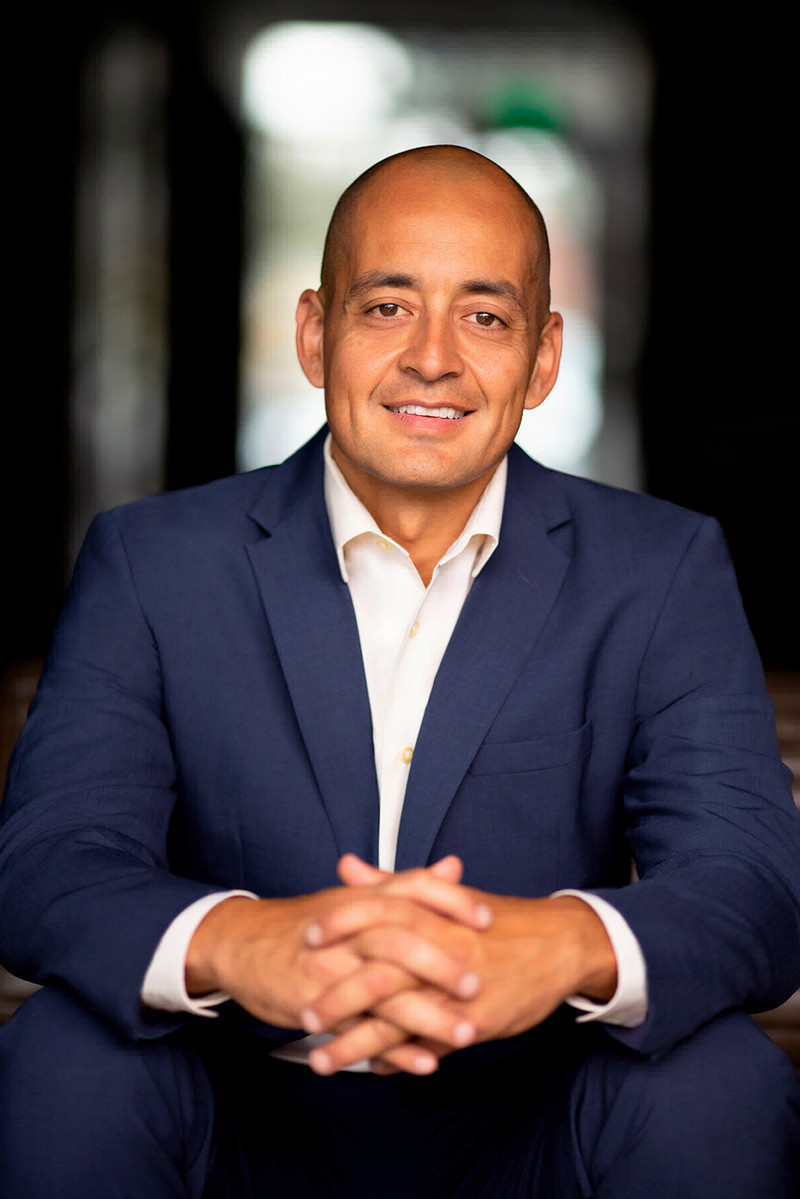
Bobby Morales '24 (MSRE)