
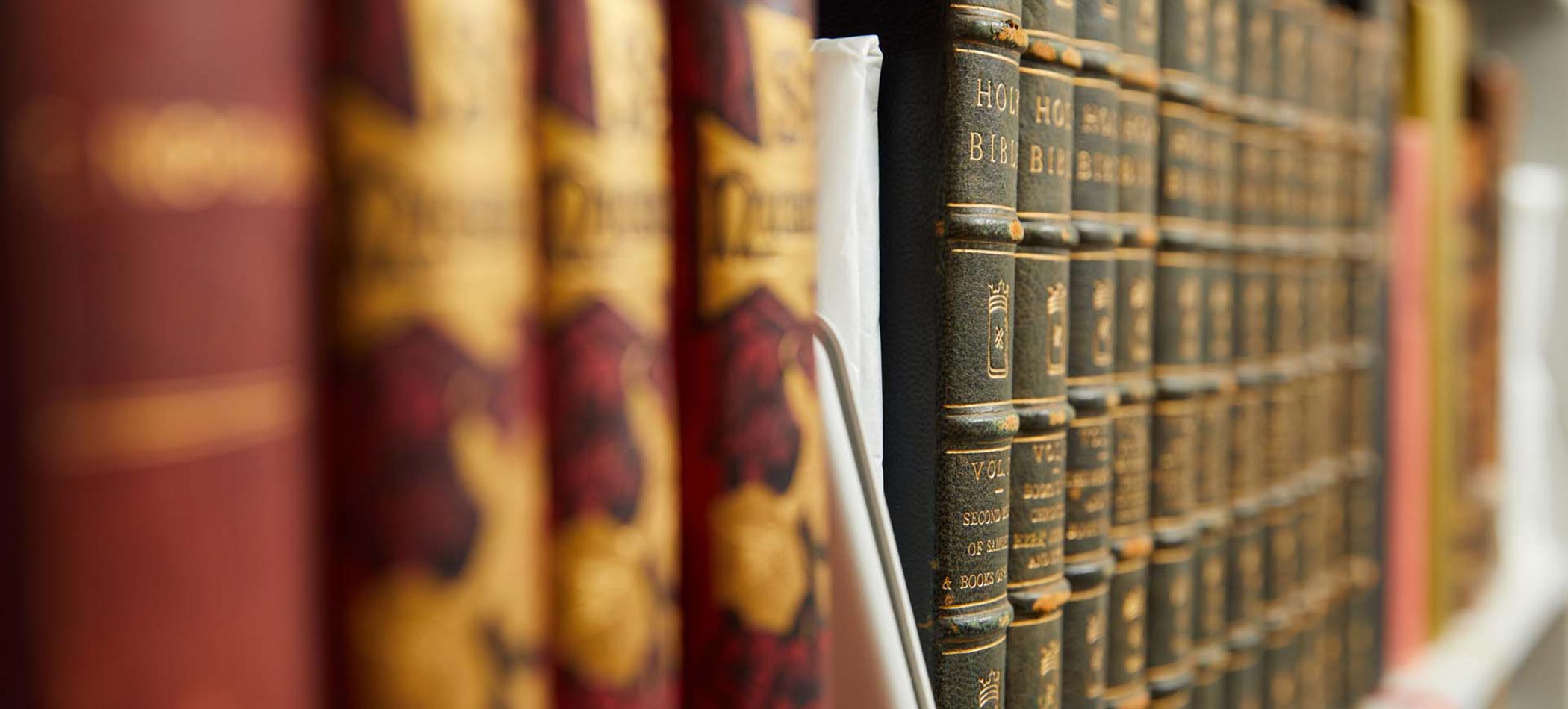
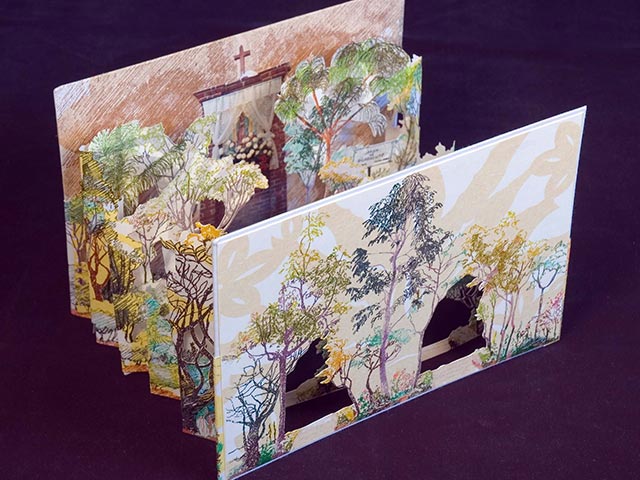
Copley Library's collection of rare books, manuscripts, and periodicals was established in the early 1950s when the Religious of the Sacred Heart donated rare books from the library they inherited from the Flood Family of San Francisco. Over the years, the collection has grown through other gifts and purchases. Collection strengths include Californiana with an emphasis on the San Diego area; Catholica and devotional literature, including the Academy of American Franciscan History's rare book and manuscript collections; manuscripts and early printed books; 20th century and contemporary artists' books and fine press books; and 19th century books notable for their bindings and ornamentation.
This collection also contains the papers and memorabilia of people associated with the university such as Alan D. Bersin (former superintendent of San Diego City Schools) and Emmett J. Culligan (entrepreneur and supporter of USD's founding).
Bookplates are decorative labels usually affixed to the front endpapers of a book to signify its ownership. The Copley Library Bookplate Collection consists of heraldic or armorial bookplates as well as bookplates by artists and graphic designers. The bookplate collection includes a reference collection of books and journals about bookplates, their designers, and their collectors. Our collection of Japanese Bookplates has been digitized and can be viewed on Digital USD.
The San Diego College for Women Postcard Collection is a legacy collection established by the Society of the Sacred Heart who founded and administered the San Diego College for Women from 1952 through the early 1970s. This postcard collection also contains several smaller collections that were donated over the years to the San Diego College for Women's Library. Many of the postcards have been digitized and can be found in Digital USD.
Human Rights at the California-Mexico Border and the San Diego Refugee website collections are being maintained by the department. These subject collections consist of various websites associated with these topics. By archiving these websites, we are guaranteeing that the information they contain will be preserved when they inevitably change or even disappear from the internet.