
CPPC Administrative Director Marcus Friedman ’21 (JD) Interviewed by ABC 10News San Diego on How GVROs Work to Protect the Public
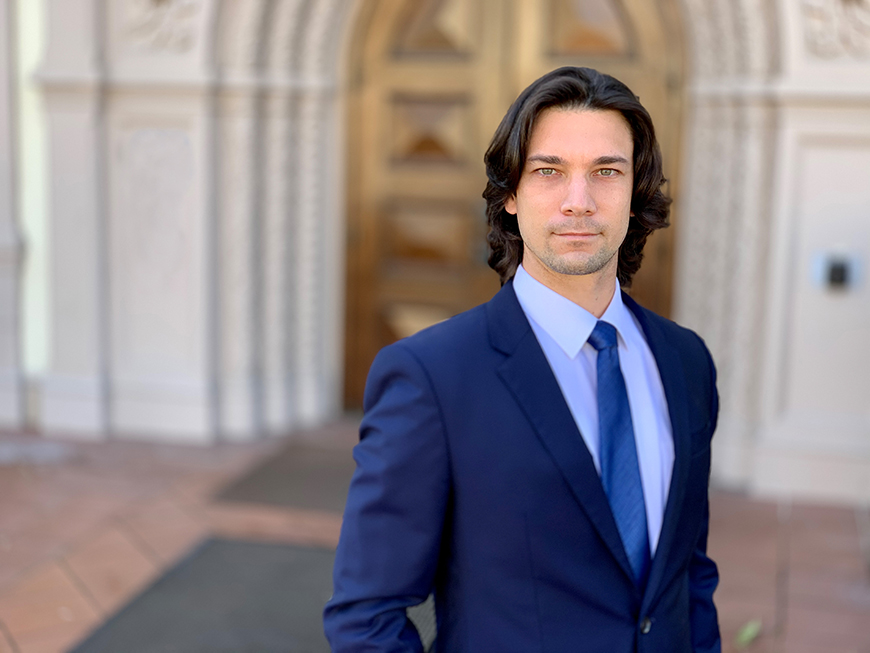
SAN DIEGO (January 31, 2024) – The University of San Diego (USD) School of Law Consumer Protection Policy Center’s (CPPC) Administrative Director Marcus Friedman ’21 (JD), appeared on ABC 10 News San Diego to explain how California’s Gun Violence Restraining Orders (GVROs) work.
According to the article, GVROs fall under the category of Red Flag laws, which are designed to empower police to act quickly to prevent a tragedy from happening.
“The purpose of GVROs in California is to act fast when something is preventable. When we can save lives, when there are victims on the line for law enforcement to step in and stop it before it happens," Friedman said. "There's situations where a process could be stretched out as to whether or not what law enforcement can do. But in California, it's very clear they understand procedurally how GVROs work, and if a report is made the day before, they can take action to stop it from happening the next day."
To learn more about CPPC and its work, visit its webpage.
About Consumer Protection Policy Center
Founded in 1980, the University of San Diego School of Law’s Consumer Protection Policy Center (CPPC) at the Centers for Public Interest Law (CPIL) serves as an academic center of research and advocacy in regulatory and public interest law. CPPC focuses its efforts on the study of an extremely powerful, yet often overlooked, level of government: state regulatory agencies. Under the supervision of experienced public interest attorneys and advocates, CPPC law student interns study California agencies that regulate business, professions, and trades.
CPPC publishes the California Regulatory Law Reporter, a unique legal journal that covers the activities and decisions of over 13 major California regulatory agencies.
In addition to its academic program, CPPC has an advocacy component. Center faculty, professional staff, and interns represent the interests of the unorganized and underrepresented in California’s legislature, courts, and regulatory agencies. CPPC attempts to make the regulatory functions of California government more efficient and visible by serving as a public monitor of state regulatory activity. The Center has been particularly active in reforming the state’s professional discipline systems for attorneys and physicians, and in advocating public interest reforms to the state’s open meetings and public records statutes.
About the University of San Diego School of Law
Each year, USD educates approximately 800 Juris Doctor and graduate law students from throughout the United States and around the world. The law school is best known for its offerings in the areas of business and corporate law, constitutional law, intellectual property, international and comparative law, public interest law and taxation.
USD School of Law is one of the 84 law schools elected to the Order of the Coif, a national honor society for law school graduates. The law school’s faculty is a strong group of outstanding scholars and teachers with national and international reputations and currently ranks 30th nationally among U.S. law faculties in scholarly impact and 41st nationally in past-year faculty downloads on the Social Sciences Research Network (SSRN). The school is accredited by the American Bar Association and is a member of the Association of American Law Schools. Founded in 1954, the law school is part of the University of San Diego, a private, independent, Roman Catholic university chartered in 1949.