
Knowledge and Creativity on Display at Fall Research Colloquium
Maher Hall was abuzz. After toiling for months over the summer, dozens of undergraduate students proudly showed their peers what they’d been working on.
Thursday was the annual Fall Research Colloquium, a showcase for the undergraduate research projects University of San Diego students work on for 10 weeks between the spring and fall semesters. It’s organized by the Office of Undergraduate Research, and gives students a platform to talk to peers, faculty members and supporters about their work.
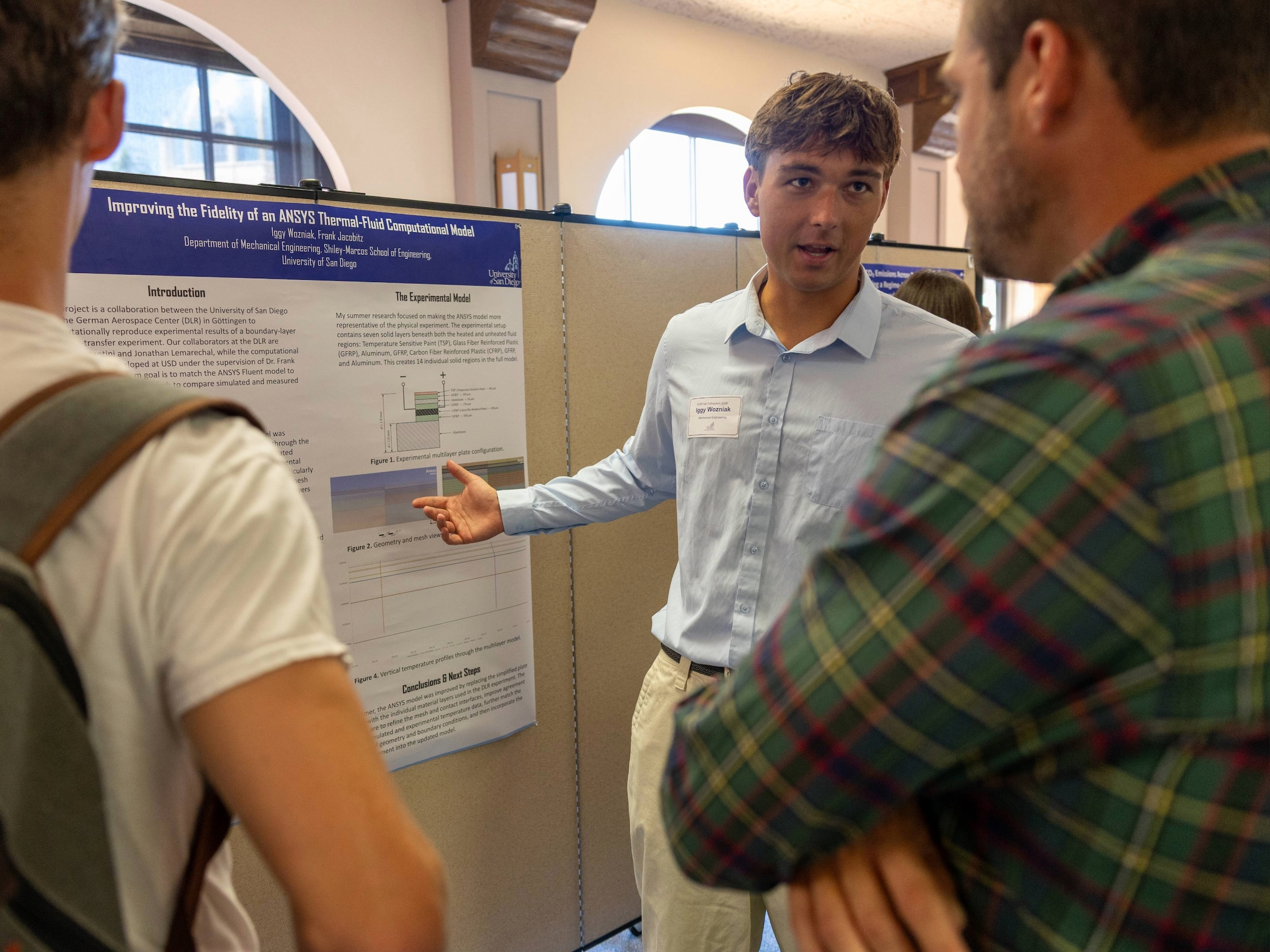
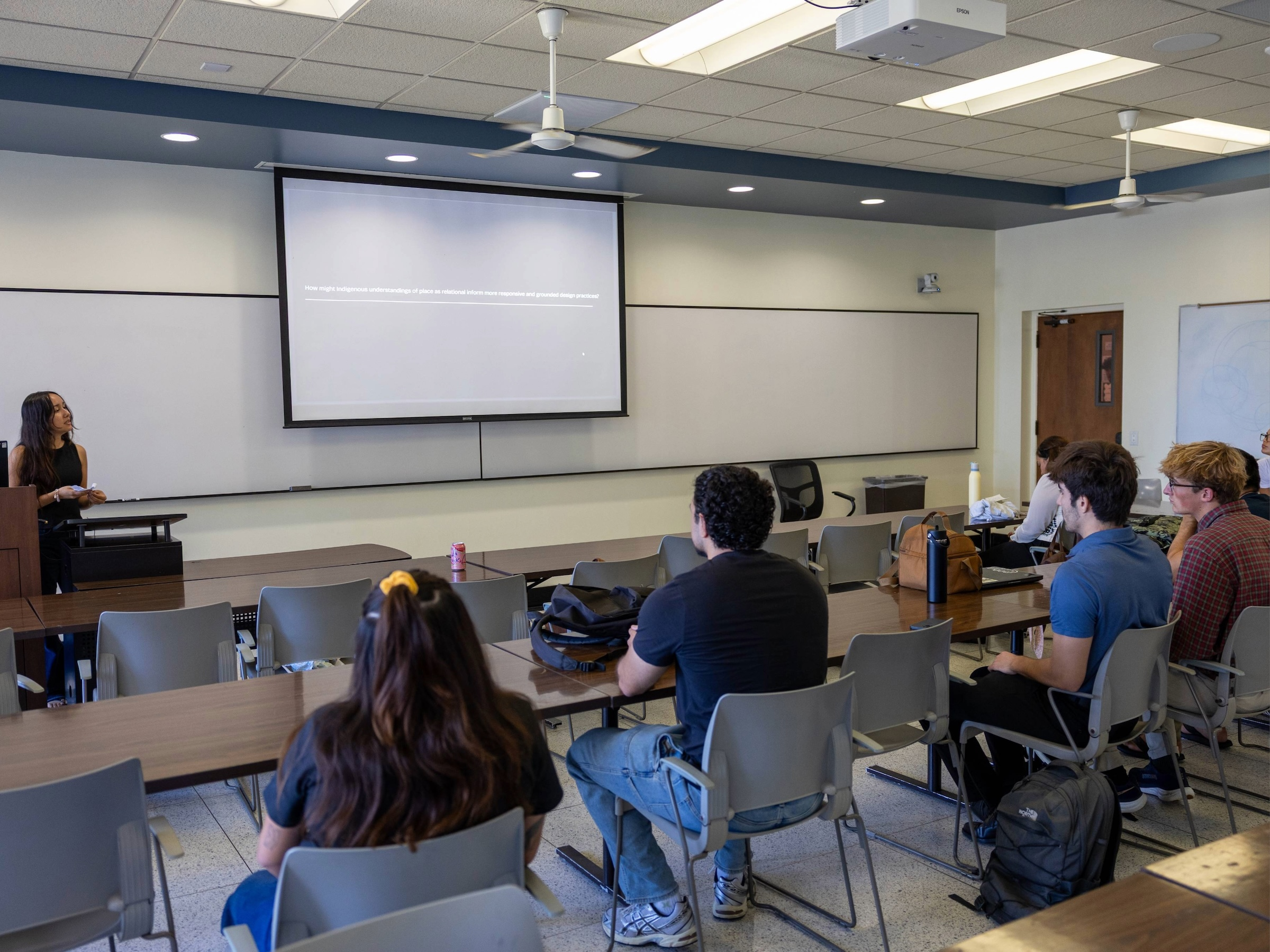
Over the summer, through USD’s Beginning Undergraduate Research Student Training (BURST) and Summer Training in Advanced Research (STAR) programs, students receive funding to support research projects, which are done in collaboration with a faculty member. The two programs and the funding they provide give undergraduate students opportunities that are often only available to graduate students.
“Undergraduate research is considered a high-impact practice,” said Cawa Tran, PhD, director of undergraduate research. “It not only prepares students with the technical skills needed in their particular fields, but we’ve also learned — especially from alumni who have conducted research — the importance of soft skills. Here they learn professional development and how to work on a team with others.”
While the idea of research often conjures up visions of a laboratory, the Fall Research Colloquium shows research and scholarly pursuit is so much more.
Callie Schreiber is a testament to that. Thursday, one of her paintings, which marries her two academic interests – art and psychology – was on display alongside her peers’ research posters. Her painting served as a striking representation of the humanities.
The senior artist was a member of the STAR program this summer, and spent her time working in a studio, exploring different creative techniques. Under the mentorship of professor Matt Rich, MFA, Schreiber would do research and study, and then apply what she learned with the creation of several different works. STAR funding provided her with the materials she needed, and an unique learning opportunity.
“The summer was great. Every day, I had this whole room to myself with all my materials. I would read and then paint,” Schreiber said. “It was a really cool opportunity because, between school and other classes, I’ve never really had time to just focus on my art. That and the funding for the materials isn’t always easy to come by.”
The event also showed how the research these students are doing is having a real-world impact.
Anthony Famoyin is a senior electrical engineering student. Over the course of his studies, he realized one of his field’s key tools had a major flaw. Multimeters, he said, didn’t have accessibility features for people who are blind or low-vision.
“What I got most out of this project is that I feel like I can learn anything now,” said Famoyin, who this summer finished a prototype multimeter with a number of features aimed at making the device independently usable by anyone. “In the beginning, I didn’t know where to start or where it was going to lead. I was able to just keep working, and with all the resources I have at my disposal, I was able to get this done. ”
Meanwhile, Famoyin found a great working partner in Grace Dabbieri. She was preparing for her first year at USD, and has an interest in engineering and computer science. Dabbieri, who is blind, had worked with Odesma Dalrymple, PhD, on past projects for people with blindness or low-vision. She was approached with the opportunity to join the research project.
Before she even took her first class at USD, Dabbieri was getting an opportunity to contribute to impactful research and learn more about the discipline she’d be pursuing on campus. The end result was the prototype, and her name alongside her mentors and Famoyin’s, on a research poster detailing their work.
“I felt part of the team. I was there in the room when we were building stuff, testing things. I felt seen and very excited to be a part of this USD community. This was really one of the highlights of my summer,” Dabbieri said. “But there’s still a lot more work to do.”