
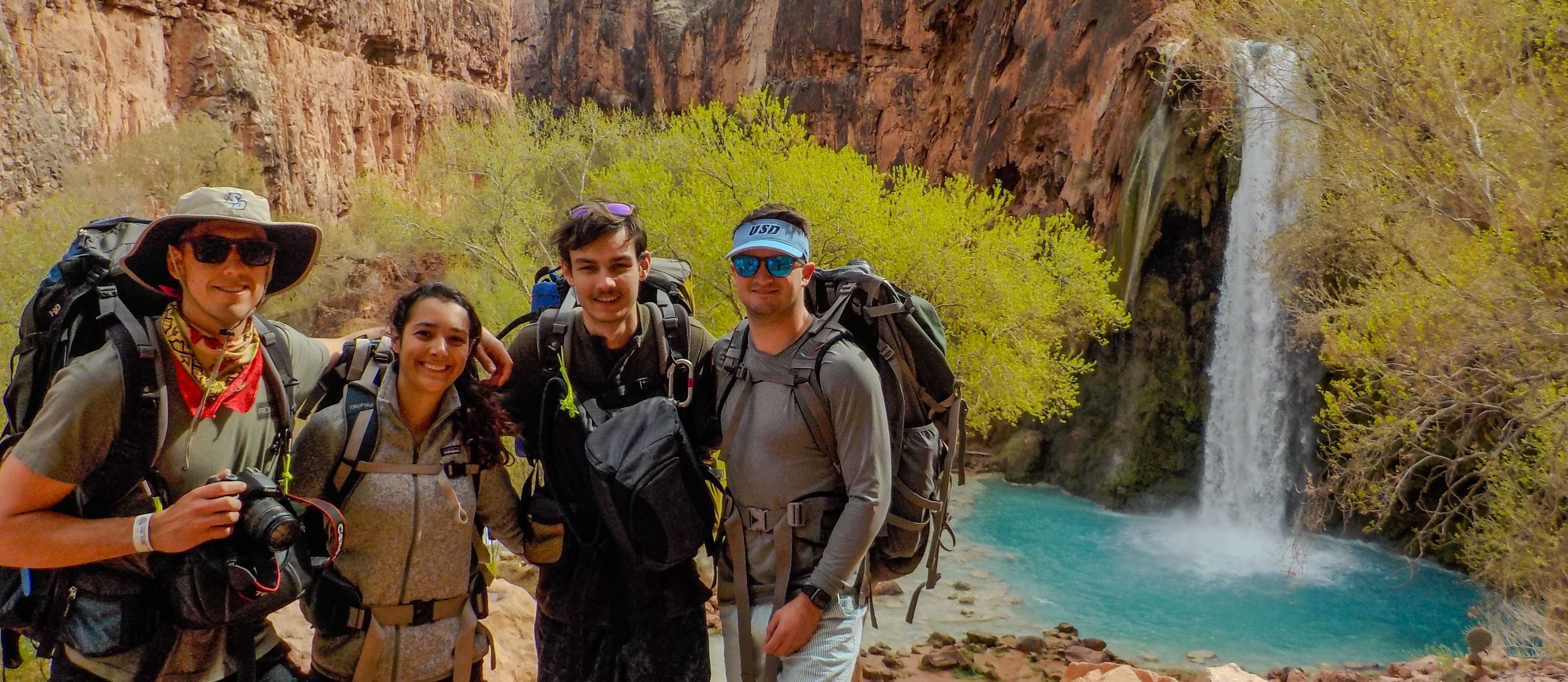
Trade the usual Thanksgiving break for a journey into Havasu Canyon. Backpack 10 miles to camp, spend the holiday exploring waterfalls and sharing a celebratory dinner, then enjoy another day in the canyon with an optional hike to Mooney Falls and Beaver Falls. You’ll have time to slow down, take in the scenery, and make the experience your own.
We’ll depart USD by noon on Tuesday, November 24, and camp that night at Grand Canyon Caverns Campground. On Wednesday, we’ll backpack 10 miles to the Havasu Falls campground. Thanksgiving Day is set aside for rest, recovery, gratitude and chasing waterfalls. On Friday, we’ll day hike to more of the canyon’s waterfalls, with an optional hike to Mooney Falls and Beaver Falls.
On Saturday, we’ll backpack 10 miles back to the trailhead, experience a slice of history on the historic Route 66 during our drive home, and camp overnight near the Colorado River. We’ll return to USD by 3 p.m. Sunday, November 29.
The $850 trip price includes transportation, permits, backpacking equipment, and most meals. Dinner during our drive there and back is on your own. Students provide their own clothing and footwear.
The trip includes two 10-mile days carrying a backpack. The hike to Mooney Falls and Beaver Falls is optional.
Itinerary:
Tuesday - Depart campus around noon and drive to Grand Canyon Cavern campground.
Wednesday - Wake with the sun and drive 90 minutes to the trailhead. Backpack eight miles into the Grand Canyon and visit the village of Supai. Continue two more miles to the campground by Havasu Falls. Enjoy your first view of Havasu Falls - it's one moment you won't ever forget. Set up camp and cook dinner.
Thursday - stretch out with a chill morning hike to two of the nearby waterfalls and take an opportunity to reflect and express gratitude. Enjoy a fry bread. Everyone contributes to creating a special dinner. Time for storytelling and dessert.
Friday - Day hike to Mooney and Beaver Falls. Soak in the canyon views and take a dip in the refreshing water.
Saturday - Pack up camp, load up our backpacks, and reverse our hike out of the canyon back to the trailhead. After celebrating our climb out of the canyon, we will begin our drive back toward USD with a stop along the historic Route 66 and camping along the way.
Sunday - Finish our drive back to campus by early afternoon.
Trip Details
Dates: November 24-29, 2026
Price: $850. Includes all transportation, equipment, permits, campsites, and trained leaders.
Is cost a barrier to your participation? Submit a funding request through the Associated Student Government Get Involved fund. This fund is designated to assist need based undergraduate students who are being limited in their involvement due to affordability. Students have the opportunity to apply for funds to be involved in various university sponsored activities.
ASG Get Involved Fund Request Form
Financial assistance is available. Please contact markceder@sandiego.edu for more information.