
Message From the Dean
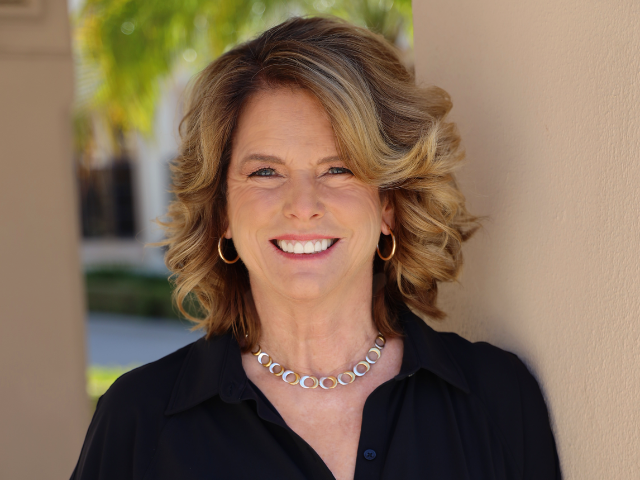
Dear Alumni, Parents and Friends:
This past year has brought unique challenges to the College of Arts and Sciences and to higher education more broadly. Despite the hurdles, our community of students, faculty, staff, alumni and friends continues to thrive. These challenges have prompted meaningful conversations about how essential a liberal arts education is for preparing thoughtful, ethical and engaged citizens. We are delighted that our shared dedication to this mission has led to the largest incoming class we've ever welcomed. At a time when the liberal arts face increasing scrutiny, we are proud of our steadfast commitment to this educational model.
The College of Arts and Sciences remains deeply engaged in work that not only advances academic excellence but also reflects a responsibility to our community and the world. In this issue, you'll see how that sense of purpose comes to life through groundbreaking research conducted in collaboration with students.
We continue to build a faculty rooted in the full breadth of the liberal arts and sciences. Within the past year, we welcomed 20 faculty members with expertise in subjects such as English, history, French, neuroscience, physics and theatre. As part of the university's commitment to academic excellence, the college works to recruit teacher-scholars who contribute through both exceptional teaching and meaningful scholarship.
I'm also pleased to share that USD, in partnership with the College of Arts and Sciences and the Humanities Center, hosted the KPBS San Diego Book Festival on campus this summer. The event featured award-winning authors — including our own — alongside live entertainment and independent booksellers. It was a celebration of literacy and the written word. Next, we'll host the fifth annual Arts and Culture Festival on Oct. 25, with live theatrical and musical performances from our most creative students and faculty.
In this third edition of Arts & Sciences magazine, you'll read how our faculty are redefining research "from soil to sound," how a new generation of students is preparing for careers in health, science and justice, and how our community is boldly reaffirming the power of the liberal arts in a time of rapid change. You'll also find spotlights on standout students and alumni, innovative faculty projects — from quantum physics to the sociology of dying — and glimpses of our future through new programs, a new neuroscience department and plans for a new Shiley STEM initiative.
Your belief in and support of our mission are deeply appreciated. Together, we are ensuring that the values at the heart of the liberal arts remain strong and relevant.

Noelle Norton, PhD
Dean, College of Arts and Sciences
College News
Spotlights
Centerpiece
Anthropology 111
Becoming Human: Introduction to Biological Anthropology With Social Justice
This Learning Community (LC) course examines what it means to be biologically and socially human within an evolutionary framework. LC classes are a special Core requirement for first-year students at USD. They combine the feel of a first-year seminar with the depth of a regular academic class, often tying in elements of community building. This course looks at humans over evolutionary time, both in light of our closest living relatives (like lemurs, monkeys and apes) and in a modern context. Social justice and integrative learning are fundamental to this course, as students debunk politicized myths about human "nature" - including those related to race, sex, gender, sexuality, privilege and intersectionality.
Awards & Honors
Student
Dylan Gage '27 (BA in mathematics and BS in physics), Katarina Matic '26 (BS in physics) and Moriah McLellan '26 (BS in chemistry) were awarded the Barry Goldwater Scholarship by the Excellence in Education Foundation.
Carmen Gray '25 (BA in political science) accepted a VIA Global Community Fellowship and will work with the Suwandi Foundation in Bali.
Reese O'Driscoll '26 (BA in political science) was awarded the Public Policy and International Affairs (PPIA) Fellowship.
Noel Amelia Marie Davis '25 (BA in sociology) was recognized with the Outstanding Contribution to Multicultural Awareness and Understanding Award.
Gabriella Gonzalez '25 (BA in sociology) and Karely Gonzalez '25 (BA in sociology) were honored with the Carmen M. Vazquez Award for Outstanding Service to the Entire Campus through Their Involvement.
Arianna Jones '25 (BA in psychology) and Sophie Viohl '25 (BA in psychology) received the Outstanding Service in University-Sponsored Activities Award.
Gladys Emilia Torres Olivarria '25 (BA in ethnic studies and sociology) was named a recipient of the Chet Pagni Award for Outstanding Volunteer Service.
Flashback 1981
Computer Dating at the University of San Diego
Long before right swipes and digital roses, college students of decades past were logging on for love. Computer dating hit campuses in the early 1980s as a futuristic mix of romance and technology. Students would fill out paper questionnaires about their interests, values and ideal partners. These forms were then fed into the university computer system, running matchmaking algorithms designed by computer science departments or outside dating services. A few days later, the results were printed out and distributed around campus: a personalized list of "compatible" matches, often complete with names, majors and dorm numbers. For a generation on the brink of the digital age, it was love at first byte.
Rubik's Cubes were all the rage in the 1980s — it's estimated that more than 200 million were sold worldwide throughout the years 1980 to 1983.
Computer dating wasn't the only high-tech happening of 1981 — MTV aired its very first music video that summer with The Buggles' Video Killed the Radio Star.
Editorial Team
Executive Editor
Tanya Aubin
Senior Editor
Michelle Kennedy
Copy Editors
Tanya Aubin
Eduard Hovhannisyan
Michelle Kennedy
Gabriela Ortiz Flores
Julene Snyder
Elleanor White
Design Team
Tanya Aubin
Contributing Writers
Lily Anderson
Tanya Aubin
Brian Clack
Israel Fox
Eduard Hovhannisyan
Ronald Kaufmann
Michelle Kennedy
Noelle Norton
Gabriela Ortiz Flores
Julene Snyder
David Syring
Jade Terry
Jillian Tullis
Elleanor White
Photography and Film Director
Michelle Kennedy
Cover Photographer
Alejandro Meter
Video Editors
Tanya Aubin
Riley Longo
College Advisory Board
Patrick Morrin ’83 (Chair)
Valerie Attisha ’94
Peter Kiley ’85
Brianna Kirkpatrick ’15
Maria Manning ’83
Katarina Matic ’26
Mary McKenzie ’07 (JD), PhD
Mary O’Connor ’83, DDS
Colleen Rodriguez ’97
Jared Ruga ’11, MFA, MBA, JD
Jensen Shirley ’09 (EdD)
Celeste Soto ’11, MA
Cole Torres ’26
Jeffrey Vijungco ’96
Glenn D. White Jr. ’78