
How Animal Welfare Regulations Can Promote Organic Farming
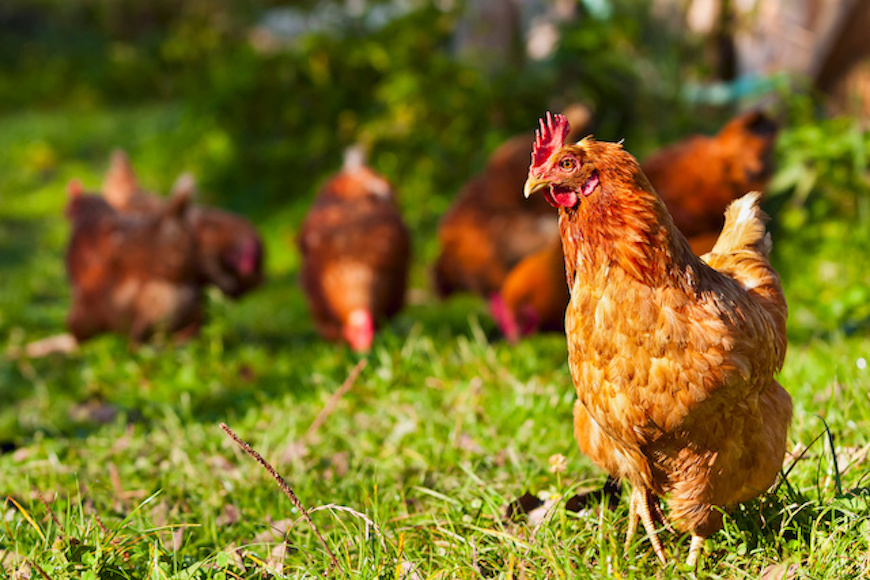
As California goes, so goes the nation, according to the adage about American culture. It’s true not just in music and fashion, but for animal welfare regulations as well.
In 2018, the state voted to improve the living conditions of egg-laying hens, breeding pigs and veal calves. For hens, it eliminated cramped battery cages. To be sold in California, eggs must come from facilities with at least 1 square foot per bird and floor coverings like bedding or straw.
Thirteen other states have followed California’s lead in banning animal cages and crates in facilities that produce eggs, pork and veal, according to the American Society for the Prevention of Cruelty to Animals. Corporate buyers such as McDonald’s, Walmart and Kroger have also followed suit, pledging to sell 100% cage-free eggs nationwide by 2026.
Such rules are forcing both agribusinesses and regulators to make hard decisions, says Wenli Xiao, PhD, associate professor of operations and supply chain management at the University of San Diego Knauss School of Business.
A key decision is what products to offer. Should conventional farms make capital investments to meet the new humane standards, or should they invest even more to meet stricter organic standards, since organic products often command higher prices?
In a research article published in 2022 in the operations journal Naval Research Logistics, Xiao and her co-authors analyze the trade-offs and offer advice. “Given the expansion costs or the upgrade costs, what should they do?” Xiao says in discussing the research. “We want to provide some ideas for farmers and companies to help them make those decisions."
Key Insights
- Animal welfare regulations are pushing farms to choose between producing humane or organic products, with conventional farms facing significant costs to meet humane standards
- High profits from organic products driven by consumer preferences encourage organic farming, even with increased operating costs
- Regulatory standards play a pivotal role in promoting organic farming, with tightened humane standards increasing prices and loosened organic standards reducing costs, while subsidies can help bridge the cost gap between organic and humane production
Humane vs. Organic Standards
Much of Xiao’s research looks at the intersection of supply chains and sustainability. Her research topics have included recycling electronic devices and reducing the environmental impacts of manufacturing operations.
She views farm animal welfare regulations, in part, as a supply chain challenge. With conventional products outlawed, farms in states like California have two types of animal products to choose from.
- Humane products, such as cage-free eggs and crate-free veal
- Organic products, which additionally require organic feed and the avoidance of antibiotics and hormones
Which ones should farms produce? The math will differ, Xiao says, based on each farm’s existing operation. A conventional farm will have to make a major investment to meet humane standards, whereas an organic farm may not have to make any.
“If a company has been selling a conventional product, they’ll need to expand the living space for their chickens, make it cleaner and add more air circulation,” Xiao says. “That’s going to incur a significant cost.”
Modeling Organic Food Production
To help sort out such differences, Xiao and her fellow researchers — including Daniel Lin, PhD, professor of operations and business analytics at the University of San Diego Knauss School of Business — created a mathematical model of supply chains involving two kinds of farms:
- One that used conventional methods prior to the new regulations
- One that used organic food production methods prior to the new regulations
In the model, corporate buyers choose which products they want farms to supply. The buyers in turn are responding to consumer preferences, such as how much extra they’re willing to pay for organic food.
“If they put a higher value on the nutritional benefits of an organic product, then they are willing to pay a higher price,” Xiao says.
Another key variable is the strengthening or loosening of regulatory standards. Xiao hopes to help policymakers understand how animal welfare regulations affect markets. She says, “How stringent should your standards be, if you want to encourage more consumption of organic products versus humane products?”
Lessons for Suppliers and Regulators
The model’s central question is how product offerings might change as both regulations and market conditions change. What Xiao finds is that different conditions can lead to very different outcomes. She outlines several lessons.
High Prices Promote Organic Farming
For conventional farms, complying with humane standards can take a sizable investment. A study by the University of California, Davis, published in Poultry Science found that switching to cage-free eggs raised operating costs 23% for farms.
Organic standards can raise labor and feed expenses even higher. But farms will spend the extra money, Xiao finds, if the profits are high enough.
In many cases, they are. A 2023 supermarket survey by CNET found that organic meats sold for twice the price of nonorganic meats. Overall, organic grocery items were 22% more expensive than nonorganic grocery items.
Low Prices Discourage Organic Farming
In rare circumstances, prices of organic items fall below those of nonorganic items. In 2023, an avian flu epidemic inflated the prices of regular eggs in the U.S., until the average cost was 50 cents more per dozen than organic eggs.
If such situations last, Xiao found, conventional farms won’t spend the extra money to go organic. What’s more, some organic farms might trim costs by abandoning organic food production.
To Lower Prices, Loosen Standards
“When a government tries to adjust or set the standards for the organic domain, they need to consider these price implications and affordability for customers,” Xiao says.
Regulators can use either of two different mechanisms to nudge farms toward organic food production, her study found, but they each have very different effects on retail prices.
Tightening humane standards, such as by increasing the space required per animal, ends up raising production costs and driving up prices. Loosening organic standards does the opposite, reducing both expenses and prices. As organic prices fall, humane producers cut prices to stay competitive.
Subsidies for Farm Animal Welfare
Rather than using only animal welfare regulations to encourage organic food production, governments can take a more proactive approach, the study finds: Pay farms to make the switch.
“A subsidy helps you to reduce the cost difference between organic and humane production,” says Xiao. “You have more incentive to introduce organic products.”
It’s not a novel idea, she notes. Historically, governments have used agricultural subsidies to support prices, promote conservation, market farm products and recover from natural disasters.
Two kinds of subsidies could promote organic food production, she says.
- Investment cost subsidies in the form of grants to help pay for new facilities and equipment
- Unit cost subsidies that pay farms a percentage of their expenses for each unit of product sold
But subsidies don’t help in all cases, Xiao adds. If a farm expects to gain little or no profit from going organic, subsidies may not be enough to change the equation. At the other extreme, if a farm expects a large profit, subsidies are unnecessary.
Subsidies can be effective, Xiao says, in situations where profits are modest. Then, financial aid can push a farm off the fence and toward organic standards.
Subsidies can benefit governments, too, by boosting overall social welfare. Farms profit from the higher prices, while consumers get more nutritious choices.
Xiao notes that farm animal welfare also contributes to social welfare. “In California, it’s important to consumers,” she says. “It’s brutal to see chickens raised in battery conditions, almost like molding themselves to a cage for their whole lives.
“Today, society and consumers have become more civilized. They want to improve welfare for the animals as well.”
Create a Better World Through Business
At the University of San Diego Knauss School of Business, professors such as Wenli Xiao, PhD, connect research to solving practical problems in business and society. Students can develop the skills to run innovative and progressive businesses, while making a difference in the world at large.
Learn more about how the school’s diverse degree programs can prepare you for a career as both a business leader and an agent of social change.
Recommended Readings
All Eyes on Supply Chain: Why Now Is the Time to Pursue a Career in Supply Chain
Inside the Supply Chain: How Old Electronics Are Recycled and Resold
Sustainability — The Supply Chain’s Critical Link
Sources:
American Society for the Prevention of Cruelty to Animals, Farm Animal Confinement Bans by State
CNET, “How Much More Do Organic Groceries Cost?”
Fox 2 Detroit, “Organic Eggs Are Cheaper Than Conventional Ones, Company's Data Shows”
The Humane League, “This Is What Prop 12 Means for Animals”
MetLife Investment Management, “Cage-Free Egg Insight”
Poultry Science, “Effects of Housing System on the Costs of Commercial Egg Production”
U.S. Department of Agriculture, Agricultural Subsidies
 Wenli Xiao, associate professor of operations and supply chain management, joined the University of San Diego's Knauss School of Business in 2012 with research interests in the areas of knowledge management, management of technology, new product development and manufacturing outsourcing.