
Why There Is No Ideal Corporate Governance System

The spread of COVID-19 has prompted many businesses to make swift and sudden changes in how they operate, while still keeping the best interests of their stakeholders in mind. Airlines, for example, have grappled with reducing or canceling flights in the wake of travel restrictions. Restaurants have adapted to government protocols for early closure, prioritizing takeout and delivery options to survive.
At the core of these firm-level decisions are corporate governance systems, which dictate the rules, regulations and practices of how businesses operate.
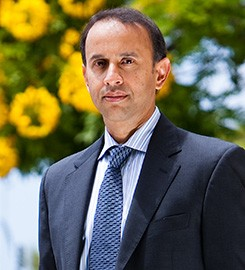
In a recent Journal of Business Ethics paper, Manzur Rahman, PhD, finance professor at the University of San Diego School of Business, compares the roles of different corporate governance systems and argues that there’s no optimal, one-size-fits-all system for all businesses, but merely different emphases on the interests of the firm’s various stakeholders.
History of Corporate Governance
Corporate governance systems are sets of rules that establish the relationships between various members of a corporation, such as shareholders, directors and employees. In a broader view, corporate government systems may include the relationships between suppliers, creditors, customers and the community at large.
“These systems set the stage for how those relationships should work and the strategic directions a corporation might take while accounting for the relative demands of its members,” says Rahman.
There are two main types of corporate governance systems: the shareholder model, prime examples of which are the systems in the U.S. and U.K., and the stakeholder model, such as those in Germany and Japan.
The Anglo-American model largely prioritizes the needs of the shareholders and investors. For example, only shareholders can elect members of the board of directors, and if a corporation has excess cash flow after all expenses are paid, that money will typically go to shareholders. This model is often seen as the result of a more free-market capitalist society.
“In a lot of U.S. and U.K. corporations, the shareholder base is very diffused,” says Rahman. “Shareholders will not have any real say in how a corporation is run when it’s public, so there’s this concern about protecting their interests.”
The stakeholder model, on the other hand, places greater emphasis on the needs of employees and other members of the corporation. For example, in Germany 50 percent of the board is elected by the employees and 50 percent by the shareholders. The stakeholder model is largely observed in more social-market economies.
“The stakeholder theory says, because a corporation is made of many different contributors, there’s a moral obligation to look out for the interest of all these different parties,” says Rahman. For example, in many corporations in Japan workers are granted lifetime employment.
“In this case, you have to negotiate and work with your employees to pursue the corporate strategic direction, so they automatically have a voice,” says Rahman.
Since each corporate governance system prioritizes different values and needs, and was founded on particular sociopolitical and historical factors, comparing the two — or choosing one ideal solution — is a complex and nuanced process.
Why There Is No Ideal Corporate Governance System
Rahman argues that there is no singular, optimal corporate governance system in his paper, “Corporate Governance Systems Diversity: A Coasian Perspective on Stakeholder Rights.” Instead, he posits that certain systems work better for specific industries or types of firms.
“You can’t say the American model works for every single case or the German model works for every single case,” says Rahman. “We argue that the American model is going to work better for industries that require large amounts of risk-capital raised from shareholders, like investment banking, oil and gas, or tech. Whereas the German model rewards industries that benefit from the development of human capital from its employees, like manufacturing and engineering.”
He believes it’s also important to consider how these systems work within the context of each country and sociopolitical climate. “Depending on the type of firm you have, national governance systems have basic rules that would favor certain types of organizations over others,” says Rahman.
Consider Walmart, which employs hundreds of thousands of people in the U.S. and worldwide. Giving those employees governance rights would be much more costly in Germany than in the United States. In fact, Walmart failed terribly when it entered the German market. Also, in just the past few years, the Accountable Capitalism Act and the Reward Work Act were proposed in the U.S. Congress, which would allow employees to select a certain percentage of directors. Neither was passed.
Because of these differences between governance systems and political climates, Rahman expects to see continued corporate governance diversity. “The systems are not going to converge,” he says. “Since different systems promote different types of productivity or creativity, there’s an economic case for why each system can be sustained.” This perspective is known as the Coasian stakeholder theory.
Corporate Governance During COVID-19
When firms are tasked with adapting to sudden and unprecedented events like COVID-19, their responses are informed by their corporate governance systems.
As cities and businesses close down to prevent the spread of the pandemic, U.S. companies see a big reduction in employment because they rely on at-will workers. If there are no customers, there’s no need to call in employees. In Germany and Japan, however, employee contracts and labor laws make it difficult to lay off employees in the short term, so an increase in unemployment is slower, even negligible.
In this situation, the German and Japanese models may have been more effective for maintaining employee relationships. It’s important to remember that U.S. corporations were responding under different government mandates and economic situations, but, of course, their actions were also informed by the Anglo-American view of the firm’s responsibility to its employees.
“The optimum corporate governance system is firm-dependent, based on the nature and character of the industry each firm is in,” says Rahman. “We invite researchers to not look at which system is the best overall, but to see which systems would provide comparative advantages to different types of corporations. Also, the COVID-19 emergency brings into sharp relief how businesses in general might be reacting differently due to national corporate governance practices.”
Embark on Your Business Career
At the University of San Diego School of Business, faculty like professor Rahman prepare students with the skills and knowledge to develop rewarding business careers that can have a global impact.
Learn more about how USD School of Business degree programs can help you embark on your career in business.
Recommended Readings
Hybrid Learning as a Path to Earning a Business Degree
International Business: How to Be a Leader in the Field
What Can You Do with an MBA? 5 Rewarding Paths and Careers in Business
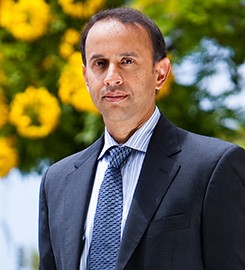 Manzur Rahman is professor of finance at the University of San Diego's Knauss School of Business, where he teaches international finance, corporate finance and corporate governance. He has published in the areas of multinational financial policy, corporate governance, regional economic integration and multinational strategy.