
Ongoing Research
"Understanding the Causes and Consequences of Evictions in the San Diego Region"
Dr. Mike Williams (Political Science), Dr. Jenn Nations (Sociology), Shiara Mateo (Political Science and Sociology), and Sam Hartwig (Political Science)
San Diego County has one of the largest populations of individuals experiencing homelessness in the United States. One of the issues that relate to homelessness is the high cost of housing. The purpose of this research project is to understand eviction court proceedings, and specifically, the experiences of tenants and landlords. Through court observations and interviews, our research analyzes trends in evictions as well as the lived experiences of those who have been involved with the eviction process. NOTE: Phase one of this research was completed in May 2021.
This project was funded by the San Diego County Board of Supervisors.
"Experiences with Law Enforcement and Citations Among San Diego’s Homeless Population"
Dr. Kate DeConinck (Theology & Religious Studies), Dr. Mike Williams (Political Science), Shiara Mateo (Political Science and Sociology), Jill O’Keeffe (Sociology), and Michelle Kamau (Peace and Justice, MA).
In 2019, the National Law Center on Homelessness and Poverty named San Diego as one of many U.S. cities that implement laws, citations, and policing practices to criminalize people experiencing homelessness. Consequently, these have had clear detrimental impacts on homeless individuals as they not only affect their mental and physical health but also create legal barriers that impair their stability and perpetuate poverty and homelessness (see Phase 1 of this research project). This current research study documents the experiences of law enforcement officials who are at the forefront of implementing San Diego’s laws with respect to homelessness. Through interviews and analysis of official records, this study provides an analysis of the dynamics that shape the ways in which law enforcement engage with those experiencing homelessness in San Diego. NOTE: Phase one of this research was completed in May 2021.
This project was funded by the San Diego County Board of Supervisors.
Coming Soon
Dr. Kate DeConinck (Theology & Religious Studies), Sophia Rodriguez (SOLES), Emma Dapkus (Lead Videographer/Photographer), and Kevin Klein (Secondary Videographer/Photographer)
This project examines the role that animals have played in San Diegans' lives during the COVID-19 pandemic with special attention to the role of animals in the lives of persons experiencing homelessness. Our research team collected written testimonies from hundreds of local residents and conducted in-depth oral history interviews with another fourteen individuals. In the process, we have sought to document answers to questions such as: What sorts of experiences have animals helped their humans grapple with over the past two years? As San Diegans work to move forward from COVID-19, how are they imagining or reimagining their relationships with their furry, feathered, or scaled companions? How are local residents thinking about the "humanimal" relationship and our commitments to other people/species today? And, what might a good life look like for pets themselves in the wake of the pandemic? This oral history study is part of the broader Good Life Project that is being conducted by researchers across multiple cities in the United States.
This project was funded by the Center for the Study of Religion and the City at Morgan State University and the Henry Luce Foundation. Additional funds to support the creation of project deliverables were provided by the Urgent Challenges Collective.
Completed Projects
"Understanding the Causes and Consequences of Evictions in the San Diego Region"
Dr. Mike Williams (Political Science), Dr. Jane Friedman (Math), Grace Martinez, Blake Hofstad, Hamdy Masri (Law), Jacquelyn Crane (Architecture), Sabrina Mendoza-Wineteer (Communication Studies)
San Diego County has one of the largest populations of individuals experiencing homelessness in the United States. One of the issues that relate to homelessness is the high cost of housing. The purpose of this research project is to understand the ways in which individuals are evicted -- and/or are threatened with eviction -- and how eviction or the threats of eviction contribute to the likelihood of experiencing homelessness. Through interviewing individuals who have been evicted, those who have been threatened with eviction, and landlords who have evicted individuals, our research analyzes trends in evictions as well as the lived experiences of those who have been involved with the eviction process. NOTE: Phase one of this research was completed in May 2021. Phase two is currently underway.
Infographic: Eviction Cliff in San Diego
The first phase of this project was funded by USD's Urgent Challenges Collective (Spring 2021). The second phase of research is funded by a grant from the San Diego County Board of Supervisors Community Enhancement program (2022).
"Experiences with Law Enforcement and Citations Among San Diego’s Homeless Population"
Dr. Kate DeConinck (Theology & Religious Studies), Dr. Mike Williams (Political Science), Merlynn Watanabe (Think Dignity), Morgan Kern (International Relations and Spanish), Shaylyn Becton (International Relations), Luis Chavez Rodriguez (SOLES)
In 2019, the National Law Center on Homelessness and Poverty named San Diego as one of many U.S. cities that implement laws, citations, and policing practices to criminalize people experiencing homelessness. Consequently, these have had clear detrimental impacts on homeless individuals as they not only affect their mental and physical health but also create legal barriers that impair their stability and perpetuate poverty and homelessness. This research study documents the experiences of homeless San Diegans to understand the impact of these practices and reveal the extent to which law enforcement utilizes citations as a method to control individuals experiencing homelessness. NOTE: Phase one of this research was completed in May 2021. Phase two is currently underway.
Infographic: Policing and Homelessness in the City of San Diego
Interactive Timeline of Criminalization and Homelessness in San Diego
The first phase of this project was funded by USD's Urgent Challenges Collective (Spring 2021). The second phase of research is funded by a grant from the San Diego County Board of Supervisors Community Enhancement program (2022).
"Affordability and Accessibility in San Diego’s Single-Room Occupancy Hotels"
Dr. Jennifer Nations (Sociology), Rebecca Samaha (Housing Program Manager, People Assisting the Homeless), Peggy Peattie (SOLES), Izabella Salinas (Political Science), and Marie-Linh Baseel (Political Science)
A lack of affordable housing is the number one driver of homelessness in the United States, a problem that is especially acute in San Diego. The availability of single-room occupancy hotels (SROs), an inexpensive housing option for low-income renters, is critical for the prevention and reduction of homelessness. The cost of SROs, SRO rental policies, and the physical location of some SROs may complicate access to this form of housing, yet there is currently no agency tracking SRO prices, policies, or location. This study will assess the availability, affordability, policies, and features of San Diego SROs with attention to accessibility for low-income, disabled, and racial minority tenants. NOTE: Phase one of this research was completed in May 2021. Phase two is currently underway.
Myths and Realities for Downtown San Diego’s Low-Income Renters
The first phase of this project was funded by USD's Urgent Challenges Collective (Spring 2021). The second phase of research is funded by a grant from the San Diego County Board of Supervisors Community Enhancement program (2022).
Dr. Kate DeConinck (Theology & Religious Studies), Michael Evans (City College), Zoya Sardashti (Kroc), Michelle Nguyen (Behavioral Neuroscience), and Mikaela Morris (Engineering)
Given the prevalence of death among unsheltered persons in the United States, it is critical to consider how to best support these individuals in the wake of a loss. This qualitative research study investigated the ways in which unhoused San Diegans grieve and engage in mourning. How do individuals cope with death and other forms of loss that they encounter while unsheltered? Is mourning possible in light of the daily stresses and lived realities of homelessness? And, are there any trends in terms of the forms of support or grief processes that have proven effective for our interviewees?
Infographic: Death Among Unhoused Persons
Infographic: How to be Trauma-Informed with Individuals Experiencing Homelessness
This project was funded by USD's Urgent Challenges Collective.
Dr. Mike Williams (Political Science), Dr. Kate DeConinck (Theology and Religious Studies), Dr. Jillian Tullis (Communication Studies), Natasha Skrypek (Undergraduate Researcher), Shelby Little (Undergraduate Researcher), and Molly Feeney (Undergraduate Researcher)
- Comprehensive Research Report (January 2021)
- Toolkit for Volunteers
- Toolkit for Student Organizations
- Religious Perspectives on Homelessness
This first phase of research for this project was funded through a Faculty Interdisciplinary Startup (FIRSt) Grant from the USD Humanities Center. The second phase of the project was funded through a research grant from the Lucky Duck Foundation.
Dr. Aarti Ivanic (School of Business), Julie Mai (Graduate Researcher), and Brianna Izaguirre (Affiliated Researcher)
This first phase of research for this project was funded through a research grant from the Urgent Challenges Collective. The second phase of the project was funded through a research grant from Tom and Karen Mulvaney.
Dr. Mike Williams (Political Science), Dr. Kate DeConinck (Theology and Religious Studies), Dr. Mounah Abdel-Samad (SDSU), Dr. Brian Adams (SDSU), Rebecca Riddle (SDSU, Graduate Researcher), and Vicenta Martinez Govea (USD, Undergraduate Researcher)
- Research Report (December 2020)
This project was funded through a research grant from the Lucky Duck Foundation.
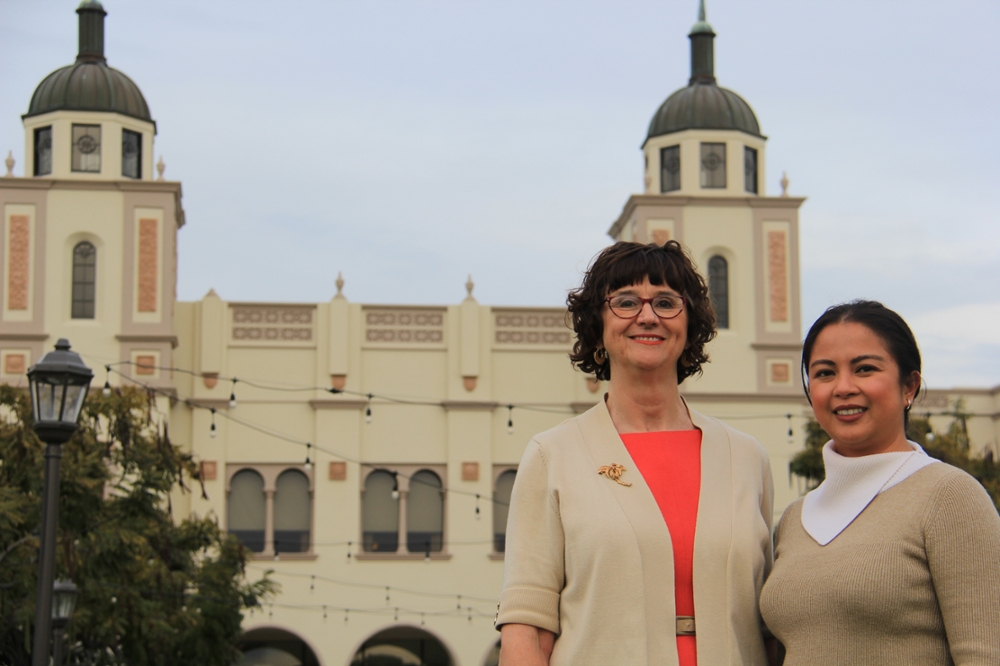
Dr. Mary Barger (left) & Kristine Mendoza, Graduate Researcher (right) from the Hahn School of Nursing and Health Science.
To what extent do community support and the use of community supportive elements help individuals stay housed? The factors that lead persons and families to housing instability, including homelessness, are complex and occur at multiple levels from the societal to the individual. This research project, conducted in collaboration with two local non-profit organizations, analyzes the impact of social support and the degree of social embeddedness that individuals have in their social support networks. Through surveys and interviews with local individuals, this project seeks to identify aspects of re-housing programs that are particularly helpful or to identify services or needs not currently being offered.
NOTE: This project was funded by USD's Urgent Challenges Collective. Research was suspended due to the COVID-19 pandemic.
Community-Based Action Research
The Collective funds and supports engaged, interdisciplinary, and actionable research related to homelessness and housing insecurity in San Diego. Through analyzing the realities of these issues, we lay the foundation for systemic and sustainable change. Since its inception in 2019, the Urgent Challenges Collective has supported twelve research projects, including 9 faculty members, 25 undergraduate and graduate student researchers, and 10 community organizations. Research teams consisted of faculty and students from each of the seven major schools at USD as well as 11 undergraduate disciplines. Our research projects are designed in collaboration with community partners and we publish open access, public-facing reports, and recommendations.