
USD biology professor is part of a global collaboration to study biodiversity in dry rivers
Meet Kate Boersma, PhD, who is an Associate Professor of Biology in the College of Arts and Sciences. Prof. Boersma recently published a paper in Nature Communications in collaboration with 82 other co-authors from around the globe.
Let’s take a few minutes to learn more about Prof. Boersma and this fascinating research.
How would you describe your recently published research to a 5 year old?
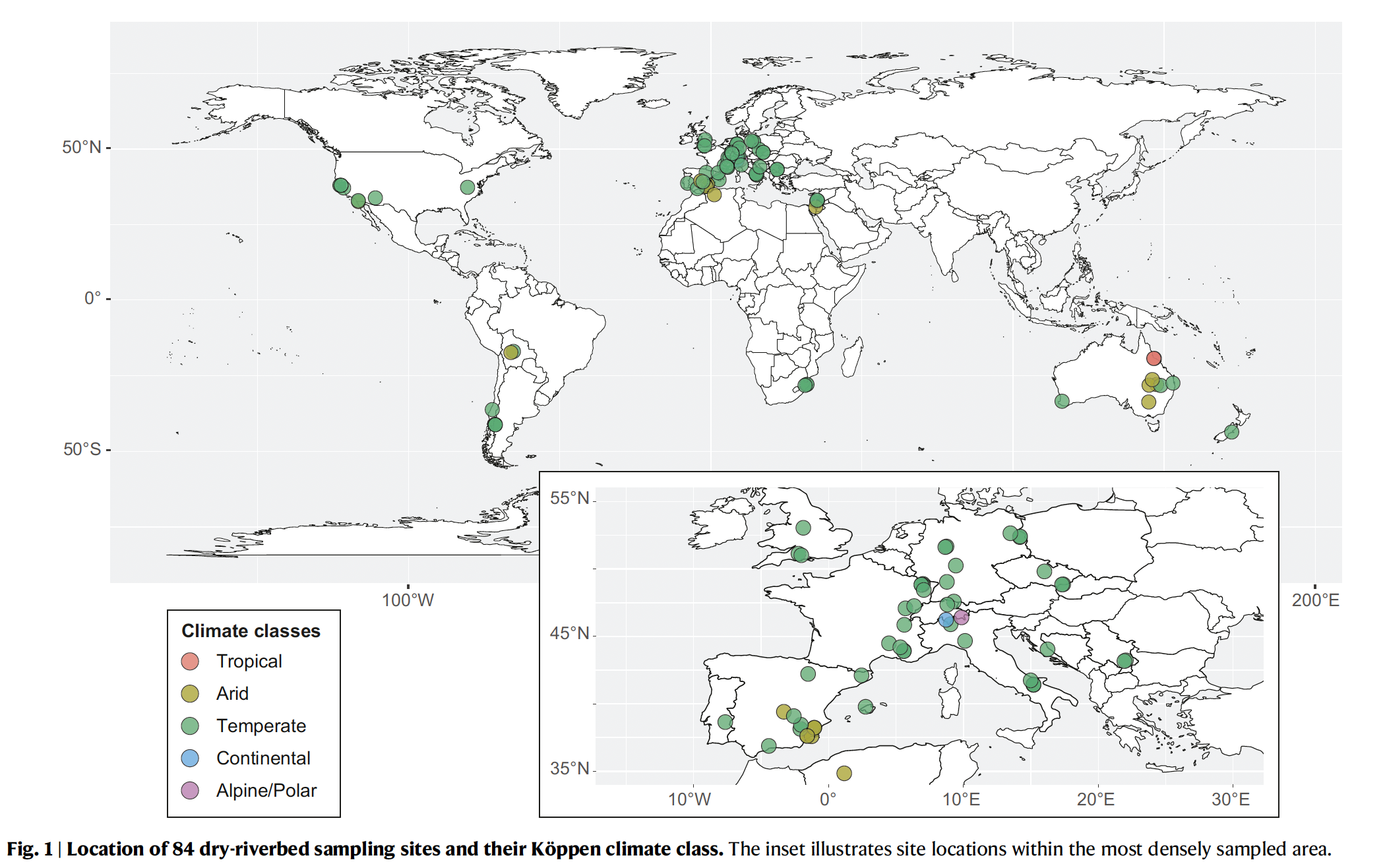
Did you know that many streams and rivers actually dry up for parts of the year? Although they don't look like normal rivers, these dry rivers are still very important for life on earth. In this study, scientists wanted to figure out which species live in rivers when they are dry. A scientific method called DNA metabarcoding lets scientists collect dry river sediment and count which species live there, including insects, plants, and even very small organisms like bacteria, fungi, algae, and tiny nematode worms. We collected sand, leaves, and soil from 84 dry streams in 19 different countries and looked at the DNA to figure out which species live in which streams. We found over 3,800 different types of living things! Most of these were bacteria, fungi, and protozoa. We found that most species decided where to live because of temperature and rainfall, but bacteria cared more about the amount of nutrients in the soil. Tough bacteria and fungi (called oligotrophs) lived in places with few nutrients where the river was dry for a long time, and other organisms (copiotrophs) were pickier and could only live in rivers that were wet for longer and had more nutrients. One of the most surprising things we found was that certain groups of organisms often lived together. We thought that the species would be more similar between streams when they had the same environment (hot & dry vs cool & wet) or when the streams were closer together (so that the species could move from one stream to the other). But we were wrong - species seemed to pick where they lived based on the other species living there, which means that they probably depend on each other for food or shelter. We hope that this information will help people realize how important dry rivers are for life on earth so that we will spend more time and money protecting these important habitats.
OMG explaining biodiversity to a 5 year old makes my brain hurt!!!!
How did you get interested in this topic?
It was an accident. I studied marine fisheries for my masters. I intended to get a phd studying how fish use marine reserves as safe habitats, even if they are small and fragmented. Then I went to a talk by a now-friend and colleague, describing how streams in the desert contract during the summer to become small, bathtub-sized bedrock pools surrounded by dry sediment, and then the same streams become flowing, connected streams again during the wet season. I realized that this was a much easier way for me to study how ecosystem connectivity and refuge habitats affect biodiversity than in the ocean. I started my PhD program without even seeing a desert. Luckily, I fell in love with arid environments, and now I can't imagine being a marine ecologist.
Tell us a bit about your co-authors and how you collaborated with them.
I have an incredible international network of collaborators studying intermittent rivers and ephemeral streams (IRES). The co-authors on this paper come from 19 countries on 4 continents! This paper was from our "1000 Intermittent Rivers Project", sponsored by an EU grant, which led to an NSF-funded DryRivers Research Coordination Network that ended last year. I know almost all of the 82 coauthors personally. We have 11 papers total, with one additional paper accepted for publication last week.
Collaborations like this one have given me so much personal fulfillment! I couldn't imagine research without them.
What's one challenge you faced in this research? How did you overcome it?
Communication! Any project involving collaborators in Australasia and in Europe means that someone is going to have to meet online in their pajamas. That said, Zoom is the reason that these projects exist (and the reason that the transition to pandemic teaching was pretty smooth for me). Additionally, this team had a very clear authorship policy and well-designed organizational structure, so once we had norms in place, things flowed fairly smoothly. We are actually currently drafting a paper on how to coordinate large international research teams to hopefully help other groups overcome some of the same challenges.
What did you enjoy most about working on this project? Why?
My co-authors are really great people! The nice thing about researching at USD is that I do not need publications to keep my job. I have plenty. So any collaborative research that I do is because I genuinely want to work with my collaborators. We meet at international conferences and have working group meetings periodically when funding is available, and it is enjoyable every time.
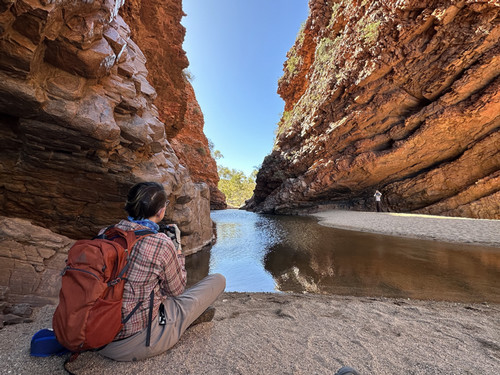
Oh, and a side bonus was a three week trip to visit freshwater oases in the Australian outback during my sabbatical. I would never have made those connections without large collaborative projects like this one.
What impact do you envision this work will have on society?
We are finally starting to understand the importance of intermittent rivers and ephemeral streams for both terrestrial and aquatic ecosystems. These data have been used directly to inform policy. Members of this team submitted a comment to the proposed revisions to the Clean Water Act to reduce the number of temporary streams included under its purview (which passed despite our comment). Similar contributions to policy are underway in Europe (so far much more successfully than here).
What are you working on now?
This same team is writing a proposal for a new project examining how intermittent rivers and ephemeral streams fit into earth's biomes and how we can use the biome concept to advance temporary stream research. Meanwhile, I'm personally writing up several papers on USD student projects in local deserts.
We look forward to hearing more about these exciting projects!