


USD professors and undergraduate student reveal intersections between politics, religion and the COVID-19 vaccine
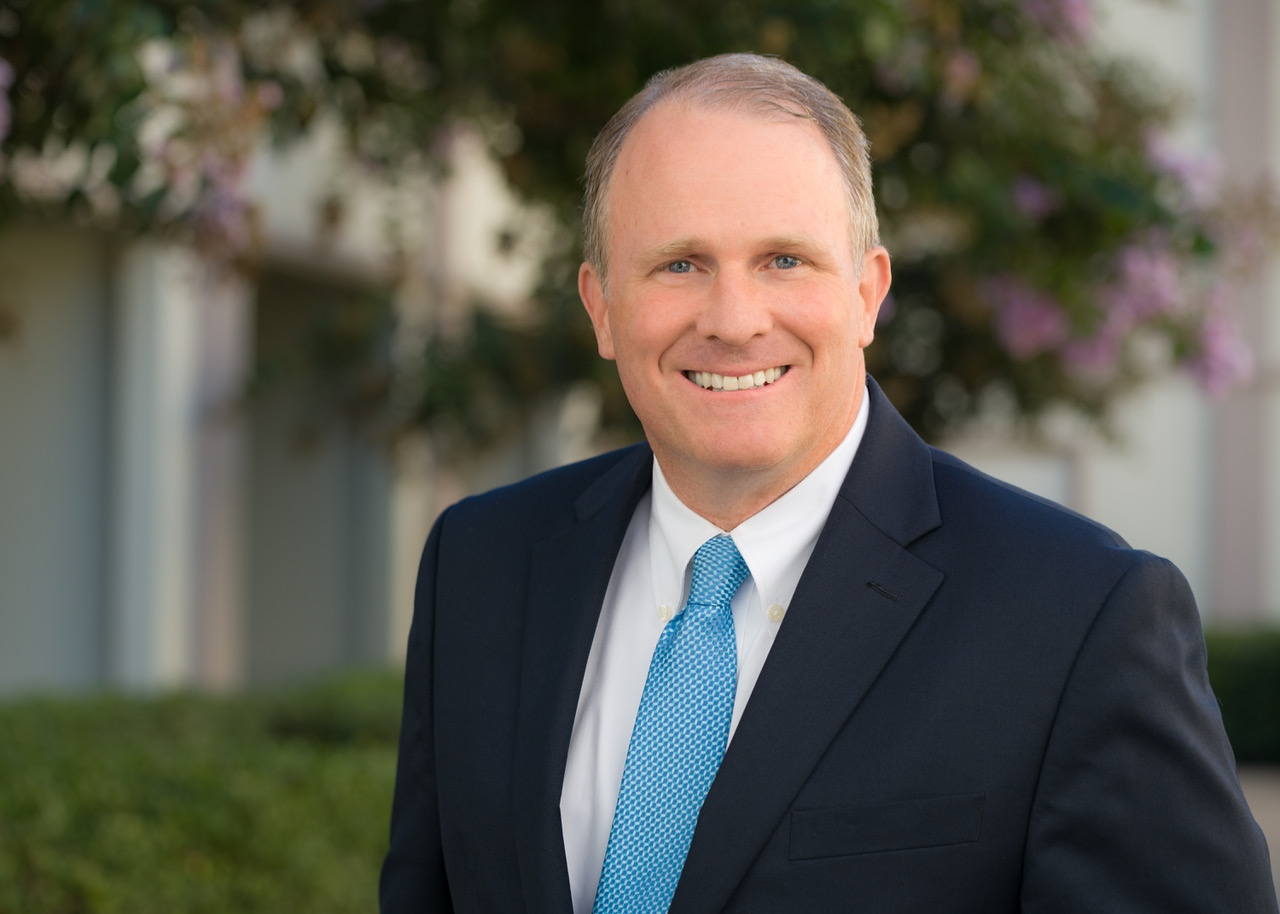
Meet Stephen Conroy, Professor of Economics in the Knauss School of Business. Prof. Conroy recently published a paper with Associate Professor of Economics, Adriana Vamosiu, and former USD undergraduate Declan Carroll in Health Economics Review on The importance of political and religious affiliation in explaining county-level COVID-19 Vaccine Hesitancy.
Let’s take a few minutes to learn more about Prof. Conroy, his team, and their fascinating research.
How would you describe your recently published research to a 5 year old?
In this paper, we investigate the role of several factors, including political affiliation, religion, education and demographics to determine what explains vaccination hesitancy for the COVID-19 vaccine at the county level in the United States. Our key findings are that political affiliation remains the strongest predictor, while the county’s percent Catholic and Evangelical are also very strong predictors. We find that many other factors explain COVID-19 vaccination rates, such as the county’s percent male, median age, percent White, median household income, percent self-employed, and the percent with a college or higher education degree. If there is a way to combat vaccine hesitancy in the future it is likely through thoughtful civic and religious leadership, clear messaging and education.
How did you get interested in this topic?
Former USD undergraduate student, Declan Carroll, and I discussed this topic when he was considering various possible senior and Honors thesis paper topics.
Tell us a bit about your co-authors and how you collaborated with them
Declan Carroll wrote the initial draft of this paper as part of his senior/Honors thesis at USD. After his final semester, we discussed whether he wanted me to mentor him on a sole-authored paper or collaborate on the paper together as co-authors. He was clear from the beginning that he wanted to work on it together. We updated the data set and reworked some of the text to make it work as a stand-alone journal article and submitted it for publication at Health Economics Review. After a really challenging revise and resubmit (R&R) order from the journal, we decided to ask Associate Professor of Economics, Dr. Adriana Vamosiu, to join us and assist us with the R&R. In the end, we all played different roles, but each one was critically important in getting the paper over the publication "finish line."
What's one challenge you faced in this research? How did you overcome it?
We wanted to use the most recent Religion Census data for the paper, i.e., from 2020, rather than the data from 2010, which is what Declan used in his original paper. We decided to wait until those data were available to complete the final version of the paper which we submitted to the journal. But when we received those new data, they were not in a very user-friendly format so those data had to be almost entirely re-coded to sync up to our data set. We asked Adriana Vamosiu to help us with that process and she was very efficient at solving what was otherwise a pretty difficult challenge.
What did you enjoy most about working on this project? Why?
I like to say that research is all about relationships! People find that funny when I say it but I really mean it. I have only published one paper as a sole-authored paper mostly because I enjoy working together with people on research projects. This one was particularly enjoyable because my coauthors, Declan and Adriana, are not only bright and hard-working but also light-hearted and energetic! We had a very good "vibe" working together on the Revise and Resubmit for this paper. In a strange way, I was both relieved and disappointed when it was over!
What impact do you envision this work will have on society?
As we state in the paper, there was this general consensus in the early stages of the COVID-19 pandemic that as soon as a vaccine was made available, people would line up by the millions to get jabbed. And yet, as the vaccines neared final FDA approval, it became clear that there were actually large groups of people who were not going to get vaccinated. I think our work peels back the covering on this issue and reveals not only the explanations for COVID-19 vaccination hesitancy but also ways to increase vaccination rates for the next pandemic--which I hope never actually occurs.
According to our analysis, there were several consistent factors that were associated with higher vaccine hesitancy, including the percentage of a county who are Republican, Evangelical Christian, and self-employed. Conversely, having a higher percentage Catholic and higher-educated population was associated with higher vaccination rates. Even though this paper was focused on the COVID-19 pandemic, these traits may also explain vaccine hesitancy, writ large, and predict which factors may matter for future pandemics.
If our results and interpretations are generalizable to the next pandemic, we should encourage church and civic leaders to have clear, consistent messaging around the vaccines and other public health measures. We should also promote education as a particularly effective "antidote" to ignorance around epidemiology and science in general. Within this framework, I would recommend not only science education and public health but also a return to "civics" as an important subject in high school. Economists should emphasize "externalities" in their discussions as a way of helping students understand that actions can have consequences beyond the immediate economic actors.
What are you working on now?
I am currently working on a paper that investigates the role of patents in explaining regional economic growth. The paper is joint with Kelli Wood (USD '24) and Associate Professor of Economics, Adriana Vamosiu. The research question we explore in that paper is: Are patents an "engine of economic growth"? If so, why or why not? Our work suggests that patents may be important engines of regional economic growth. One commonality of this paper (other than the two USD faculty who are involved!) is that we use a similar empirical approach as the recently-published COVID-19 paper, using county-level data.
Anything else you want to share?
My paper with Declan Carroll is the fourth peer-reviewed journal article published with a total of five former undergraduate USD students. This is something I very much enjoy doing and I think it is also a great opportunity for our students to participate in scholarship at the highest levels.
'I hope undergraduate research is something that more and more of my colleagues will embrace as an important benefit not only for students but also for faculty.'
We look forward to hearing more from Profs. Conroy and Vamosiu and their undergraduate co-authors!