
USD professors bridge disciplinary perspectives to discover the power of memory-making with geological materials
Meet Diane Marie Keeling, Professor of Communication, and Bethany O'Shea, Professor of Environmental and Ocean Sciences, in the College of Arts & Sciences. Profs. Keeling and O’Shea recently published a paper in Environmental Communication on Conceptualizing Black Humanity Through Geopoetic Intimacy and Resistance.
Let’s take a few minutes to learn more about Profs. Keeling and O’Shea and their fascinating research!
How would you describe your recently published research to a 5 year old?
In the US, white people killed Black people who wanted to be free, to be treated equal and to build a community for themselves. White people wanted to be more powerful than the Black people and use them to make money, so they would sometimes kill some of them to scare their friends and family. This was wrong and created a lot of pain. It's important that we remember and honor the lives of the people who were killed. It's also important to help the communities who experienced this violence heal. Our research is about how people can use rocks to heal from this horrible history.
How did you get interested in this topic?
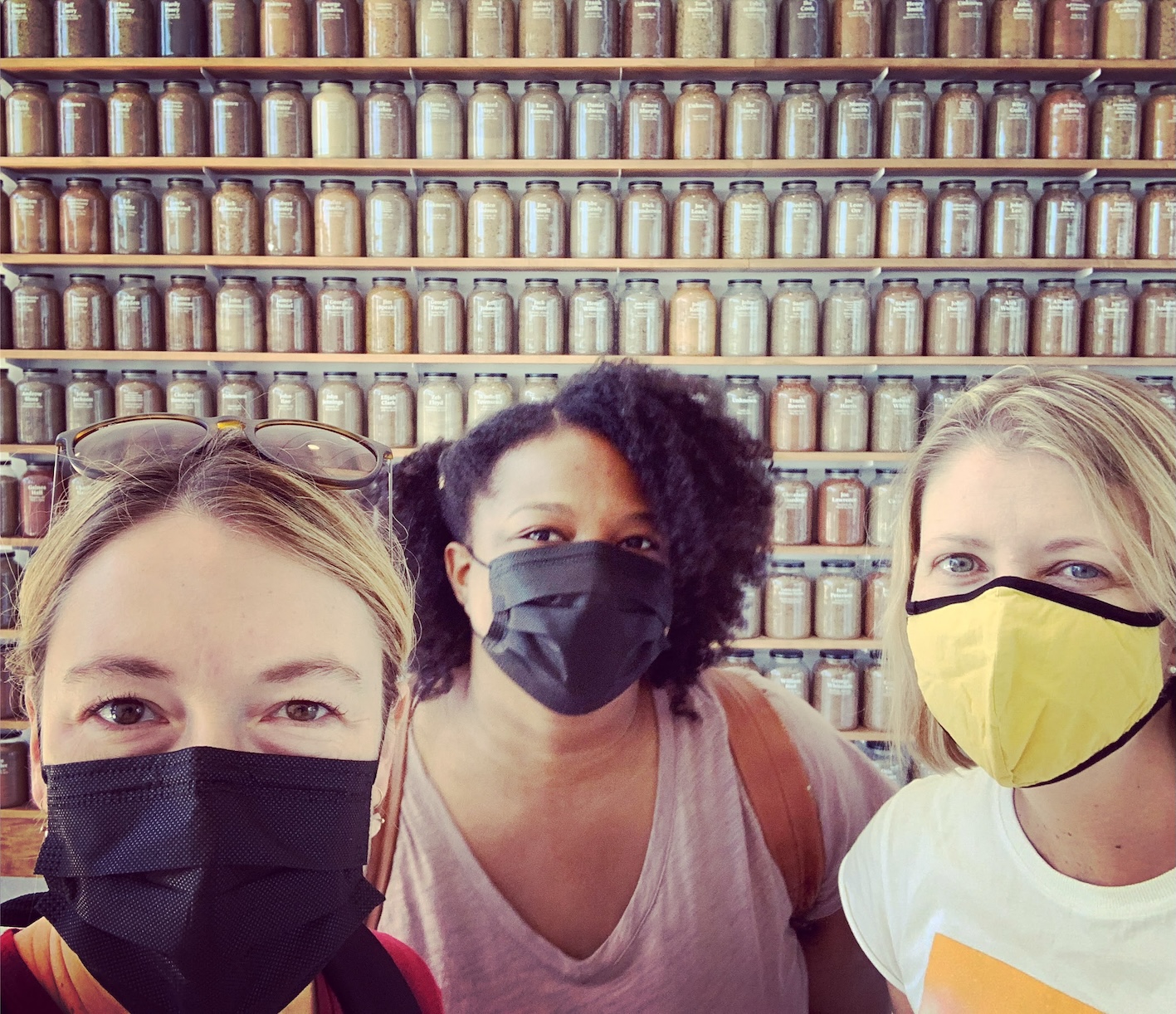
We were talking about our research with each other and realized how geology is rhetorical. We took both our passions and combined them. Diane recently met our co-author Ariel Seay-Howard at a Rhetoric Society of America Summer Institute. Ariel was beginning her dissertation and studying public memory about plantations and racial violence. At the institute, she discussed learning about a soil collection at the Legacy Museum in Birmingham, AL. The collection was composed of soil collected from places across the US where lynching occurred. Diane was organizing a panel for an upcoming conference on the topic of rhetoric and rocks, which Diane and Beth were going to present on. Diane invited Ariel to present on her emerging research on the soil collection memorial. However, after further discussing her project, she was interested in collaborating with Beth and Diane. The soil collection memorial Ariel wanted to study became the case study for Diane and Beth's earlier discussions about geology and rhetoric. Together, we visited Birmingham, AL to view the soil collection and learned many other ways that geology was strategically used in the memorialization of lynching victims.
Tell us a bit about your co-authors and how you collaborated with them
We collaborated with Ariel Seay-Howard who is Assistant Professor of Communication, Race and Rhetoric at North Carolina State University. She specializes in racial violence. When we first started collaborating, Ariel was a graduate candidate at Wayne State University. When we first started collaborating we would set an hour meeting on zoom each week to have conversations and discuss our research.
What's one challenge you faced in this research? How did you overcome it?
Diane was invited to participate in a special issue at a top rhetoric journal in her field. The topic was "Rhetoric and/of the Common(s)." She asked the group if we thought our research could fit this special issue topic. We agreed that we could tailor the argument towards this theme. Beth says that the language of rhetoric was new to her so during conversations she felt that she was always asking for clarification on terms that were new, like 'geopoetics'. She remembers asking Diane to describe the commons and watched as Diane verbally walked through a definition followed by brainstorming of how our work fit with the geologic commons and it ended up being a wonderful Q&A session that essentially helped us form our thesis. However, consistently the editors and reviewers suggested that while the framing of the essay fit the topic of the commons, the analysis did not. During the final round of revisions, we decided to take the analysis in a different direction, but it was a completely different paper. We decided to take the original analysis and publish it with a different journal - so we ended up writing two papers together. This project is the second one.
What did you enjoy most about working on this project? Why?
We had a lot of fun together during our trip to Birmingham, AL. In addition to visiting the National Memorial for Peace & Justice, Legacy Museum, and learning about the history of racial violence in the city of Birmingham, AL, we also went to a city festival, fish cookout, and concert. We rented a house together and stayed in town, shared meals and had conversations about rhetoric and geology as we walked throughout the city. We had light bulb moments when we least expected it simply by being in such a historical location.
What impact do you envision this work will have on society?
We hope that the research will amplify the importance of remembering our violent racist past, honoring victims of racial violence, and the way geology can contribute to the healing process.
What are you working on now?
Diane is writing with Chad Kishimoto, Associate Professor in USD’s Physics and Biophysics Department, on the rhetorical challenge of microscale description for particle physicists. Physicists have to describe their observations of phenomena that exist at incomprehensible scales of experience.
Beth is examining the connection between water pollution & health at the Salton Sea, where a shrinking lake is exposing agriculturally polluted sediments that present an air quality threat in a region that is earmarked for future lithium development.
We look forward to hearing more from Profs. Keeling and O’Shea!