The mission of the Institute for Law and Philosophy is to advance knowledge on legal topics of philosophical significance, particularly those implicating moral, political and religious philosophical issues.
In furtherance of its mission, the Institute endeavors:
- to educate law school faculty and students on the philosophical implications of various legal topics by introducing them to relevant literature and arguments and exposing them to major international scholars working on those topics.
- to forge bonds between major international scholars and the wealth of talent on the USD law faculty and to acquaint others with the rich tradition of high-level intellectual exchange that characterizes the School of Law.
- to supply conference papers of major significance written by internationally known scholars to USD's San Diego Law Review and Journal of Contemporary Legal Issues.
Leadership
Executive Directors
Directors
Harriet Baber
Department of Philosophy, USD
Saba Bazargan
Assistant Professor of Philosophy, UC San Diego
Abraham Bell
Professor of Law, USD
Laurence Claus
Professor of Law, USD
Donald Dripps
Professor of Law, USD
Miranda Perry Fleischer
Professor of Law, USD
Dov Fox
Professor of Law, USD
Dana Kay Nelkin
Department of Philosophy, UC San Diego
Samuel C. Rickless
Department of Philosophy, UC San Diego
Connie Rosati
Department of Philosophy, University of Texas
Manuel Vargas
Professor of Philosophy
Chris Wonnell
Professor of Law, USD
A Principled Constitution? Four Skeptical Views
By: Steven D. Smith, Larry Alexander, James Allen, and Maimon Schwarzschild
Is the United States Constitution the embodiment of certain principles? The four authors of this book for a variety of reasons, and with somewhat different emphases, believe the answer is no. Those who authored the Constitution no doubt all believed in liberty, equality, and, with caveats, republican self-government values, or if you will, principles. But they had different conceptions of those principles and what those principles entailed for constituting a government. Although the Constitution they created reflected, in some sense, their principles, the Constitution itself was a specific list of do’s and don’ts that its creators hoped would gain the allegiance of the newly independent and sovereign states. And, for somewhat different reasons, the authors of this book believe that was a good thing.
Programs
Roundtables
The Institute for Law and Philosophy hosts roundtable meetings of 12 to 18 scholars to discuss a particular topic of legal-philosophical interest. Classic readings on the topic are assigned in advance. Roundtables deepen everyone's understanding of the topic and its implications, with the goal of enriching future teaching and scholarship. Past roundtable topics include the tradeoff between welfare and rights; freedom of expression; the nature of rights; hate crime legislation; the moral status of animals, fetuses and infants; moral luck; and the legal treatment of religion and religious arguments.
Conferences
The Institute for Law and Philosophy hosts conferences at which participants present original papers on a legal-philosophical topic. Papers are typically published in one of USD's scholarly journals, the San Diego Law Review or the Journal of Contemporary Legal Issues. Unlike roundtables, which are intimate and have a limited audience, conferences are open to students, faculty, members of the bench and bar, and interested members of the public. The Institute has also sponsored conferences on legal transitions (how law should respond when changes in the laws produce windfalls and wipeouts), on the theory underlying compensatory damages, and on the theory of legal interpretation.
Public Lectures
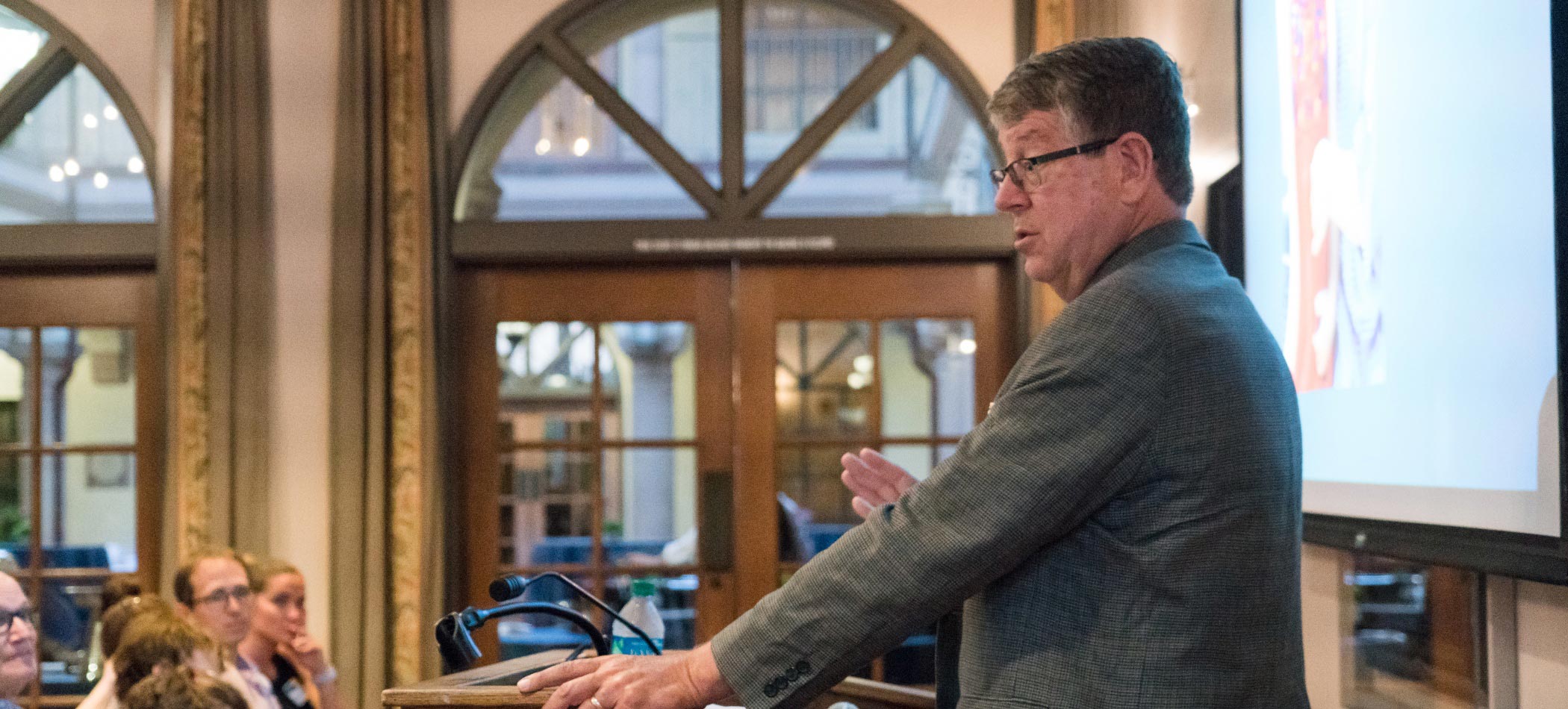
Lectures at the Institute for Law and Philosophy feature a noted speaker on a legal-philosophical topic and are open to the general public. The Institute has previously held public lectures by prominent academics on military intervention in other nations for humanitarian reasons, on the role of moral values in higher education, and on ethics in the adversary system.
Public Debates
The Institute for Law and Philosophy hosts debates between two or more prominent figures on a topic of legal-philosophical interest that are open to the general public. Previous debates have explored the relation between morality and religion and have probed issues at the intersection of neuroscience and the law.