
October 2026
Interpreting our Role in Artificial Intelligence Using the Pope’s Encyclical
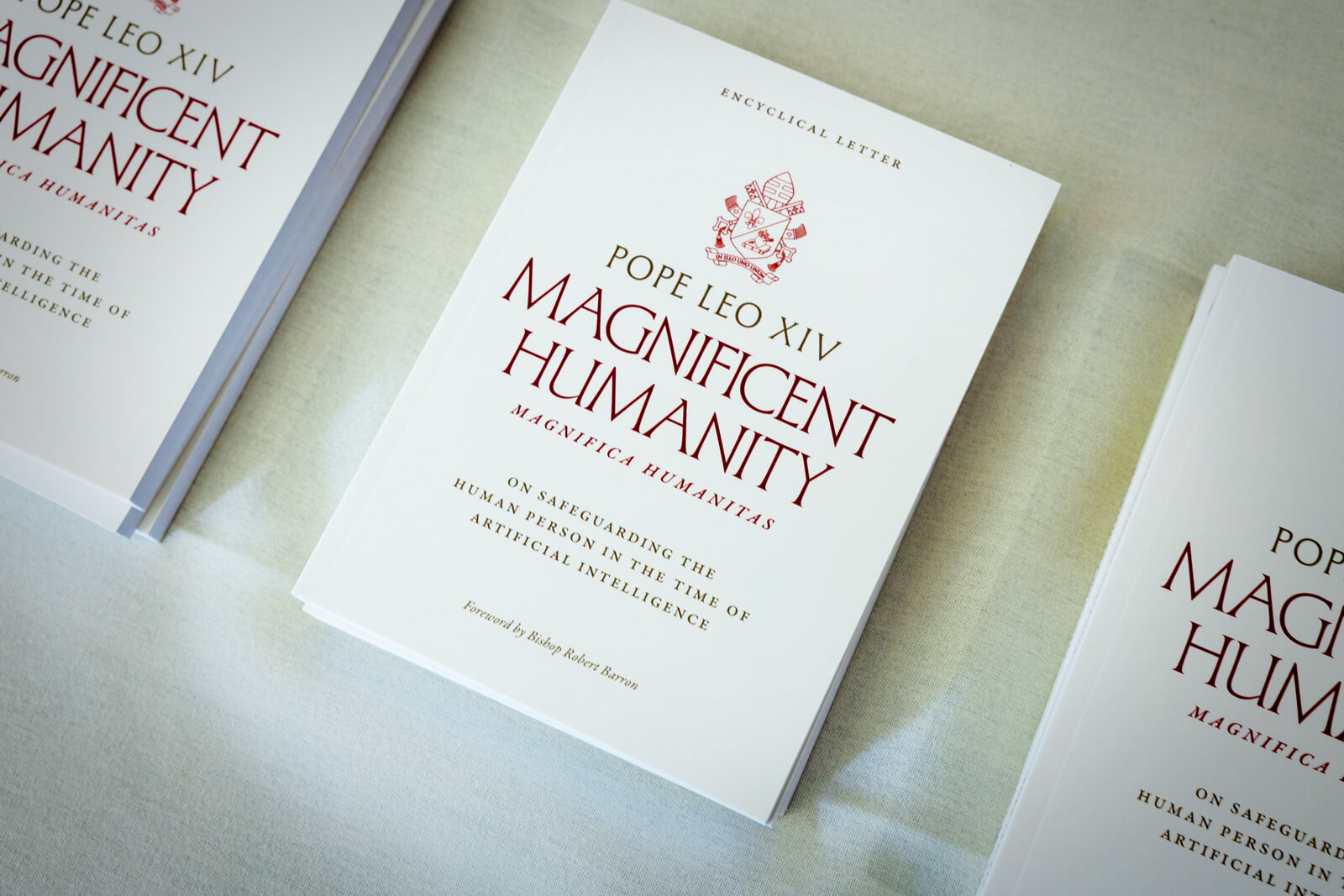
In May, Pope Leo XIV released his encyclical Magnifica Humanitas focused on “safeguarding the human person in the time of artificial intelligence.” As a contemporary Catholic university, the Pope’s messages are an essential guide for how we lead our campus community. With so much information to digest, I wanted to make sure I understood all of the elements of his piece and how it would direct our university’s approach to artificial intelligence.
So, for the first time in many years, I went back to school to expand my knowledge on AI. I enrolled in a 3-week online class about the Ethics of AI at the London School of Economics where I was connected with students from across the world – from China to the Middle East – all with the same mission: to understand the ethical implications of AI in our respective roles.
The only problem was some of the classes were live - and in London time – so I was taking my class from 11 p.m. - 1 a.m.! Let’s say, my summer hours were a bit unusual for a few weeks.
Despite the time zone difference, the classes introduced me to new insights on AI and allowed me to start seeing one clear picture – what really matters through these new technological advancements is human connection and also a liberal arts education. And, it had me reflecting on the fact that at USD, we’re already prioritizing both of those.
The people of USD are at the center of everything we do. From the professors who help educate the next generation, to the students who take on humanity’s urgent challenges through service projects or new initiatives, I know that our community makes a real difference. Students at USD get a true interdisciplinary education that challenges them to think across boundaries – allowing science-focused students to take classes in the arts or communication, making them not only a better scientist in the future but one that can communicate their research more effectively with their communities.
”The people of USD are at the center of everything we do. From the professors who help educate the next generation, to the students who take on humanity’s urgent challenges through service projects or new initiatives, I know that our community makes a real difference.”
While AI may be changing day-by-day, what I’m certain of is that USD has the formula to empower our students to take on humanity’s challenges and be adaptable and flexible, no matter how technology evolves. When students graduate, my hope is they’ll understand the importance of being an effective communicator, be able to conquer difficult mathematical questions, learn how to work collaboratively and make new connections and, most importantly, be critical thinkers who know what questions to ask – all without the help of AI.
In the encyclical, Pope Leo XIV discusses the “central” role of education in AI. He says, in part, “schools are not called to follow the pace of the digital world, but to offer that which the digital sphere by itself cannot provide, namely a shared time for learning and developing trustworthy relationships.” At USD, we have been committed to providing this type of education to our students for more than 75 years and will continue to follow our mission and values to make this a reality for decades to come – no matter what technology arises next.
If you’re curious about how we’re thinking about AI at USD, I encourage you to check out our approach to AI.
Jim’s Quick Bits
The book I am reading:
“When Einstein walked with Gödel: Excursions to the Edge of Thought” by Jim Holt
What I am listening to now:
Keb Mo’s new album: The Breakdown - favorite song off the album Yesterdays
Best thing about fall:
Cooling temperatures and Pumpkin Spice everything