
Using Metaphors to Promote Professional Skepticism and Reduce Fraud Risk

A skeptical mindset is essential to conducting high quality financial statement audits. Unfortunately, professional auditors don’t always approach their tasks with a sufficiently questioning and critical frame of mind. The results can be disastrous for investors, clients and the audit firms themselves.
The Enron scandal, which destroyed the company and brought down accounting firm Arthur Andersen, is perhaps the most glaring example of a massive accounting fraud and audit failure. In the aftermath of Enron and other big accounting scandals, audit firms and regulators, including the Public Company Accounting Oversight Board (PCAOB), are looking for new ways to promote professional skepticism. But how? Simply reminding auditors to be skeptical isn’t enough, and traditional approaches, such as checklists, often fail to produce the desired effect.
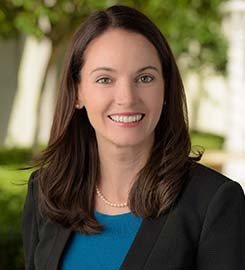
Promoting professional skepticism is a focus of Dr. Mary Durkin’s academic research. Durkin, an assistant professor of accounting at the University of San Diego’s Knauss School of Business, licensed CPA and former auditor at Deloitte & Touche, studies auditor judgment and decision-making.
Borrowing from the field of psychological research, Durkin and her co-authors conducted an experiment involving auditors from two Big Four accounting firms. Their paper, “Can Simple Metaphors Be Used as Decision Aids to Promote Professional Skepticism?,” published in spring 2020 in the American Accounting Association’s Journal of Information Systems, suggests that something as simple as reading metaphors embedded in short stories before conducting an audit task can activate skeptical judgments among auditors.
Testing the Effect of Reading Simple Metaphors
To be effective, auditors must be skeptical of their clients as well as their own ability to detect fraud. Experienced auditors, in particular, may become overconfident and fail to pick up on warning signs in financial documents.
To test their hypothesis that metaphors — in the form of short stories completely unrelated to auditing — can promote auditor skepticism and influence auditor judgments, Durkin had 99 senior auditors from two Big Four firms read two types of metaphors:
- A client-skeptical metaphor told the story of a deceitful car dealer engaging in self-serving behavior, including lying to customers about the condition of a car.
- A self-skeptical metaphor described a senior physician warning a group of younger doctors of the danger of becoming overconfident in their own ability to detect serious viral infections, thereby putting patients at risk.
After reading one of these two brief metaphorical passages — or no passage at all in the case of the control group — the participants were asked to perform audit tasks. The study found that, relative to the control group, the auditors who read the client-skeptical metaphor were more inclined to question the reliability of evidence and the honesty of the client. The self-skeptical metaphor readers expressed concern about their own ability to detect problems and errors and assessed higher levels of fraud risk than the control group.
Both metaphors were shown to increase auditor skepticism and promote the appropriate application of professional skepticism during the auditors’ judgment process, suggesting that metaphorical priming can be an efficient and valuable tool for improving audit quality.
How can a subtle intervention have such a powerful influence on its outcome? The answer lies in the power of metaphorical priming.
The Power of Metaphorical Priming
The power of metaphors lies in their ability to shape our thinking and influence how we view the world. Metaphors are effective at influencing our behavior because they can unconsciously activate complex knowledge structures that guide the search for and analysis of evidence.
Building on psychological research on the power of metaphorical priming, Durkin and her co-authors found that in an audit setting metaphors can override even strongly held opinions and beliefs — such as overconfidence in one’s own ability to detect fraud — and “shift individuals’ judgment processes without the need for extensive training and without significantly increasing the cognitive demands placed upon decision-makers.”
The ability of metaphorical priming to effectively and efficiently produce more client- and self-skeptical auditors without the need for extra training or making additional time demands on staff is potentially welcome news for audit practitioners, who may already be overburdened. While the study’s findings are promising, limitations include the need for further research into the persistence of the effects of metaphorical priming.
Research Implications for the Professional Audit Community
Following a spate of high-profile accounting scandals in the early 2000s, audit practitioners, government regulators and the financial markets have focused on the lack of auditor independence and skepticism toward clients, while less attention has been paid to promoting self-skepticism among auditors.
Durkin’s paper is one of only a few to examine the overconfidence bias among professional auditors. Her ongoing research on auditor judgment and decision-making, and the effect of communication modes between auditors and clients, provides new insight into the importance of auditor self-skepticism.
As her study shows, both types of skepticism are activated by reading metaphors. As such, metaphorical priming has the potential to supplement or replace traditional decision aids such as checklists and should be considered another tool in the toolkit for promoting high-quality audits and preventing future audit failures like the Enron scandal that destroyed Arthur Andersen.
Earn a Bachelor’s or Master’s Degree in Accounting from the University of San Diego Knauss School of Business
Learn more about assistant professor of accounting Dr. Mary Durkin’s experimental approach to research and how a master’s degree in accounting from the University of San Diego Knauss School of Business can prepare students to pursue rewarding careers as accountants and auditors.
Sources:
Journal of Information Systems, “Can Simple Metaphors Be Used as Decision Aids to Promote Professional Skepticism?”
 Mary Durkin is an assistant professor of accountancy at the University of San Diego's Knauss School of Business. Prior to completing her PhD in accountancy at Bentley University, she received her bachelor’s degree from the University of Connecticut and went on to work at Deloitte & Touche in the firm’s assurance practice.