At USD, we recognize the transformative power of studying abroad, not only in expanding academic horizons but also in shaping a more sustainable future. The study abroad office encourages students to engage with diverse cultures while embracing sustainable practices every step of the way. Whether you are in the process of selecting a program, preparing to go abroad, or are currently abroad, there are many things you can do to study abroad responsibly and more sustainability.
Research Sustainable Programs: Look for study abroad programs that prioritize environmental and social sustainability in their curriculum and operations.
Consider Program Location: Choose destinations closer to home or with accessible transportation options to minimize carbon emissions from travel.
Opt for Longer Duration: Select programs that offer longer durations to reduce the frequency of international flights and maximize your immersion experience.
Choose Homestays: Consider living with host families to reduce your environmental impact by sharing resources and immersing yourself in local culture.
Support Community Initiatives: Look for opportunities to contribute to community-led projects that have positive social or environmental impacts, such as volunteering with local conservation efforts or participating in sustainable development projects.
Pack Light: Bring only essential items to minimize luggage weight and reduce fuel consumption during transportation.
Use Reusable Items: Invest in reusable water bottles, utensils, and shopping bags to reduce single-use plastic waste both at home and abroad. Water purifiers and filters can be used in areas with water quality concerns.
Choose Eco-Friendly Products: Prioritize environmentally friendly toiletries, cleaning products, and personal care items to minimize your environmental footprint.
Digitize Documents: Opt for digital copies of travel documents, maps, and guides to reduce paper waste and streamline your travel preparations.This is as simple as taking a picture of your documents.
Offset Carbon Footprint: Consider purchasing carbon offsets to compensate for the emissions generated by your travel and activities abroad. We recommend Atmosfair. Other options to consider include Native, Cool Effect, Terrapass, and Offset Network.
Eco-Friendly Flights: When possible, purchase direct flights (i.e. less emissions) and research which airlines are working to limit their carbon footprint.
Explore Locally: Consider spending weekends and breaks exploring your host city and country rather than destinations that require air travel.
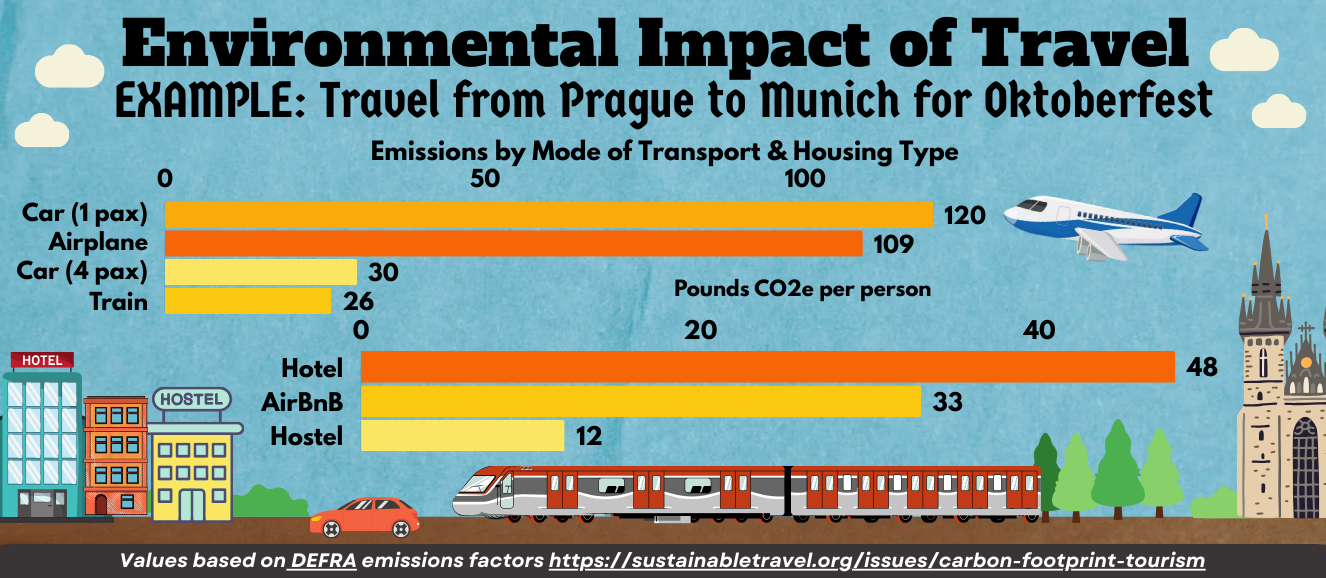
Consider Trip Impact: Taking a weekend trip? Calculate your trip’s impact and consider taking a train instead of a plane.
Conserve Energy and Water: Practice energy-saving habits, such as turning off lights and unplugging electronics when not in use, and take shorter showers to minimize water consumption.
Reduce, Reuse, Recycle: Follow local recycling guidelines and minimize waste by opting for reusable items, such as bags and containers, and recycling whenever possible.
Support Local Markets and Sustainable Products: Purchase goods and souvenirs from local markets and artisans to support the local economy and reduce the carbon footprint associated with imported goods.
Choose Eco-Friendly Transportation: Walk, bike, or use public transportation to explore your host city instead of relying on taxis or rental cars, reducing emissions and promoting sustainable mobility. In areas where walking, biking, and public transportation may not be possible, opt for electric, hybrid, or smaller vehicles.
Eat Locally and Seasonally: Enjoy regional cuisine made from locally sourced and seasonal ingredients to support sustainable agriculture and reduce the environmental impact of food transportation. Look up if there is a farmer’s market happening nearby.
Engage in Sustainable Tourism Activities: Participate in eco-friendly tours and activities, such as hiking, wildlife watching, or volunteering for environmental conservation projects, to minimize negative impacts on natural habitats and wildlife.
Respect Cultural and Natural Heritage: Follow local customs and regulations to preserve cultural heritage sites and natural landscapes, and avoid activities that harm or exploit animals and ecosystems (such as riding elephants or swimming with dolphins).
Participate in Community Initiatives: Get involved in community-led sustainability projects, such as beach cleanups, tree planting, or educational workshops, to contribute positively to the local environment and community.
Donate Unwanted Items: At the end of your program, donate or responsibly dispose of items you no longer need instead of throwing them away, reducing waste and supporting local communities.
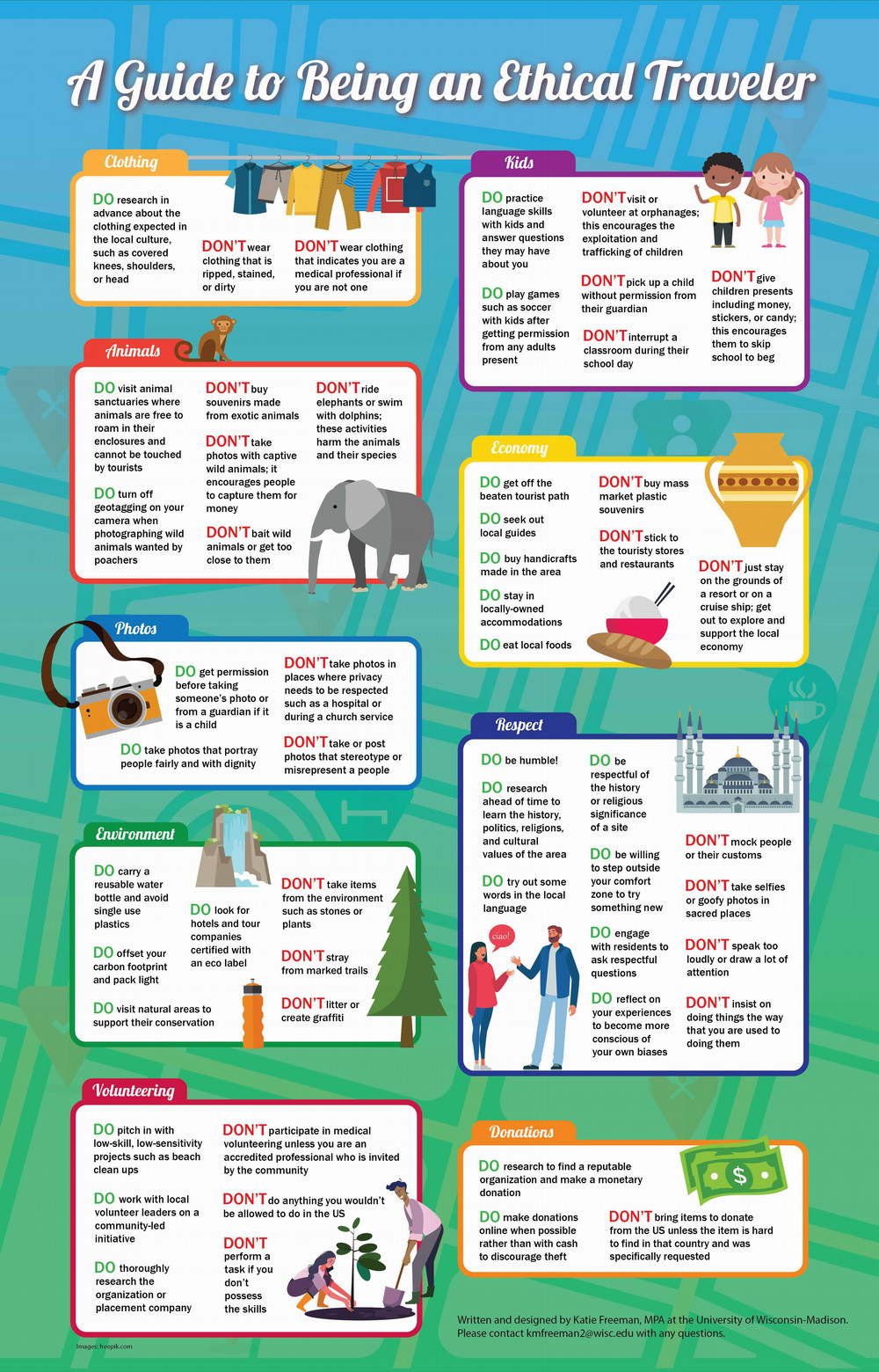
Practice Being an Ethical Traveler: From clothing to volunteering, there are many things to do and not do to practice being an ethical traveler. We encourage you to consider the ways you can be responsible abroad. Here is an excellent resource. Also check out this helpful guide.