
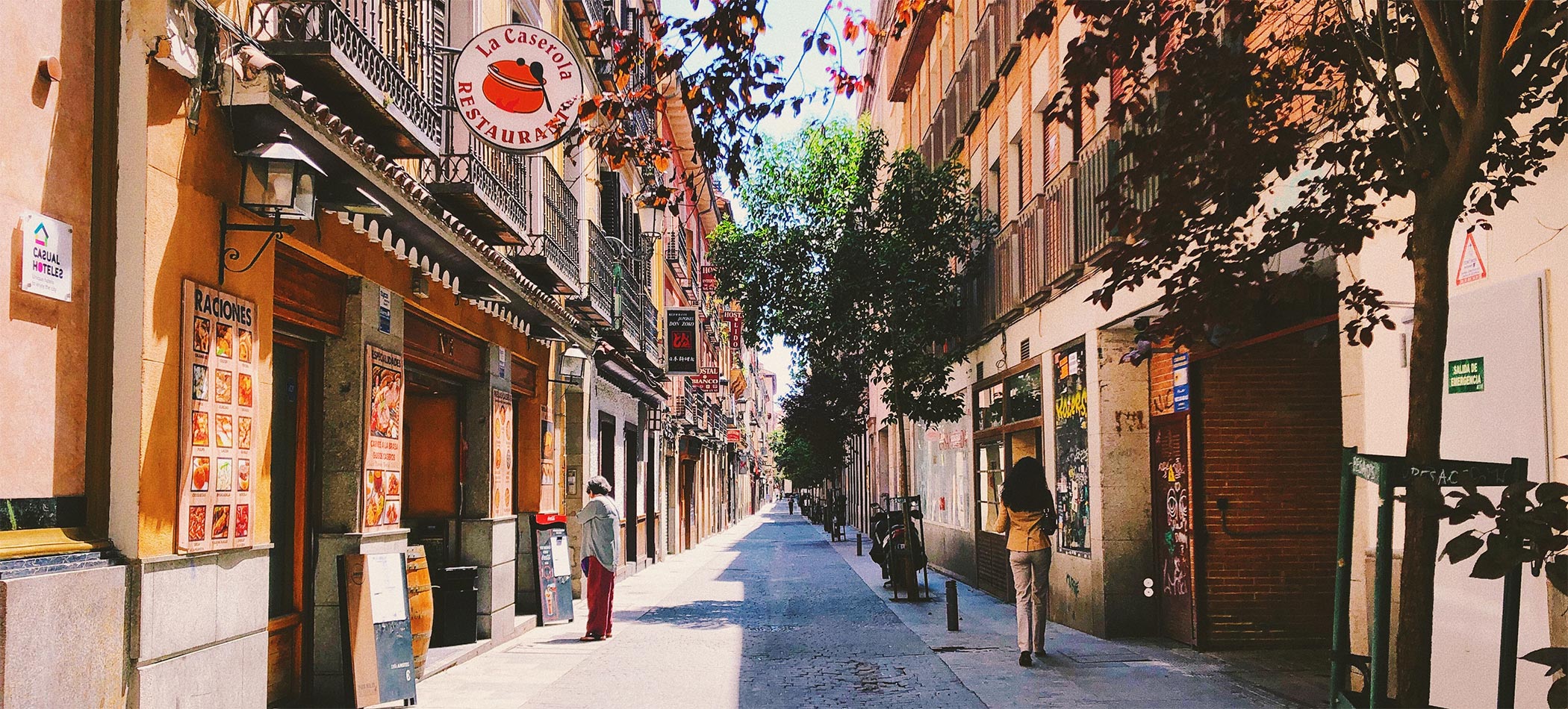
Spanish culture is widely known for Flamenco music and dance, bullfights, fantastic beaches and lots of sunshine. Day to day living in Madrid may seem less "Spanish" than other smaller towns and cities in Spain. The Spanish siesta, or midday nap, is gradually and steadily diminishing, being replaced by more traditional business working hours. The fast paced lifestyle of businessmen and women seems to contradict the slower, Mediterranean ways of life. However, it is precisely these reasons that make Madrid unique to the country, offering its visitors and inhabitants a complex and beautiful mixture of old Spain and modern life.
Among the clamor of this large, metropolitan city, you will still find Madrileños pausing their work day for an hour-long coffee break in bars or cafés. Spanish tapas are served throughout the city, from restaurants representing a variety of regions in Spain. Clubs often do not close until dawn, and the city lights and pedestrian activity make it hard to distinguish between 3 a.m. and 3 p.m. Come and experience the harmonious blend of progress with tradition, nationalism with tolerance, and people from all over the world — all within Madrid.
Madrid has one of the most comprehensive and dependable public transportation systems in the world, making it easy for students to access any part of the city at a very low cost. This public transportation system is comprised of the Madrid metro, buses, and local trains. Upon arrival to Madrid, students will be provided with a transportation identification card, which will allow them to purchase unlimited monthly travel passes (for use on metro & bus).
Madrid Metro
Madrid's metro system is comprised of 12 lines and covers most of the city and runs from 6:00 am to 1:30 am daily. The USD Madrid Center is located right off the Banco de Espana and Retiro metro stops, so students can conveniently take to metro to class everyday. For a comprehensive map of the Madrid metro, visit their website.
City Buses
Madrid’s extensive bus services consist of over 150 lines that reach virtually every corner of the city and outskirts. Although the buses tend to take longer to reach their destination than the metro, they cover a larger area of the city, and you get to see where you’re going. Buses run every 10 or 15 minutes (depending on the time of the day) beginning at 6:00am to approximately 11:30pm. Late night buses are available, but run less frequently (every 20-25 minutes) beginning at midnight from Plaza Cibeles (near Puerta del Sol). For an overview of bus routes, visit the EMT Madrid website.
Soccer or "fútbol" is Spain’s national sport and easily the country’s most important participant and spectator sport. Spanish soccer fans are among the most dedicated and fervent in Europe. Madrid is home to three professional soccer or "fútbol" teams: Real Madrid, Atlético de Madrid, and Rayo Vallecano. Attending a soccer game in Madrid is a cultural experience that we highly encourage students to take a part in!
Staying in shape and healthy is easy in Madrid. Students have access to the gym (and group fitness classes) and intramural sports teams at the Universidad Pontificia de Comillas. The world famous Retiro park, which is right outside of the USD Madrid Center is the perfect place to walk or jog with friends.
While in Madrid, students have access to various academic spaces that provide quiet areas designed for study. The USD Madrid Center's open study areas as well as group study areas ideal for student collaboration. Additionally, students participating in the USD Madrid semester program have access to study areas on the Universidad Pontificia Comillas campus, which includes libraries, computer labs, and large study halls.
The most convenient way to access money while in Madrid is to withdrawal money (using your persoal ATM card) at one of the many ATMs throughout the city. This will give students the most up-to-date exchange rate. Students should be aware that many banks charge a withdrawal fee, so it is advisable to withdrawal larger sums of Euros from an ATM at one time to avoid frequent charges. Banks can charge upwards of $5.00 per ATM withdrawal, so students should contact their bank prior to departure to learn about their international withdrawal policies.
All students participating in the USD Madrid Center semester program live off-campus in either home stays or in student residence halls.
In home stays, students may request to live alone in a home or with other students (up to two other roommates) and breakfast and dinner are included daily (seven days a week). Students have declared that the home stay experience was one of the best parts of their entire time abroad. A home stay doesn't just provide a roof over your head and meals on the table, it provides an insider's perspective to life in Madrid and integrates you into the culture by including you in social events as well as daily life activities.
For security reasons, students are not permitted to find their own housing arrangements outside of the USD-contracted housing.
Spanish language students at the USD Madrid Center are paired with local university students to help enhance their Spanish-speaking ability and to help the Spanish locals improve their English. The Language Partners also help students to assimilate to life in Madrid by serving as peer-to-peer ambassadors. The USD Madrid Center Semester Program will assist students in finding a match with local students; however, once students are paired, they work together among themselves to determine their own activities and scheduling arrangements.