
Community Collaboration
The Linda Vista Community Garden Project
In partnership with local community leaders, the USD Department of Anthropology established a collaborative research and action project centered at the Linda Vista Community Garden. Led by Chair and Professor of Anthropology David Syring, PhD, a cultural anthropologist focusing on community-based research and indigenous agricultural traditions, the initiative turns urban garden plots into living classrooms for sustainable agriculture and social connection.
Through ethnobotanical mapping, oral history recording and hands-on cultivation, USD anthropology students work alongside local residents to document how community gardens foster food security and cross-cultural dialogue across San Diego.
Impacts
Community-Engaged Fieldwork
Students master ethnographic interviewing and participant observation directly within the neighborhood.
Food Justice and Sustainability
Research explores local food sovereignty, urban ecology and climate resilience strategies in San Diego's diverse communities.
Public Knowledge Exchange
Produce harvests and ecological insights are shared through interactive workshops, neighborhood festivals and open-access community reports.
Vital Research
Forensic Science, Missing Persons and Ethical True Crime
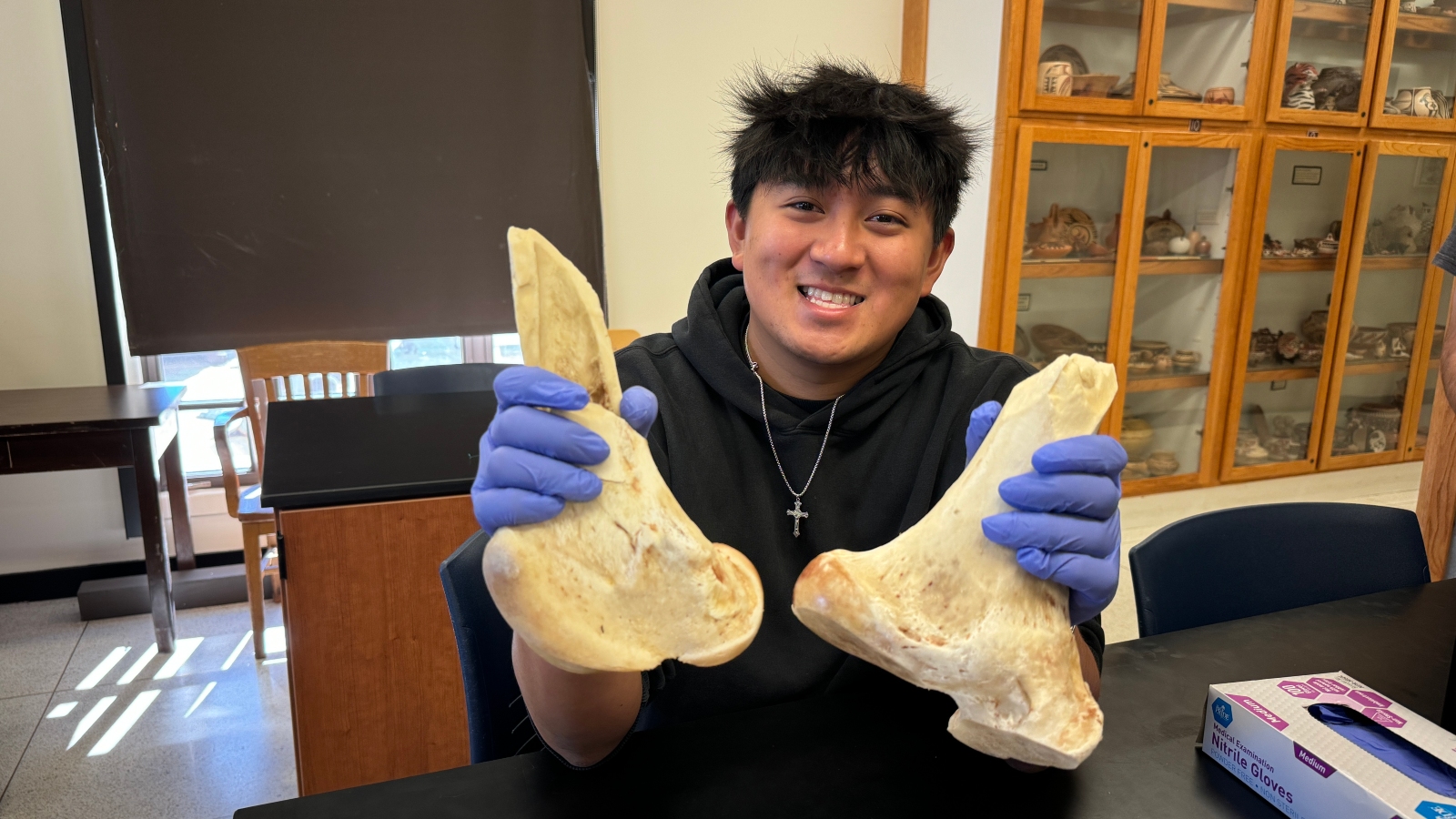
Led by Associate Professor of Anthropology Marni LaFleur, PhD, USD Anthropology is spearheading vital research at the intersection of forensic anthropology, human rights and ethical public narrative. Certified in Forensic Investigative Genetic Genealogy (FIGG), Dr. LaFleur focuses on cold case resolutions and identifying missing and unidentified human remains, with particular emphasis on marginalized groups, including Indigenous communities (e.g., Missing and Murdered Indigenous Peoples), borderland migrants and LGBTQ+ individuals.
Beyond forensic identification, LaFleur pioneered innovative coursework in ethical true crime, challenging students to critically examine media consumption around cold cases, prioritize victim advocacy and apply decolonial, victim-centered frameworks to missing person investigations.
Impacts
Cold Case Identification
Applying genetic genealogy and bioarchaeology to resolve long-unsolved cases involving vulnerable populations.
Ethical True Crime Curriculum
Teaching students to critique true crime media, center victim dignity and address systemic inequities in justice systems.
Human Rights and Borderland Studies
Investigating migrant deaths and missing persons along the US-Mexico border to inform humanitarian efforts and policy response.