
Heart-Centered Connections (HCC) Practitioners Certificate (Level 1)
The Heart-Centered Connections (HCC) Practitioners Certificate (Level 1) empowers classroom teachers, community educators, child-serving professionals, and caregivers in building capacity to cultivate trauma-informed neuroinclusive learning environments. These environments, grounded in adult social-emotional wellness, create positive benefits for emotional resilience and academic success among neurodiverse youth. At the heart of the program is the understanding that meaningful connection precedes effective learning. By exploring the intricate links between the often fragmented fields of applied educational neuroscience, neurodiversity, trauma-informed teaching, and social-emotional learning, participants gain practical tools to connect with youth on a brain and nervous system level. Through this integrated holistic lens, participants learn to foster environments that ensure all learners—especially those impacted by neurodivergence, mental health challenges, trauma, or foster care—can thrive.
The University of San Diego offers the HCC program as a 37.5 hour graduate-level, non-degree professional certificate program. It equips participants with transformative skills and strategies to revolutionize how they support themselves and the youth they serve. Upon completion, participants can opt-in and pay to earn 3 Graduate-Level Extension Units through the University’s School of Leadership and Education Sciences, solidifying their commitment to inclusive and heart-centered education.
Our Heart-Centered Connections™ Curriculum
delivers transformational experiences in 7 Pillars:
Upcoming Cohort Dates & Program Cost
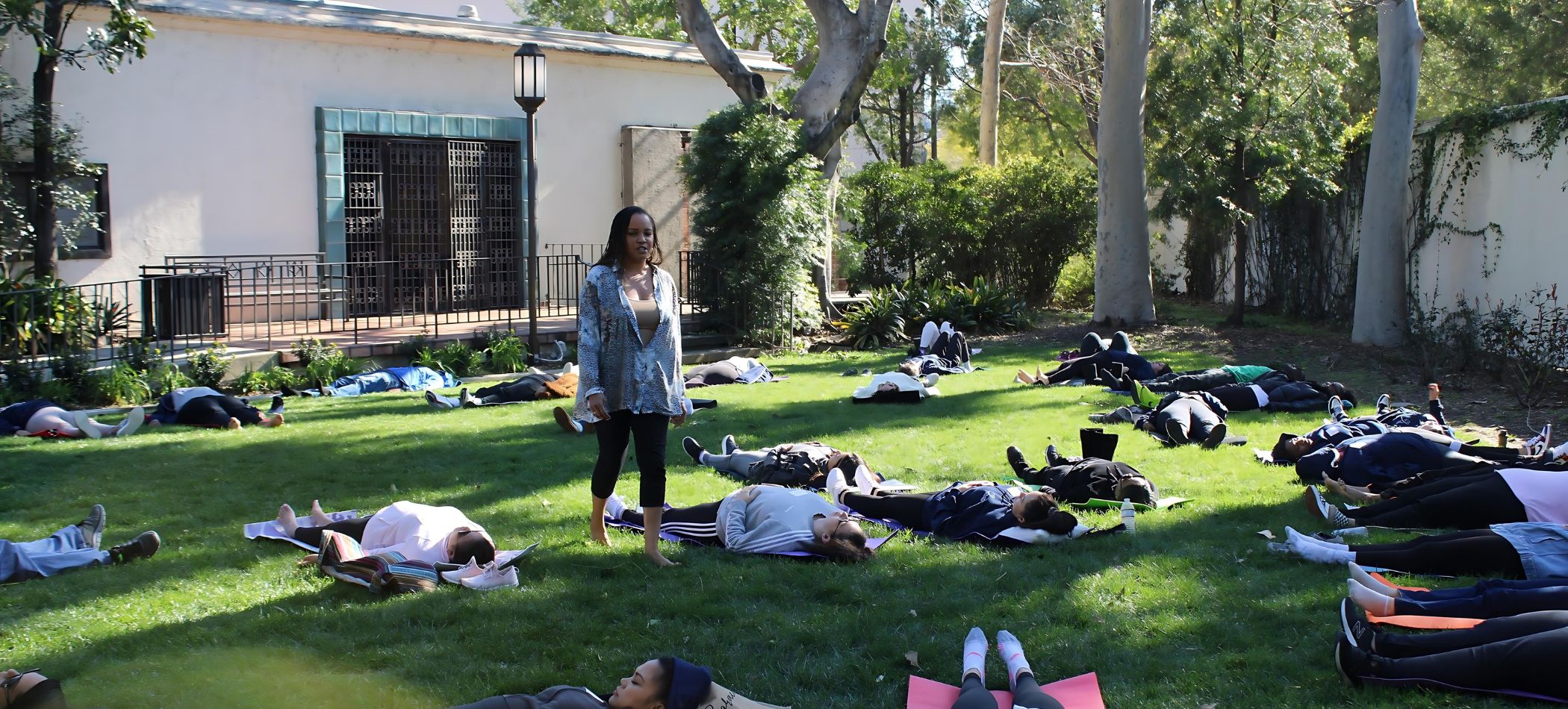
The standard program begins with a three-day, in-person immersion retreat introducing core foundational knowledge and mind-body practices. The immersion retreat is followed by eight virtual learning sessions that explore the seven pillars of Heart-Centered Connections. The seven pillars are uniquely designed to provide a comprehensive education on the functioning of the autonomic nervous system and the conditions of a trauma-informed, neuroinclusive classroom.
SEPTEMBER 2026 Cohort (Fully Virtual - No In-Person Immersion)
Virtual Session Dates: Zoom (12 sessions)
Saturday's from 9:00-11:00am (Pacific Time)
September 26, October 3, October 10, October 17, October 24, October 31, November 7, November 14, November 21, December 5, December 12, December 19, 2026
The cost for this certificate is $1,199 (Due to no in-person costs).
This program will be co-facilitated by Dr. Niki and other trained HCC facilitators.
OCTOBER 2026 Cohort (Hybrid, In-Person Immersion & Virtual Sessions)
Immersion Dates: October 28-30, 2026 in San Diego, California (3 Days)
Virtual Follow-Up Session Dates: Zoom (8 Sessions)
Wednesdays from 4:00-6:00pm (Pacific Time)
November 4, November 18, December 2, December 16, January 6, January 20, February 3, February 17
The cost for this certificate is $1,700.
This program will be co-facilitated by Dr. Niki and other trained HCC facilitators.
Registration is now open! Click HERE to register. Please make sure you are registering for the correct cohort.
- Immersion Day 1 Agenda
- Immersion Day 2 Agenda
- Immersion Day 3 Agenda
| 11:00 a.m.-12:00 p.m. |
Introductions Group Agreements |
| 12:00-1:00 p.m. | Lunch |
| 1:00-3:00 p.m. |
Introduction to Applied Educational Neuroscience |
| 3:00-4:00 p.m. | Break |
| 4:00-6:00 p.m. |
Build Your Brain and Nervous System |
REGISTRATION NOW OPEN
⚠️ PLEASE NOTE: When registering, please ensure you have selected the correct cohort. These sessions differ in cost, format (Hybrid vs. Virtual), and meeting dates.
Pillar #1: Self-Awareness
In this session, participants will:
- review the foundational elements of the autonomic nervous system
- review the science of the nervous system’s survival responses
- explore the importance of nervous system state for adults serving neurodivergent children
- prepare to launch a 21-Day Vagus Nerve Reset Challenge to build adult nervous system capacity
Pillar #2: Interpersonal Awareness
In this session, participants will:
- learn how to help students access the ventral vagal state, a nervous system state that is key for social engagement
- gain knowledge of how different nervous system states produce different behavior responses and consider how and when these behaviors appear in students
- explore the impact of implicit bias on the nervous system and behavior responses
Pillar #3: Neuroinclusive Spaces
In this session, participants will:
- learn how elements of environmental design and sensory stimulation in the classroom impact nervous system regulation
- explore how to meet the sensory needs of neurodivergent learners from a trauma-informed perspective
- discuss how connections to familiar places, colors, sounds, nature, etc., impact learning and behavior
- reflect on their own classroom design and consider modifications based on the information presented in this pillar
Pillar #4: Activated Genius
In this session, participants will:
- recognize an expanded idea of genius and ways to cultivate it in all students
- discuss the emerging connection between neurodivergence and creativity
- understand current research about the theta/beta brainwave ratio and how it impacts neurodivergent learners
- create a plan to include more opportunities for open mode thinking in lesson plans
Pillar #5: Engaged Learning
In this session, participants will:
- explore how learning differences, trauma, and cultural connections impact how the brain learns
- understand the power of mnemonic instruction, and learn the different types
- discover why direct instruction in executive functions is critical for effective inclusive education
- connect psychological safety through rituals and routines to enhanced student learning for neurodivergent learners
Pillar #6: Mindful Communication
In this session, participants will:
- learn the 3 principles of heart-centered communication
- explore the power of storytelling and narrative empathy to enhance social connections with youth
- elevate student's hope, choice, and agency through compassionate right action
- identify a student and create a plan to improve communication and connection
Pillar #7: Heart-Centered Repair
In this session, participants will:
- establish an operating definition of felt-safety and embodied equity in the learning environment
- create a survey that invites students and families to evaluate their felt sense of safety and connectedness in the learning environment
- learn how to engage in cycles of continuous feedback and improvement to build trust with students and families by demonstrating vulnerability to learn and grow alongside them
- review the science on the impact of formal apology and repair on adult’s ability to sustain heart-centered connections with youth.
Program Review and Certificate Completion Celebration
In this session, participants will:
- have a program review and certificate completion celebration
Watch the HCC Promo Video!
Click the 'promo video' below. Our in-person immersions are hosted at the beautiful Island Palms Hotel in San Diego California. Check out their website below.
About the Facilitator
Dr. Niki Elliott
Niki Elliott, PhD serves as director for the Center for Embodied Equity and Neurodiversity at University of San Diego’s School of Leadership and Education Sciences. In this role, she leads the development of research projects and professional certificates for PK-12 educators, school counselors, and college faculty.
A high-energy, spirited, and inspiring teacher educator, Niki has taught students of all ages for more than 30 years. She is a staunch advocate for students whose lived experiences include learning disabilities, mental health diagnoses, and foster care placement. Her mission is to galvanize an education workforce that establishes trauma-informed, neuroinclusive learning communities where all students and educators thrive.
Each program will be co-facilitated by Dr. Niki and other trained Heart-Centered Connections Facilitators.
We sincerely thank the San Diego Foundation for their vital support in making this program possible for our educators.
Contact Us
If you have any questions or need to request any accommodations, please contact our support team.