
The Long Italian Anthropocene: The “Capture and Control” of Bodies, Lives and Ecosystems in the Cybercene
Historically known for its geology and biodiversity, southern Italy has become an important site to study the impact of the Anthropocene on Europe's subaltern communities. In this talk, Vetri Nathan, PhD, will define the term “Cybercene” and discuss the impact of ecoviolence on Italy's internal "sacrifice zones" and the people from local and Global Souths that inhabit them. Through the case of Satnam Singh, a migrant agricultural worker who died in Italy in June 2024, Dr. Nathan will illustrate this era's mechanisms of commodification, othering and wasting.
Mr. Singh’s story of modern racialized enslaved labor will be followed by an analysis of the phenomenon of "dunki" migration from India to Europe and North America as an example of colonial-Cybercene multispecies co-becoming. This presentation will demonstrate how qualitative humanistic analysis of natureculture by as undertaken by The Cybercene Lab complements data-driven studies of our digital societies, while highlighting the urgency of examining Italy's multispecies relationships to create more sustainable and resilient communities.
About the Speaker
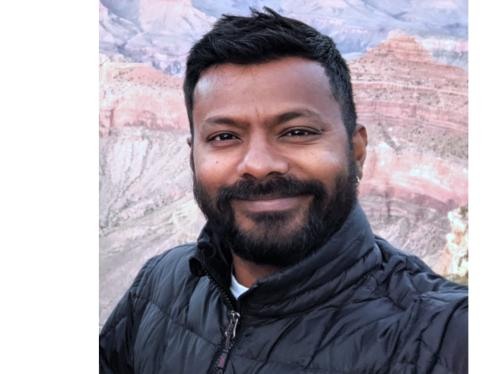
Dr. Vetri Nathan is associate professor of the Department of European Languages and Transcultural Studies at the University of California, Los Angeles. Dr. Nathan studies cultural foundations of environmental (in)justice and national, migrant and diasporic identities, particularly in Italy and the Mediterranean region. Born in Mumbai, he holds a PhD from Stanford University and joined UCLA in 2024 after positions at UMass Boston (2011-21) and Rutgers University (2022-24). His book, Marvelous Bodies: Italy's New Migrant Cinema (Purdue UP, 2017), examines Italian films addressing immigration from the Global South. At UCLA, he directs the new humanities Cybercene Lab, a gathering space to study multispecies wellbeing and the connections between cultural discourse, manufactured conflicts, climate change and habitat/biodiversity loss.