
Where Geology Meets Philosophy: USD Students Embark on a Desert Sublime Journey
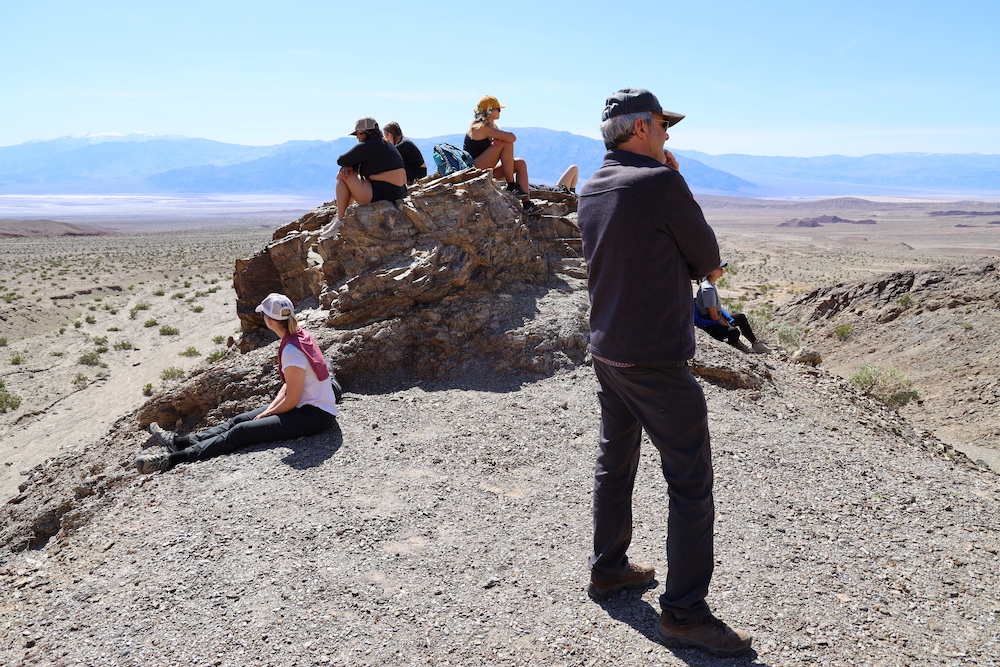
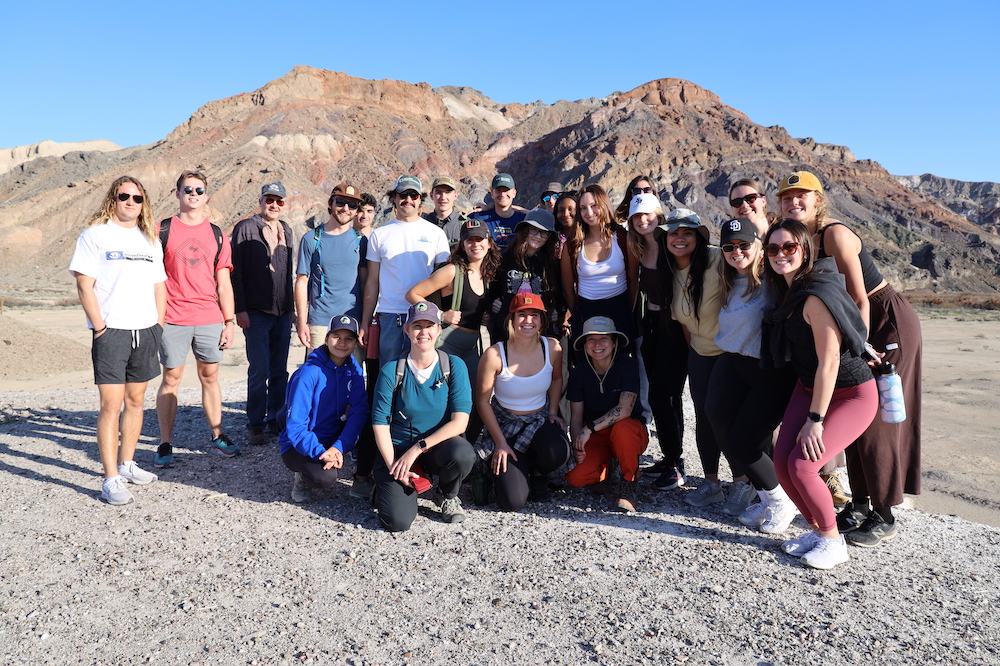
Twenty University of San Diego students walked out onto Death Valley’s Badwater Basin crunching miles of salt under their feet. Blinding sunlight blanketed the group led by two USD professors— one specializing in geology, the other, philosophy.
The course, Interdisciplinary Studies (INST) 350, is called The Desert Sublime. Team taught by Professor of Environmental and Ocean Sciences Bethany O’Shea, PhD, and Professor of Philosophy and A. Vassiliadis Director of the Humanities Center Brian Clack, PhD, the curriculum introduces students to eighteenth century philosopher Edmund Burke’s A Philosophical Enquiry into the Origin of Our Ideas of the Sublime and Beautiful.The text serves as a compass to help students explore aspects of the sublime and beautiful across the landscape of Death Valley, while simultaneously studying the region’s geology. The Desert Sublime class includes four days of experiential learning outside of the classroom, which took place this past weekend.
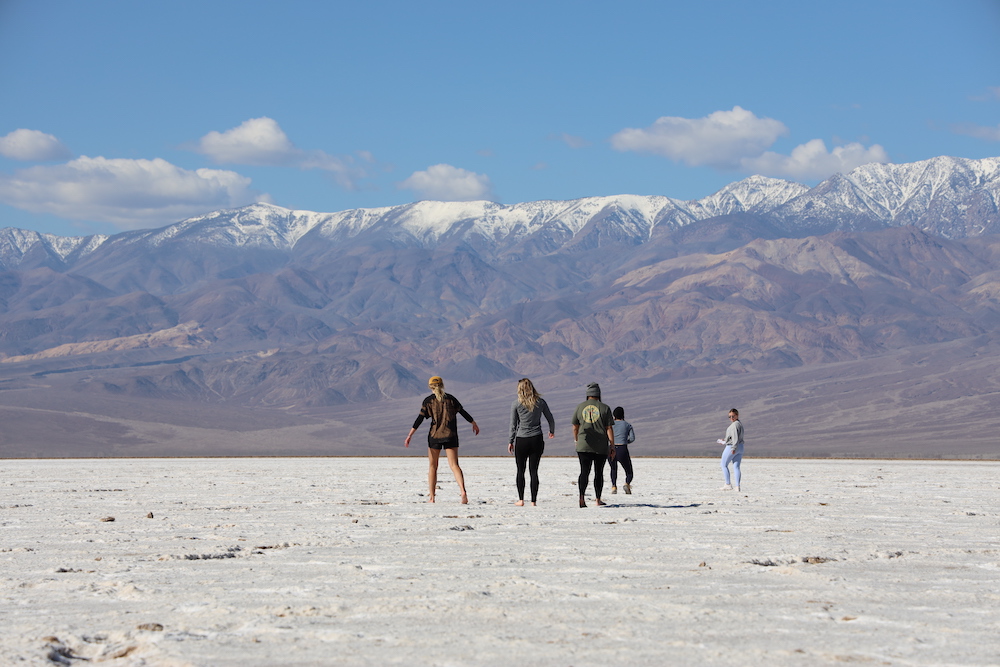
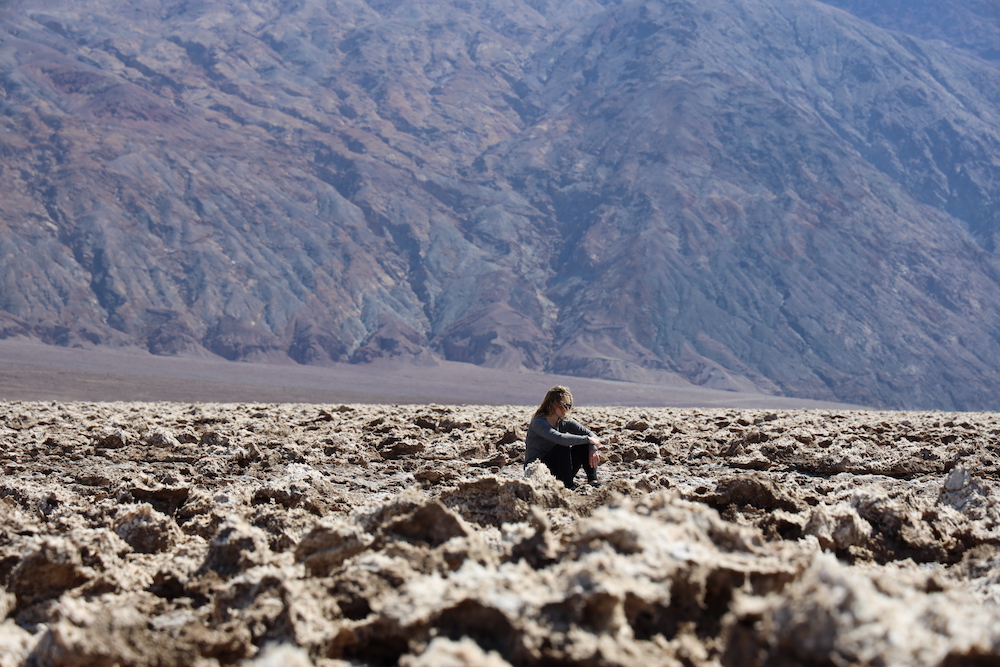
Students explored nearly a dozen sites in and around Death Valley National Park and were tasked with exercises to help them immerse themselves into the experience. They read and pondered quotes from literary greats, meditated on a jagged rock salt bed and listened to Debussy’s "Clair de Lune'' while driving through the desert. The goal: to be still in the environment without distraction and notice the feelings associated with the structure and silence of the desert. Students like math major Sebastian Poli committed to the assignments and immersed himself in the experiential learning process.
“We’ve seen here at Artist’s Palette where it is really beautiful and then at the Devil's Golf Course where it is eerie, jagged and sublime. It just speaks to how there is both in the world and there’s also a spectrum. It’s been interesting to see my interpretations and how I’ve been able to see the beauty and sublime in things or not being able to figure out which one is which as well,” said Poli.
The Desert Sublime course is a significant part of a wider, multi-year exploration and undertaking by the University of San Diego’s Humanities Center called Natural Landscapes and Human Meaning. Over the course of three years, the Humanities Center is hosting expert panels, lectures and classes on oceans, deserts, forests, ice and glaciers, mountains and cities. The focus this semester is deserts.The Desert Sublime course coincided with the Desert Sublime: Southwestern Landscapes by Emma Stibbon exhibition in the Humanities Center Gallery currently on view through May 15.
“Our aim was to explore those big questions of life, questions that confront not only artists and humanists, but also social scientists and natural scientists. Landscapes provoke a range of emotions and passions in all human beings, so this immersive class can appeal to anyone,” said Clack.
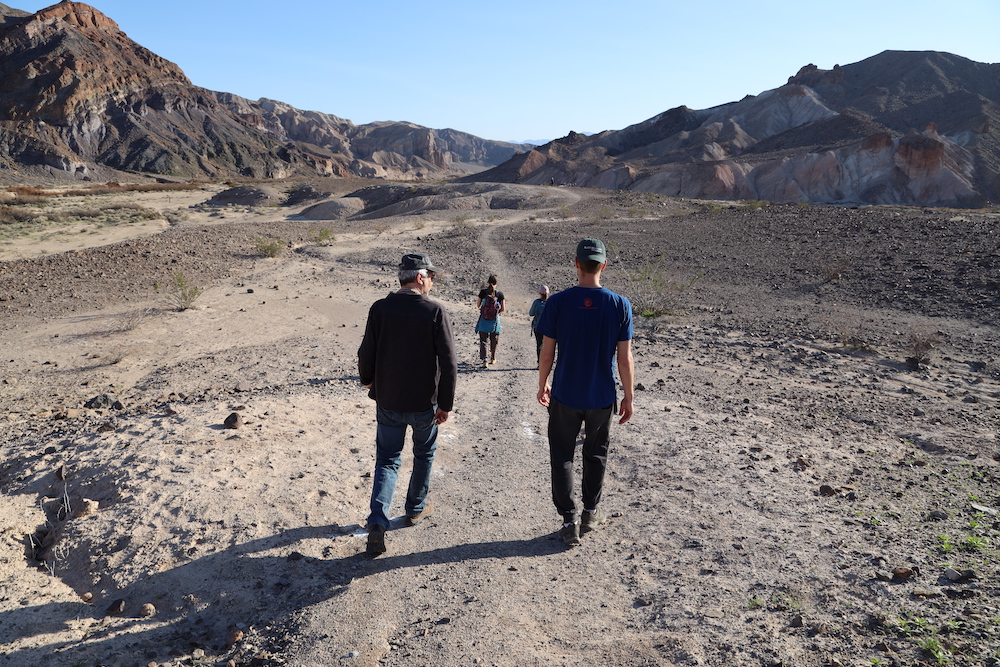
“I thoroughly enjoyed watching students talk to Dr. Clack. In geochemistry we don’t ever talk about our feelings,” said O’Shea. “And I see these students, come up and talk to him and tell him that they felt a lightness and were introspective as they looked at the vastness of the valley. They can explain how that valley formed geologically, but now they are talking to him about the emotions that that vastness evoked, and I really enjoyed seeing that,” says O’Shea.
This class trip to Death Valley proved to be a meaningful experience that students will not only cherish but will also compel them to view science from a philosophical lens. Drs. O'Shea and Clack hope to offer the class again in the 2024-25 academic year as they continue to explore ways in which the humanities and the sciences can fruitfully work together.