
How Underlying Consumer Values Can Support New Strategies for Nonprofit Organizations
Volunteers are the backbone of charitable nonprofit service organizations, helping execute programs, raising funds, and serving the cause with their time. Recent reports from the Urban Institute indicate nonprofit sectors in the United States are healthy with continued financial growth - with public charities making up more than two-thirds of all registered nonprofit organizations.* And while nonprofits rely heavily on volunteers, more than one-third of those who volunteer for a given year do not donate their time the next year to any nonprofit - adding up to what some estimate is $38 billion in lost labor.* These findings indicate an opportunity for leaders in the nonprofit space to look deeper into how volunteerism could be maximized for their organizations, and develop a strategic approach to attracting and retaining volunteers - enhancing their programs in the process.
Most research to-date with applications to service organizations has examined aspects of the service provider, programs, and the volunteer experience, reporting participants may experience positive (as well as unintended) negative well-being consequences.* However, research has largely underemphasized aspects of the volunteers themselves, which is why a new paper by Justine Rapp Farrell, PhD., Associate Professor of Marketing at the University of San Diego School of Business, has the potential to help nonprofit service organizations create strategies for improved programs and volunteer retention.
The paper, “Have You Found What You’re Looking for? How Values Orientations Affect Pro-Social Change After Transformative Service Experiences,” in press at the Journal of Consumer Affairs, examines the factors that influence an individual’s volunteer experience, with a particular focus on the volunteer’s underlying values.
“Our aim is that nonprofits leverage knowledge from our research to better serve and operate,” Farrell said. “Understanding more about volunteers themselves can help organizations increase engagement and longevity with those volunteer relationships.”
The Approach and Findings
The study used a longitudinal design in the context of a cross-country bike trip to benefit multiple sclerosis (Bike the US for MS), to investigate how a volunteer’s attitudes and skills, as well as perceived personal change and connection to the experience, may depend upon their underlying values. Meaningful differences between participants do exist, and these differences for the sake of the study are conceptualized in terms of values orientations.
Findings indicate that those values associated with achievement and growth may lead to undesirable changes in civic attitudes, while values associated with external validation promoted positive personal change and an enhanced connection to the organization and cause.
“We see that self-serving motivations in achievement and growth, whether altruistic or not, don’t have long-term, long-lasting effects for service organizations,” explained Farrell. “The results find that volunteers who value external validation are significantly more likely to believe they had been changed by the experience and have a connection with the organization.”
Insights
A common assumption in recent literature is that volunteerism leads to positive changes in the participant. However, this paper finds that the volunteer experience does not necessarily lead to enhancements in well-being. While Farrell’s present study does not undermine past research, it does suggest that such well-being effects are complexly determined by aspects of the experience itself, as well as differences among participants.
Participants exhibiting an external-validation orientation were significantly more likely to believe that they had been changed by the experience, and to cite a connection with the organization and to the cause of multiple sclerosis. It’s not surprising that those individuals who value interpersonal relationships are more likely to form connections to the entities involved in the experience (the organization and the cause), given a fundamental tendency to focus outwardly and seek affiliation (Mulder et al. 2015).
Implications for Program Strategies
Service providers interested in fostering collective well-being, improving volunteer retention, and improving programs may do so more effectively if they target volunteers most likely to experience and recognize the positive benefit of the cause, as individuals who seek or value external validation. Knowing that people seek out volunteer experiences for thrill, achievement, or for external validation can aid organizations in the positioning and promotion of their cause, and with the right volunteers recruited, in the sustainability of their workforce and delivery of programs.
“Service organizations have a strategic opportunity to align their programs and cause with positioning centered on the externally validated volunteer profile,” says Farrell. “Positioning content around empathy, for example, can be utilized to target those motivated by external validation.”
Of note, future research may examine how the COVID-19 pandemic has (perhaps permanently) changed ways in which service organizations co-create their services with participants. Researchers have begun to explore the ways COVID-19 has influenced corporate social responsibility (He and Harris 2020), marketing innovation (Di and Li 2020), and social issues including race (Crockett and Grier 2020) and food access (Bublitz et al. 2020). Through these unprecedented times, understanding how individuals’ underlying values orientations shape their experiences in a pre- and post-pandemic world will assist both service organizations and ultimately their volunteers.
Discover Your Passion in Business
The University of San Diego School of Business understands that there is more to business than profit. Justine Rapp Farrell's research interests focus on the domain of consumer welfare, more specifically on the marketing implications of public policy on underrepresented groups. Offering a range of degree programs, internships and real-world experiences, the School of Business challenges students to imagine ventures that are fiscally and socially responsible. Visit the University of San Diego School of Business to learn more about how it can encourage you to explore your passions and change the world.
Written by Megan Munson
Sources
- Urban Institute, The Nonprofit Sector in Brief 2019
- Stanford Social Innovation, The New Volunteer Workforce
- National Institutes of Health, The impact of Covid-19 pandemic on corporate social responsibility and marketing philosophy, National response strategies and marketing innovations during the COVID-19 pandemic
- Sage Journals, Race in the Marketplace and COVID-19, Pandemic Reveals Vulnerabilities in Food Access: Confronting Hunger Amidst a Crisis
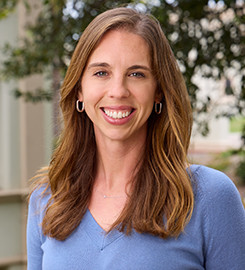 Justine Rapp Farrell, Ph.D. is an associate professor of marketing and chair of the marketing department at the University of San Diego's Knauss School of Business. She teaches Digital Marketing and Consumer Behavior with a focus on experiential education and project-based learning.