
Beyond the Wall: What Really Motivates Mexico-U.S. Migration?

In the often emotional debate about Mexican immigration to the United States, some questions are posed again and again. What does a fair immigration system look like? Is building a border wall an effective strategy? One question, however, often goes unasked despite its centrality to the conversation: What motivates Mexicans to immigrate to the U.S. in the first place?
If U.S. voters and policymakers better understood the answer to this question, the immigration conversation might sound dramatically different.
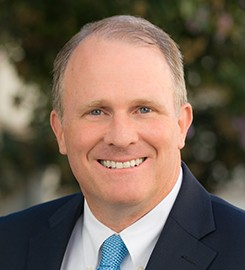
“One of the fundamental assumptions people in the U.S. tend to make is that everyone wants to live in the U.S., and that’s just not true,” says Dr. Stephen Conroy, professor of economics and associate dean for undergraduate programs at the University of San Diego Knauss School of Business. “People usually want to live where they grew up, near their families.”
Conroy and co-author Alix Naugler explore Mexican immigrants’ motivations for leaving home and coming to the U.S. in the recently published research paper “Motivations for Mexican-U.S. Migration: Does the Economy Matter?” Their research focuses on whether the motivations behind immigration are influenced by macroeconomic conditions in the U.S. or Mexico.
Conroy and Naugler found that between 2010 and 2016, during periods of high growth and low unemployment in the U.S., the economy was the strongest motivating factor for Mexico-to-U.S. immigration. This finding has significant policy implications — while a wall can’t adapt to shifting economic conditions, the research suggests other types of immigration policy could.
Correcting False Assumptions
Conroy and Naugler were drawn to examine what motivates Mexico-U.S. migration in part because they wanted to challenge some of the assumptions that pervade conversations about immigration in the U.S.
For example, many Americans believe that most or all undocumented immigrants arrive in the U.S. by crossing the border illegally and therefore could be deterred by a wall. In actuality, research from the Center of Migration Studies of New York shows that 62% of undocumented immigrants have overstayed legal tourist visas — something a wall would do nothing to prevent. What’s more, Conroy explains, a border wall would likely have the opposite effect, keeping people in the U.S. who would otherwise move back and forth across the border as the demand for workers dictates.
Another common assumption among politicians and voters who support anti-immigration policy is that increasing the human costs of immigration — such as by separating families at the border — will deter people from crossing.
"Similar to the wall, trying to increase costs of immigration will reduce it only marginally when the expected benefits — such as the prospect of a job — are high," Conroy says. “My point is, and our research shows, that as long as the demand for workers is strong, they’re going to find a way to immigrate.”
Reasons for Leaving
Conroy and Naugler determined immigrants’ most common motivations for crossing the border by examining data from a major ongoing project called the Survey of Migration at Mexico’s Northern Border. The project’s researchers have been questioning Mexican residents and immigrants daily since 1993 to collect demographic and migration-specific information.
Conroy and Naugler focused on survey data collected between January 2010 and September 2016, identifying date-specific connections to U.S. macroeconomic trends. Next to each of the 44,017 survey responses they considered, they recorded the U.S. unemployment rate and gross domestic product growth rate on that date.
“Our unique contribution to the literature was to introduce macroeconomic variables into the survey data and see whether the macroeconomic variables had an impact on their decision to emigrate,” Conroy says. “We found that it did.”
A System That’s Much More Likely to Work
Mexican migrants coming to the U.S. were much less likely to be drawn by economic reasons in 2010 and 2011, when the storm clouds of the Great Recession still lingered over the U.S. economy, than they were in 2013 and 2014, when the U.S. economy was healthier. During the periods when the U.S. economy was weaker, migrants most often said that reuniting with family was their motivation for crossing the border. While economic motivations were still present in 2015 and 2016, they weren’t as strong as in 2013 and 2014, suggesting that Donald Trump’s presence on the political stage starting in the summer of 2015 discouraged economic immigration — immigration driven by the pursuit of economic well-being — perhaps in part by indirectly reducing the number of employers willing to hire immigrants. Interestingly, the researchers found no evidence that Mexicans felt compelled to leave their country during periods of economic downswing.
Conroy says these results provide the basis for a strong case against immigration policies that simply endeavor to keep Mexican immigrants from entering the U.S. If the economic environment in the U.S. is friendly enough, he believes, these policies will prove ineffective. Instead, Conroy’s findings suggest that a policy that acknowledges economic motivations and the resulting ebb and flow of migration is more likely to be successful. For example, a temporary or guest worker program could allow immigrants and employers to respond to expected variations in economic conditions over time. Such policies, he says, could provide the basis of an immigration system that works on all sides.
“The economy is always changing, and if you have an immigration policy that doesn’t sync up to macroeconomic conditions, you’ve got a system that is doomed to fail,” says Conroy. “What you’re doing is forcing people to make permanent decisions about migration when the economy is fluctuating. If you can somehow make the policies fit with the economic realities of fluctuations, then you’d have a system that’s much more likely to work.”
Explore Leading Research on Immigration
An expert in applied economics, Dr. Stephen Conroy has published more than 25 journal articles, book chapters and conference proceedings on his research. He has won several research and teaching awards at the University of San Diego and was named a Top 50 Undergraduate Business Professor by Poets & Quants in 2018.
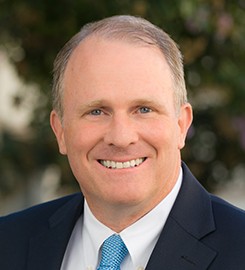 Stephen Conroy is a professor of economics at the University of San Diego's Knauss School of Business. He has published more than 25 journals, book chapters and conference proceedings and has been named a Top 50 Undergraduate Business Professor by Poets&Quants.