
CAI's Senior Counsel, Ed Howard, Quoted in The Washington Times on the Landmark Social Media Verdicts
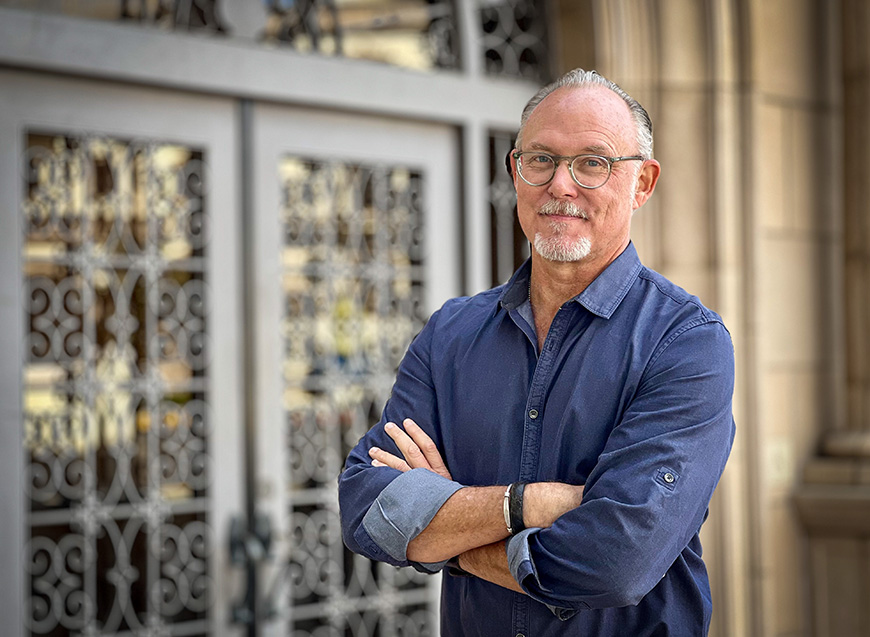
SAN DIEGO (March 24, 2026) – Ed Howard, Senior Counsel and Senior Policy Analyst at the Children's Advocacy Institute (CAI) at the University of San Diego School of Law, was quoted in an article titled, “Juries find social media platforms knowingly harmed children.”
According to the article, juries in California and New Mexico ordered social media companies to pay hundreds of millions of dollars for harming children with addictive algorithms in two unprecedented verdicts this week.
The California Case (Los Angeles)
Jurors in Los Angeles found Meta and Google's YouTube were negligent in turning over their platforms to algorithms that hooked children into staying online for as long as possible, without regard to their sleep or emotional health. They awarded $3 million — $2.1 million from Meta and $900,000 from YouTube — in actual damages to a 20-year-old woman known only by the initials KGM, for a childhood addiction to social media that aggravated her mental illness.
The New Mexico Case
A jury found Meta liable on all counts, including for willfully engaging in “unfair and deceptive” and “unconscionable” trade practices, and ordered the company to pay $375 million in damages. The New Mexico jury was tasked with deciding whether Meta willfully made false and misleading statements about the safety of its platforms or engaged in “unconscionable” practices by knowingly designing its platforms to harm young people.
CAI's Senior Counsel, Ed Howard, called the verdicts "a game-changer" that opens a legal path to holding companies accountable for “knowingly harming children.”
"This is a watershed moment in the history of consumer relationships to these platforms," Mr. Howard said. "The common theme in the New Mexico and Los Angeles cases is that it’s the AI-written, user-engagement-at-all-costs algorithms that make them liable."
CAI sponsored the first bill in the nation to address social media addiction in youth and have been at the forefront of the fight to protect children from online harm. To learn more about CAI’s work to protect children online visit our website.
To read the full article by Sean Salai, visit The Washington Times.
About the Children's Advocacy Institute
The Children's Advocacy Institute (CAI), founded at the nonprofit University of San Diego School of Law in 1989, is one of the nation's premiere academic, research, and advocacy organizations working to improve the lives of children and youth, with special emphasis on improving the child protection and foster care systems and enhancing resources that are available to youth aging out of foster care.
In its academic component, CAI trains law students and attorneys to be effective child advocates throughout their legal careers. Its Child Advocacy Clinic gives USD Law students three distinct clinical opportunities to advocate on behalf of children and youth.
CAI's research and advocacy component, conducted through its offices in San Diego, Sacramento, and Washington, D.C., seeks to leverage change for children and youth through impact litigation, regulatory and legislative advocacy, and public education. Active primarily at the federal and state levels, CAI's efforts are multi-faceted—comprehensively and successfully embracing all tools of public interest advocacy to improve the lives of children and youth. To support CAI’s work, please visit our website.
About the School of Law
Each year, USD Law educates approximately 800 Juris Doctor and graduate law students from throughout the United States and around the world. The law school is best known for its offerings in the areas of business and corporate law, constitutional law, intellectual property, international and comparative law, public interest law and taxation.
USD School of Law is one of the 88 law schools elected to the Order of the Coif, a national honor society for law school graduates. The law school’s faculty is a strong group of outstanding scholars and teachers with national and international reputations. The school is accredited by the American Bar Association and is a member of the Association of American Law Schools. Founded in 1954, the law school is part of the University of San Diego, a private, independent, Roman Catholic university chartered in 1949.