Place-Based Justice Network Members
Augsburg University is committed to participation as a contributing community member in the neighborhood we call home, Cedar-Riverside. The Sabo Center stewards this commitment by leading Augsburg’s university-wide place-based work and anchor institution strategy, as well as serving as the touchpoint for community-engaged learning in Cedar-Riverside and Minneapolis.
As a leader and long-standing institution within Bates College, the Harward Center for Community Partnerships is committed to developing and maintaining authentic and mutually beneficial partnerships with the Lewiston Auburn community in Maine. We work with our local partners in a variety of ways, including course-based community engagement, annual student-led grant-making to local nonprofits, community-engaged research, student club and athletic team community engagement, and civic engagement with local politics and issues. The longevity of many of our partners speaks to the commitment and trust built over the years: Lots to Gardens, Lewiston Public Schools, Lewiston Housing Authority, Trinity Jubilee Center, and Maine Museum of Innovation, Learning, and Labor are all among both our earliest and our current partners dating back to the early 2000s. As stated by Bates President Garry Jenkins in his 2024 inaugural address, the fates of Bates, Lewiston, and Auburn are intertwined.
The Swearer Center for Public Service at Brown University is a community of scholars, students, practitioners and community members who work together to build on community strengths and address community challenges. Our work engages all as co-learners, co-teachers, co-actors and co-creators of knowledge and action. Our work aims to yield transformative learning, and positive sustainable change, through collective action. The Swearer Center engages with more than 1000 students and 60 faculty per year, through and with 200+ community partners — more than half of which are in the Greater Providence, Rhode Island area. One area of growing impact is the Community-Engaged Data and Evaluation Collaborative, which builds capacity among nonprofit and public agencies to address their data and evaluation priorities; with backbone support from the Swearer Center, students, faculty and staff from 17 units have already engaged in related projects, and many relationships are ongoing. You can learn more about the Center's strategic goals here: https://www.brown.edu/
Carleton’s Center for Community and Civic Engagement (CCCE) is a hub for experiential learning and scholarship that contributes to more just, thriving, and sustainable communities; reciprocal community-campus partnerships that advance shared priorities; and civic agency and collaboration that is attentive to racial equity, power, and positionality. Our place-based commitment is to our local Rice County community and Dakota Oyate, with additional issue-driven collaborations with state-wide, national, and global partners. We fulfill our commitments through Academic Civic Engagement courses, student-led local community initiatives, internships, community-based student employment, and faculty public scholarship.
| Creighton University, in Omaha, NE (also has a new campus in Phoenix and campus in Dominican Republic, and other satellites) is neighbors with North Omaha, a primarily African American area of the city with both a rich cultural history and recent history of disinvestment. We both are along the "24th St. Corridor," which also includes the primarily Hispanic/Latino(a) area of the city, South Omaha; this corridor is where Creighton concentrates its community engagement effort. Campuses offices key to our efforts are the Schlegel Center for Service and Justice, and the Office of Global and Community-Based Learning (new, to offer better support for academic service learning) the Health Sciences Multicultural and Community Affairs office, and the Kingfisher Institute for the Liberal Arts and Professions. |
| Drexel sees itself as part of the West Philadelphia community. The Dornsife Center for Neighborhood Partnerships is a community-based resource center. The Lindy Center for Civic Engagement supports students and faculty in linking their teaching and learning journey with our community partners. Our Promise Neighbohood and Action for Early Learning initiatives work to improve education and health outcomes for kids who live and go to school in West Philadelphia. Our climate and sustainability initiatives link this important work to our anchor strategy as one of Philadelphia's largest institutions of higher education. |
- Find Out More: Website
Our place-based community engagement work is anchored in two places: 1) a long-standing partnership between Fairfield University and Cesar Batalla Elementary School in the West End Neighborhood of Bridgeport, CT and 2) as part of a new satellite campus that Fairfield University just opened in the East End of Bridgeport where we are offering a 2-year Associates degree and laying the foundation for a community-engagement hub
The Center for Social Justice Research, Teaching, and Service (CSJ) opened its doors in 2001. Our vision is collective liberation: a world in which we all live with dignity and determine our futures in just community. The CSJ transforms education and interrupts systems of oppression. Our work centers community knowledge, critical reflection, and the redistribution of resources.
Opportunity Northeast, Gonzaga’s place-based initiative, is strategically focused on improving outcomes for children, youth and families in Northeast Spokane. This endeavor engages Gonzaga students in transformative, real-world educational experiences, and offers staff and faculty the opportunity to engage more deeply in the shared work of community development through community-engaged scholarship, teaching, research and implementation.
Information will be added soon...
Our place-based initiative is driven by the needs and voices of the members of the communities with whom we work. Through visioning processes, community dialogues, and ongoing relationships, our work leverages the capacities of the university to respond to the requests and articulated needs of our community partners. Additionally, through the JCU in the City initiative, we are able to provide students with dynamic, high-impact courses, internships, and experiential learning opportunities that cultivate a student’s sense of civic responsibility, foster critical thinking and analytical skills, hone their creative problem-solving abilities, and learn about the power of solidarity and collaboration in confronting the social issues of our times.
Community Engaged Learning programs at La Salle exist to create and support meaningful educational experiences for students through direct engagement with the city, its resources, and its residents. Our programs invite students to experience the many cultural assets of our community, as well as to witness, critically reflect upon, and respond to its challenges. We aim to foster the kind of education that is at the heart of La Salle’s mission: one that empowers students to live fuller and more thoughtful lives, while working for the common good. Our Community Engaged programs take multiple forms:
- Community-based learning is a pedagogical strategy that integrates community engagement, in the form of dialogue or research, with academic content and critical reflection. CBL is rooted in the belief that communities are spaces of inherent educational value, and that engaging with our community in thoughtful and rigorous ways enriches the learning experience and strengthens our community as a whole. Our Together and By Association (TABA) courses, service-learning courses, and Inside Out courses form the core of our Community-Based Learning programs.
- Engagement in the Philadelphia community (city as classroom programming)
- Engagement with global Lasallian community
La Salle's Community Engaged Learning programs are always evolving to accommodate the interests of faculty and students, the needs of community partners, and shifts in scholarly perspectives on Community-Engaged Learning.
- Find Out More: Website
LEAD California is a statewide nonprofit organization supporting half a million university and college students, administrators, faculty, staff, and community members who, with our resources, expertise, training, and connections are creating innovative ways to ensure a healthy, just, and democratic society. We are committed to ensuring that all California institutions of higher education fulfill their public purpose and prepare students to be ethical leaders and compassionate citizens who make this world better for all.
- Find Out More: Website
Loyola's York Road Initiative supports community engagement and community development efforts for neighborhood partners within a 2-mile stretch of commercial corridor along York Road in North Baltimore. Issue areas include education, food equity, business promotion, and capacity building efforts.
We focus on civic and community engagement through course-based community-engaged learning, student employment, research and scholarship and civic initiatives, working in collaboration within the city of St. Paul and broader Twin Cities metro.
- Find Out More: Website
Thriving Neighbors is a community-engaged learning program that links Santa Clara University (SCU) with the five, predominantly Latinx neighborhoods that make up the Greater Washington community in San Jose. We promote collaboration between SCU (students and faculty), local agencies, and Latinx communities in San Jose to create a more equitable and inclusive society by: i) Fostering education for K-12 Latinx students; ii) Co-creating, executing, and evaluating programs to increase capacity development, and iii) Offering SCU students the opportunity to put their expertise and knowledge into practice.
Founded in 2004, the Center for Community Engagement is a dynamic outgrowth of Seattle University’s Jesuit Catholic tradition and mission of “educating the whole person, to professional formation and to empowering leaders for a just and humane world.” The Center serves as the main entry point for students, faculty and staff who want to engage in the local community. The Center also acts as the focal point for community-based organizations and government institutions seeking University support to address unmet community needs. The Center encourages all forms of community engagement including direct service, philanthropy, activism, political participation, social entrepreneurship, community-based research, and advocacy. The Center’s signature focus is the Seattle University Youth Initiative (SUYI). Since 2011, the Youth Initiative unites the campus and its wider community to enhance Seattle U students’ learning and improve the academic achievement of 1,000+ neighborhood youth from low-income backgrounds. The Center pursues SUYI’s goals through a holistic approach focusing on strong schools, stable housing, access to health care, safe neighborhoods and living-wage jobs.
Engage Dallas is a place-based community engagement initiative via SMU’s Residential Commons to address community needs focusing on South and West Dallas. The initiative is a long-term, university-wide commitment led by students to partner with local residents, organizations, and other leaders to positively impact the community. There is equal emphasis on campus and community impact stemming from the initiative.
The Haas Center for Public Service at Stanford University connects academic study with community and public service to strengthen communities and develop effective public leaders. The Haas Center aims to create reciprocal partnerships that center community partners in the design, facilitation, and evaluation of our efforts to ensure value and relevance to all involved. Two foundational programs maintain a place-based focus. Partnerships for Climate Justice in the Bay (PCJ in the Bay) supports partnerships between Stanford students, faculty and staff and Bay Area community leaders to help build equitable climate change solutions. PCJ in the Bay offers opportunities for students to participate through community-engaged courses, fellowships, and volunteering while building capacity for local community partners. The Education Partnerships program promotes educational equity in local PK-12 classrooms by engaging Stanford students and community youth in tutoring, education, and mentoring relationships.
Towson University is committed to positive impacts, making a difference, and transforming lives in Greater Baltimore and throughout Maryland. However, we don’t do this work alone. We do it through partnerships. At TU, partnerships are supported by BTU (Baltimore–Towson University) — elevating the work we’re already doing with partners throughout Greater Baltimore to better address the needs of the region. Our partnerships work because they focus on cross-campus collaboration, mutual respect, and innovative approaches to problem solving.
Information will be added soon...
| The Office of Engagement and Community Affairs (ECA) is the core unit at the University of Pittsburgh with responsibility to advance a community engagement strategy for the University, to ensure that Pitt is a partner and asset to the region, to mobilize the University’s response to community-identified problems and concerns and to support faculty and staff in delivering sustainable and substantive engagement and outreach activities. To achieve these goals, we partner with all major divisions of the University and connect the various community-focused programs across academic units with the University’s larger community engagement agenda. |
The goal of CASA’s Youth Engagement Initiative (YEI) is to provide reciprocal learning experiences with a community of learners who are creative, critical thinkers and whose sense of compassion calls on them to form a more just society. The initiative has work-study students and student leaders who are trained to be classroom and afterschool mentors and spend 8-10 hours a week in a K-12 community site, with a community partner in the role of a co-educator and the students are given a chance to recognize the high-impact of place-based initiatives in closing the opportunity gap that exists in our current K-12 education system. Program support and resources are focused in Linda Vista and support classrooms, after school programs, counselors, resource teachers, and extra curricular activities that promote social and emotional wellness. USD students work with community co-educator partners to create programs that incorporate critical pedagogy that is culturally responsive.
Launched in 2014, Engage San Francisco is an intentional, systematic, and transformative university-community initiative that achieves community-identified outcomes through collective partnerships and programming that support children, youth, and families in the Western Addition. To accomplish this, Engage San Francisco achieves two key goals:
Goals
Engage San Francisco has two key goals:
Contribute to and support a vibrant, thriving community for children, youth and families and the Western Addition
Enhance student learning and faculty research in the Jesuit tradition with key connections to the University of San Francisco’s Mission and Vision 2028
Our areas of emphasis are:
Learning, College Access, Literacy
Partnership Capacity, Health
African American Histories and Knowledge
$wysiwyg_content
Othello-UW Commons adds value to existing and new community-engaged initiatives between the University of Washington and Southeast Seattle communities. Our Guiding Principals Involve and engage community partners, prioritizing community-informed work that aligns with the mission of the University of Washington Foster and engage in just and equitable relationships between the community and the UW Be transparent and accountable in a spirit of mutuality and solidarity
Information will be added soon...
The Aleshire Center for Leadership and Community Engagement is committed to developing leaders through high-impact community-engaged learning. We empower students to become global citizens that support the creation of thriving, just communities. We bridge academic and co-curricular experiences to foster cross-cultural understanding and create innovative approaches to learning in partnership with community stakeholders.
Since 2004, Whitworth University has committed to serve the West Central neighborhood of Spokane, located approximately seven miles from its campus. With the goal of growing reciprocal and sustainable relationships between the university and neighborhood, Whitworth’s West Central partnership initially invested service-learning programs, university research, and human capital in its partner neighborhood. The partnership was rooted in the vision of Christian Community Development (CCD), and still upholds elements of CCD philosophy in its strategic planning, alongside principles of Asset-Based Community Development. With funding from the Dornsife Foundation in 2015, the partnership has grown to include a focus on university investment of capital resources, purchasing, and human-resource assets in West Central to build on the community’s existing strengths. Today the Dornsife Center for Community Engagement connects the resources of the campus and West Central to build knowledge and grow a strong neighborhood.
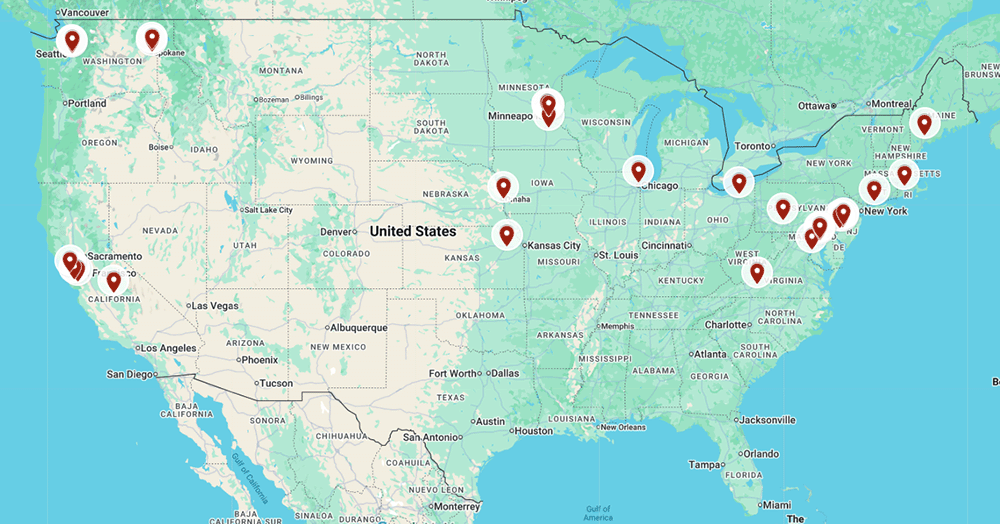
Map Image