
Research Highlights from the Teaching Pathway Postdoctoral Program
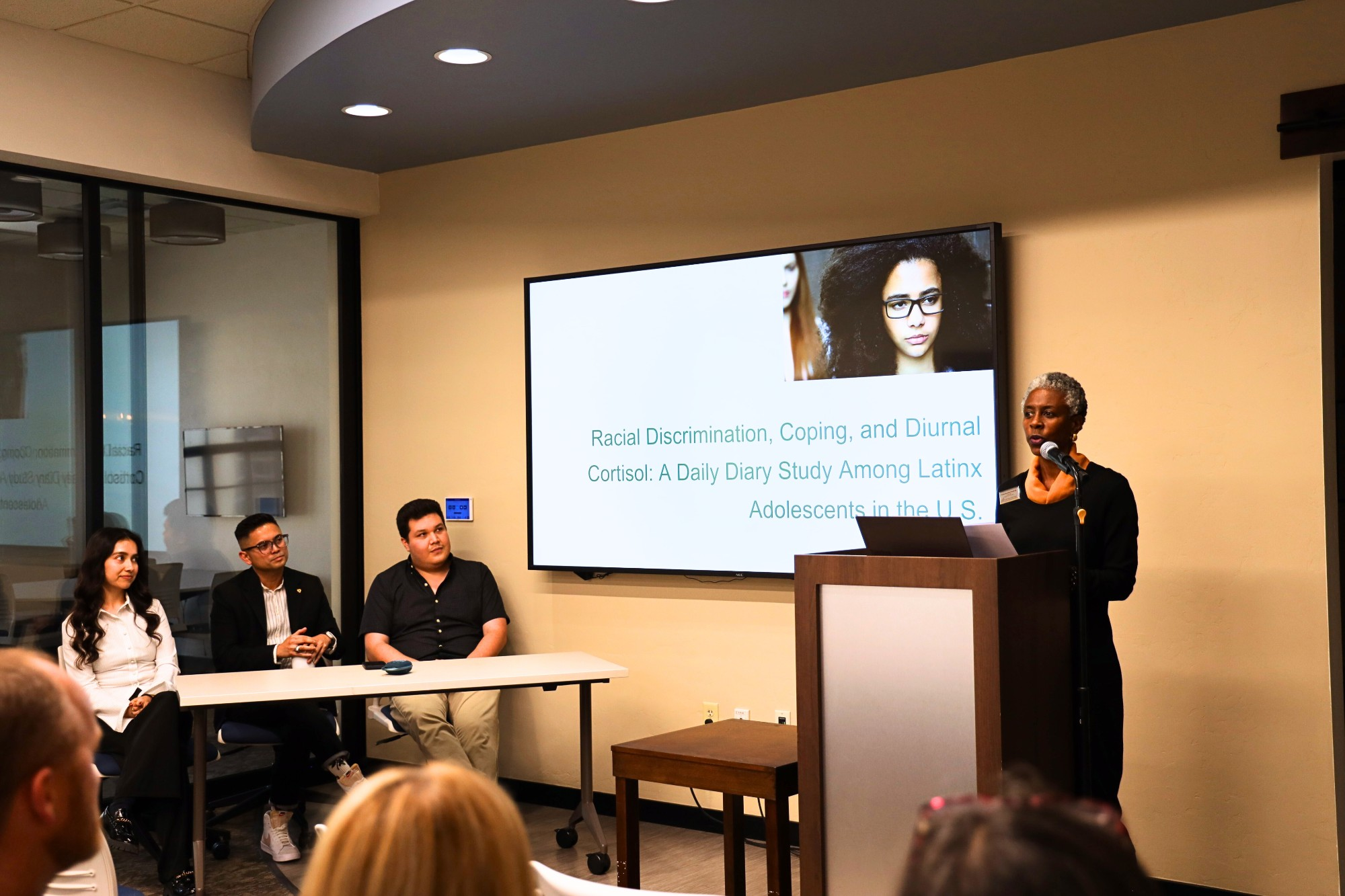
On March 6, the College of Arts and Sciences held a research presentation panel highlighting the work of the three postdoctoral faculty members from the Diversity Postdoctoral Faculty Program: Arturo León Sandoval, PhD; Evelyn Sarsar, PhD; and Wilfred Paloma, MFA. The program is highly competitive, recruiting talented teacher-scholars from across the nation. “We’re excited that our students have access to these faculty as teachers to enrich their USD experience,” shared Associate Dean of Faculty and Program Committee Co-chair Kristin Moran, PhD.
The event also served as an opportunity to announce a new name for the program: Teaching Pathway Postdoctoral Program. “Often referred to as 'Teaching Postdoctoral Programs' within academia, we intentionally adopted the term 'Pathway' to more accurately reflect the intended purpose of the program in advancing academic careers, particularly by embedding the teacher-scholar model," explained Assistant Dean of Undergraduate Studies and Program Committee Co-chair Pauline Berryman Powell, MA.
Plans to change the name of the program had been in the works for some time after former participants of the program requested a different name.The program, as always, remains committed to the development of scholars who empower students from U.S. communities that are underrepresented in academia. The announcement of the new name was received with excitement by attendees and current postdoctoral faculty in the program.
After the announcement, Dr. Sarsar from the Department of Psychological Sciences started off the panel with her presentation titled “Racial Discrimination, Coping, and Diurnal Cortisol: A Daily Diary Study Among Latinx Adolescents in the U.S.” Her research explored the effects of different types of coping strategies – in response to racial discrimination – on cortisol levels in a small group of young Latinx teens. She shared her methodology and results which did not support her original hypothesis – that proactive coping strategies would have a major impact on diurnal cortisol. Dr. Sarsar shared that there were some indications that proactive coping strategies were protective but given the small number of participants, their developmental stage (in terms of age) and the short research collection period, more long-term research is needed.
Next, Paloma from the Department of Theatre presented his work with Interview Theatre – a form of documented theatre in which plays are constructed using the precise words spoken by interviewees. His work is influenced by Theatre of the Oppressed, a form of theater aimed at empowering communities and instigating social change. As a result, Paloma intentionally centers the experiences of the people he interviews and works with to create plays. His presentation titled “Theatre for the Public Good: Reflections on Street Seen,” spotlighted Street Seen, a project he stewarded that shared the stories of people who are unhouse. The project involved a great deal of collaboration from multiple universities and local organizations, including Diversionary Theatre, where Paloma serves as the director of education.
Dr. León Sandoval from the Department of Chemistry and Biochemistry, gave the final presentation titled “Building Molecules, Building Medicines: Exploring the Chemist’s Toolbox.” His presentation gave attendees a thorough lesson in understanding how medicines are manufactured. He not only expertly explained the chemical processes of creating molecules and medicines, but also the costs associated with each step of the process. Dr. León Sandoval drove home the importance of the work he and his lab have been conducting in regards to finding ways to more easily and inexpensively manufacture highly valuable molecules needed for the development of medicines. He also shared the progress they have made and the challenges they are working to resolve.
After the presentations, attendees dove deeper into the work of the postdoctoral faculty by asking questions. A couple of people noted the ways in which the three distinct areas complemented one another. “I was thrilled to hear how these different research projects interplayed with each other during the panel,” shared Dr. Moran.
Overall, the event was a success and highlighted the important work being conducted by the postdoctoral faculty as well as the importance of programs like these. “Today’s presentation was a wonderful example of how the Teaching Pathway Postdoctoral Program displays teaching excellence while cultivating inclusive communities within academic departments at the university, specifically in the College of Arts and Sciences,” said Powell.
By Gaby Ortiz Flores