
USD Faculty and Students Learn About Kumeyaay History, Culture During Native American Heritage Month
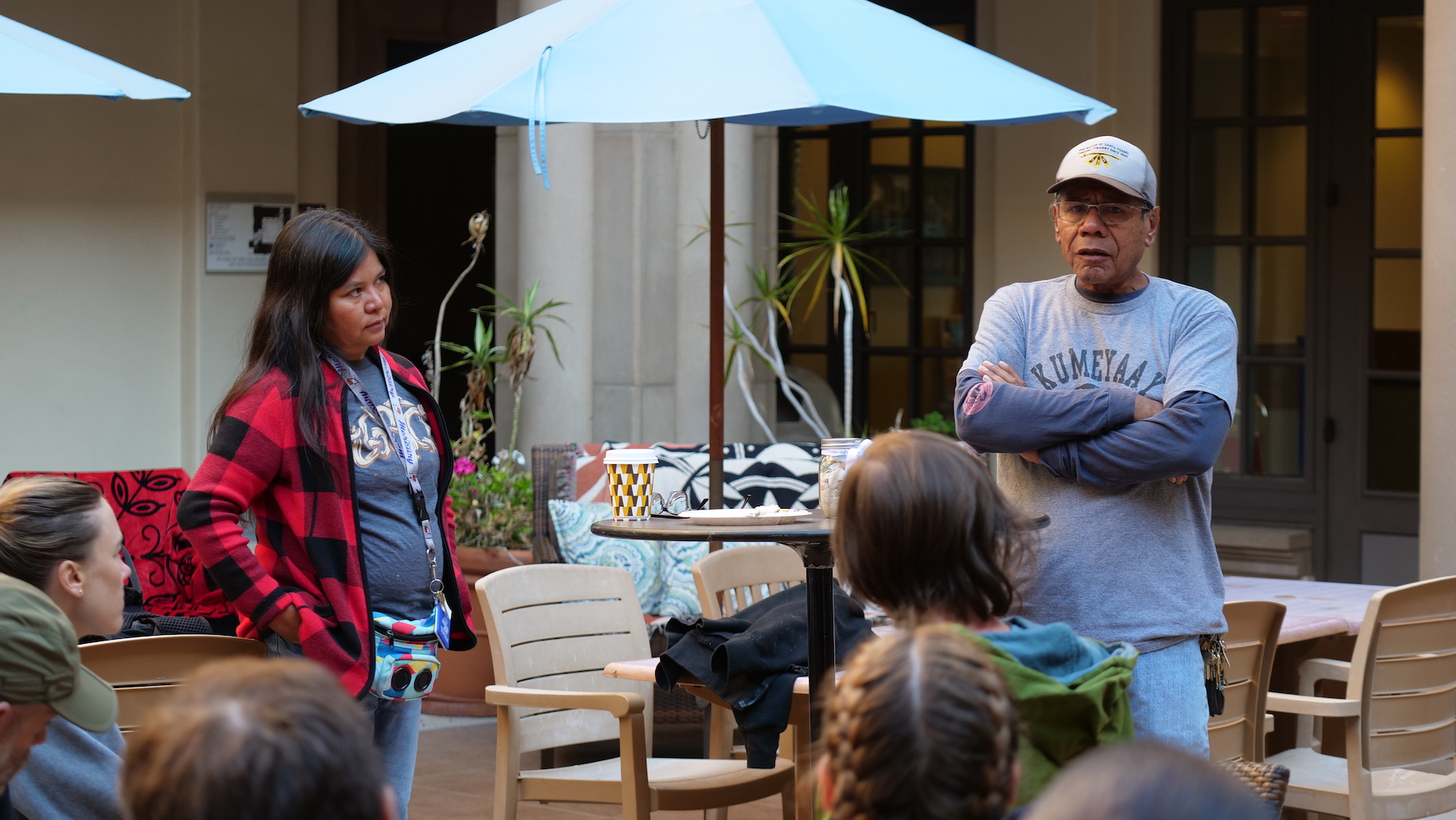
As Native American Heritage Month began, Sahmie Wytewa, Tribal Liaison at the University of San Diego, wanted the USD community to reflect on years past before looking to the days ahead.
The Office of the Tribal Liaison kicked off a month of events Friday with Kumeyaay History Day. Dozens of students, faculty and staff took part, and were guided through various activities by Kumeyaay elder and President of Kumeyaay Community College, Dr. Stan Rodriguez.
“(In Rodriguez) we have a very valued cultural member and steward guiding these conversations,” Wytewa said. “This is probably one of the first times that a Kumeyaay elder is coming to share a really strong (piece of) history. It was nice to be out there with our faculty, students and visitors asking questions.”
The goal of the day was to gain first-hand perspective about the Indigenous people who have historically called the region home, and acknowledge their relationship to the land.
The day started with the Wake the Fire Walk – a trek through Tecolote Canyon. Rodriguez led the group through the area, pointing out some of the native plants and wildlife. A lighthearted observation from Rodriguez (“Anyone know what that is,” he asked rhetorically, before cracking a smile and stating the obvious “a rabbit!”) was followed by an explanation of how the nature in the canyon connects to Kumeyaay traditions and culture – all opening the door to more questions, discussion and understanding.
After a light breakfast and social hour, the group piled into vans for a short ride over to what’s known as Mission Basilica de San Diego Alcalá. That site, like much of San Diego, resides on Kumeyaay ancestral lands. And, in 1775, it was the site of a Kumeyaay revolt against missionaries who, Rodriguez said, had mistreated and subjugated the Kumeyaay people.
Rodriguez detailed the history of the revolt and what led up to it, before again opening the floor to a discussion. Attendees – with Indigenous backgrounds and otherwise – reflected on what they’d learned, how it affected them, and how it might broaden their perspective moving forward.
Wytewa says creating those kinds of spaces, even ones where we discuss violent or traumatic events of the past, are an important part of coming together as a community and moving forward. Talking, and listening, are key.
“Something that we’ve learned in launching programs and developing conversations on this campus is that we want to do a better job of unpacking how people are taking that information in, and creating programming around those conversations,” Wytewa said.
Rodriguez has an animated and engaging personality befitting of an educator. In Friday’s roving classroom, he was eager to share stories about Kumeyaay history, answer questions, and take part in discussions. Learning to appreciate Kumeyaay culture, he said, could help spark oneself to investigate their own culture, and grow their connection to it. The product, he says, is a more tolerant society and a “celebration of diversity.”
“That’s one of the things that made this space extra special – that everyone was coming from a different place, a different perspective, different experiences,” said third-year student Gladys Torres Olivarria, who was at Kumeyaay History Day from beginning to end. “Because you won’t be able to understand something if you’re not looking at it from all the perspectives available, and I think that’s what diversity brings.”
Kumeyaay History Day was one of several events the Office of the Tribal Liaison is organizing for Native American Heritage Month. But Wytewa wants to stress that at USD this type of celebration goes beyond November.
“We really want to emphasize that while we’re celebrating Native American Heritage Month with this kickoff,” she said, “we celebrate Native and Indigenous identity every single day.”