
USD School of Law Colloquium: Judge M. Margaret McKeown
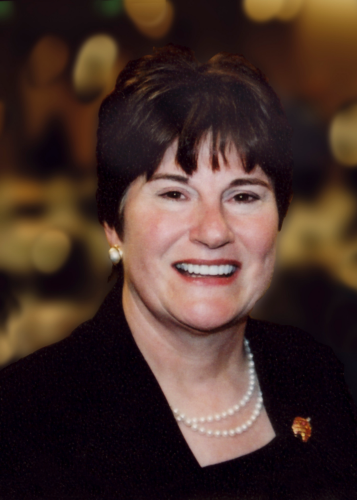
Judge M. Margaret McKeown
U.S. Court of Appeals, Ninth Circuit
Jurist in Residence, USD School of Law
The topics of the talk will be her book, Citizen Justice: The Environmental Legacy of William O. Douglas - Public Advocate and Conservation Champion and her Yale Law Review (October 24, 2021) article Politics and Judicial Ethics: A Historical Perspective.
M. Margaret McKeown has served almost twenty-five years as a judge on the U.S. Court of Appeals for the Ninth Circuit. She is a member of the American Academy of Arts and Sciences, an affiliated scholar at the Center for the American West at Stanford University, and jurist-in-residence at the University of San Diego School of Law. As a former White House Fellow, she served as special assistant at the White House and as special assistant to the Secretary of the Interior. A Wyoming native, she serves on the board of Teton Science Schools and was a member of the first American expedition to Mt. Shishapangma in Tibet.
Open to all, but seating is limited so RSVP now.
A light lunch will be provided to everyone who submits an RSVP by Tuesday, March 28th.
Questions? usdlawevent@sandiego.edu
Judge McKeown graduated from Georgetown University Law Center and holds an honorary doctorate from Georgetown University. Before her appointment, she was the first woman partner at Perkins Coie in Seattle and Washington, D.C.
Judge McKeown is a member of the US Judicial Conference Committee on Judicial Conduct and Disability. She chairs the Ninth Circuit Workplace Environment Committee and is a member of the National Workplace Conduct Working Group. She is on the Council of the American Law Institute, the Judicial Advisory Board of the American Society of International Law, and the editorial board of Litigation magazine. She served as Chair of the ABA Commission on the 19th Amendment, past President of the Federal Judges Association, and former chair of the US Judicial Conference Codes of Conduct Committee (ethics).
Judge McKeown is on the board of the World Justice Project and is Vice Chair of the ABA Rule of Law Initiative and a current special advisor. She has lectured throughout the world on international law, intellectual property, human rights, ethics, and constitutional law and has participated in numerous rule of law initiatives with judges and lawyers.
Judge McKeown received the ABA Margaret Brent Women Lawyers of Achievement award, the ABA John Marshall Award, the Inns of Court Ninth Circuit Professionalism Award, the Washington Women Lawyers President’s Award, and the Girl Scouts Cool Woman Award, among others.
Author of "Citizen Justice: The Environmental Legacy of William O. Douglas"
“Like her subject, Margaret McKeown is a child of the West, a distinguished jurist, an incisive writer, and a lover of wild places. She brings all those assets powerfully to bear in this long-overdue account of William O. Douglas’s enormously consequential contributions to the modern conservation movement. Douglas was chronically controversial, frequently cantankerous, sometimes conniving, and often cavalier about judicial ethics. But whether on the bench or on the trail, he toiled tirelessly and creatively to protect the wilderness he held so dear. This colorful and compelling book secures his rightful place in the pantheon of environmental champions.”
—David M. Kennedy, Professor Emeritus of American History, Stanford University; Pulitzer Prize for History; author, Freedom from Fear: The American People in Depression and War, 1929-1945; former director of Stanford’s Bill Lane Center for the American West
U.S. Supreme Court Justice William O. Douglas was a giant in the legal world, even if he is often remembered for his four wives, as a potential vice-presidential nominee, as a target of impeachment proceedings, and for his tenure as the longest-serving justice from 1939 to 1975. His most enduring legacy, however, is perhaps his advocacy for the environment.
Douglas was the spiritual heir to early twentieth-century conservation pioneers such as Teddy Roosevelt and John Muir. His personal spiritual mantra embraced nature as a place of solitude, sanctuary, and refuge. Caught in the giant expansion of America’s urban and transportation infrastructure after World War II, Douglas became a powerful leader in forging the ambitious goals of today’s environmental movement. And, in doing so, Douglas became a true citizen justice.