
Global Alliance for Laudato Si’
The Inaugural Meeting of the Global Alliance for Integral Ecology
The bedrock of USD’s Shiley-Marcos School of Engineering mission as a contemporary Catholic university is to challenge academic professionals to do more than solve technical problems — it calls on them to work toward a more just and sustainable world. Caroline Baillie, a professor and academic director of the Master of Science in Sustainability, Health and Engineering (MESH) program, recently took that mission directly to the heart of the Vatican.
More than half a century ago, with the world on the brink of a nuclear crisis, Pope Saint John XXIII issued a landmark encyclical that rejected war and offered a vision of global peace. Today, Earth faces a parallel threat: an accelerating environmental collapse that has become the defining crisis of our century.
In response to this modern crisis, Pope Francis published his 2015 encyclical, “Laudato si’,” subtitled “On Care for Our Common Home.” The document's title is drawn from St. Francis of Assisi’s 13th-century poem, “Canticle of the Creatures.” By anchoring his urgent call to protect the environment in St. Francis's centuries-old reverence for the interconnectedness of all living things, Pope Francis issued a profound challenge to humanity: to honor the inherent dignity of the Earth and everyone on it.
Now that call to action is taking a massive step forward. Rooted in the encyclical’s vision, the Global Alliance for Integral Ecology launched in 2026 to develop a strategy to implement these teachings and address complex ecological crises by pooling international research and best practices.
This international network of universities, research centers and organizations formally debuted during its inaugural convening March 9 and 10, 2026. Born from a partnership between the University of Notre Dame and the Vatican’s Laudato si’ Center for Higher Education, the alliance marks a major milestone in collaboration between global academia and the Holy See, the central governing body and spiritual leadership of the global Catholic Church.
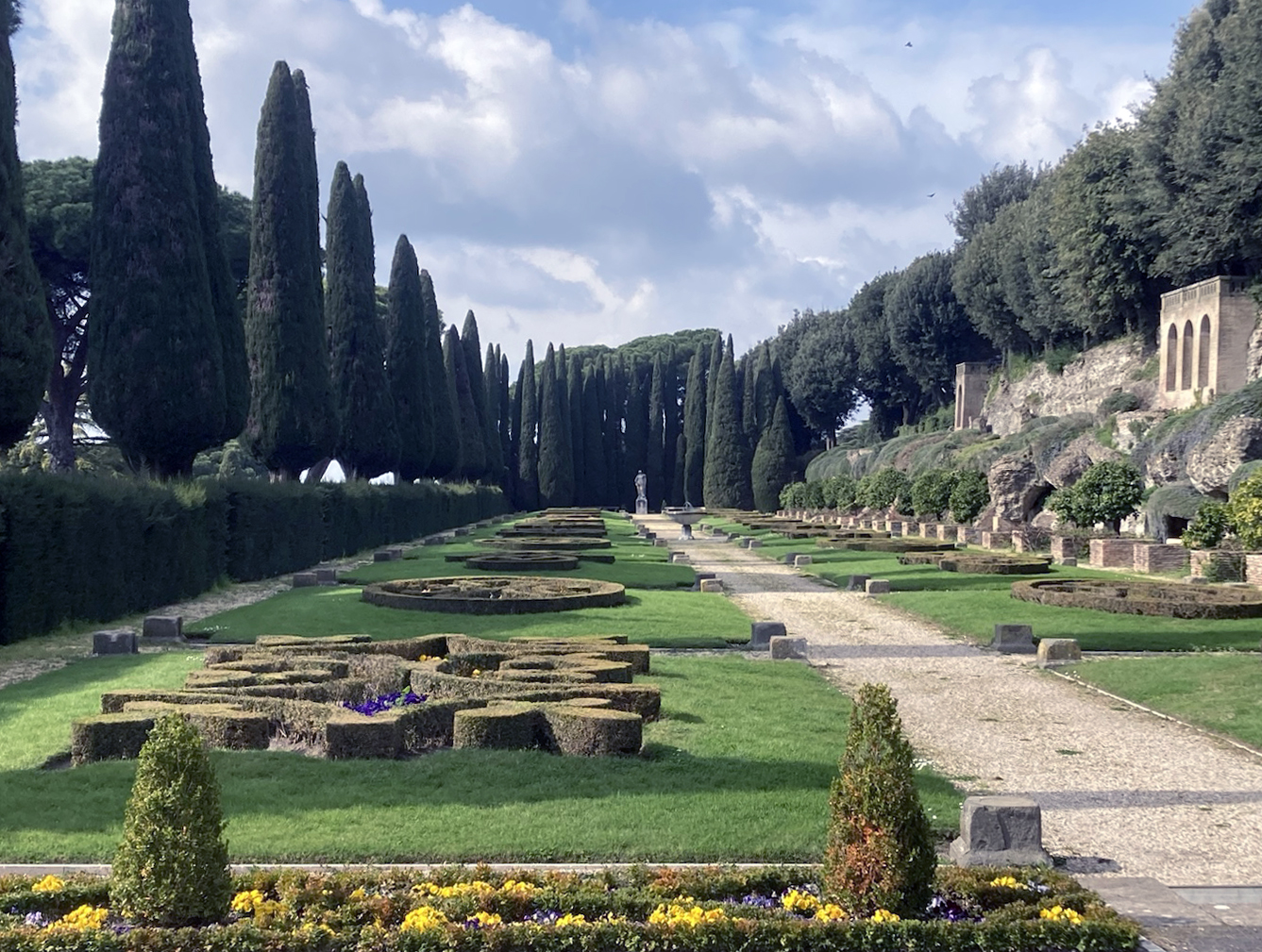
The inaugural meeting brought together scholars and sustainability leaders representing more than 60 universities and 30 countries across the Americas, Europe, Asia and Africa. The event was held at Borgo Laudato si’, a historic papal summer residence in Castel Gandolfo, Rome that has been transformed into a living laboratory for ecology.
The Laudato si’ Center for Higher Education and the University of Notre Dame’s Just Transformations to Sustainability Initiative welcomed more than 100 scholars and institutional leaders from around the world to develop and advance a long-term vision for the Global Alliance.
“The invitees were selected on the basis of how they reflect the principles of Laudato si’ and bring them to life whilst resonating deeply with the values and vision we are working to advance.” Baillie recalls, “I met an amazing number of individuals from other countries and different disciplines, all of them working at the intersection of sustainability and justice.”
The convening enabled participants to share and critically reflect on sustainability research and education while drawing inspiration from the principles of integral ecology. It also helped build partnerships and establish shared research, educational and action goals consistent with the Pope’s message.
“Ultimately, we created forward-looking working groups to affect transformative change for sustainability,” Baillie notes.
The two-day meeting comprised one day of sharing expertise through panel discussions on redefining fields, reimagining futures and enabling collaboration. “I presented in the enabling collaboration discussion about my research on transformative, transdisciplinary education and demonstrating this through my work for MESH,” says Baillie.
“We spent the second day planning what the groups might do over the next two years and to establish a budget.” She adds, “We aimed to explore how these amazing principles can be implemented across the world and into different programs.”
Fundamentally, the convening ignited an enduring collaborative movement that ensures the power of science is directly harnessed to answer what Pope Francis eloquently named "the cry of the earth and the cry of the poor." This alliance perfectly mirrors USD’s own commitment to the Vatican’s environmental call.
“This is a conversation about the very future USD is helping to build,” concludes Baillie. “This matters for the USD Community because knowledge integration defines how we bridge the gap between engineering, health and social justice in a sustainable way. Global citizenship also speaks to engaging with international leaders to reshape higher education.”
In July 2026, President James T. Harris III issued a formal letter of commitment requesting membership for the University of San Diego in the Laudato Si’ Action Platform. The Vatican-sponsored initiative helps institutions develop and track a seven-year roadmap for sustainability across seven core pillars addressing ecological and social challenges. This engagement positions the university at the forefront of global, faith-integrated ecological action.
For a deeper dive at the inaugural meeting, listen to Dr. Caroline Baillie's podcast here.