
From Campus RJ to Leading Restorative Practices: Restoring a Community in St. Louis
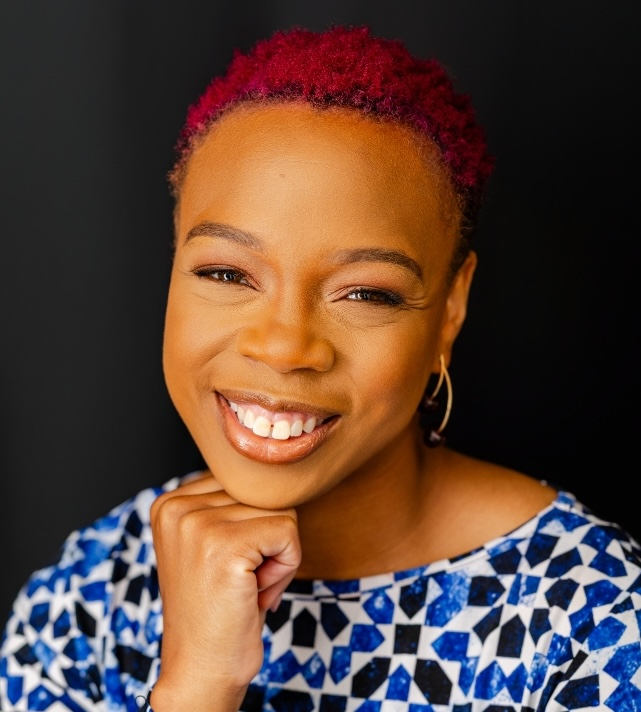
After completing her certificate, Phillips immediately put her training into action within student affairs, embedding restorative principles across her various roles in higher education. She also remained deeply engaged with the Center through her leadership on the planning committee for the Restorative Justice Network of Catholic Campuses (RJNCC), collaborating with colleagues nationwide to help institutions articulate, strengthen, and implement restorative practices.
Ultimately, Phillips’ commitment to healing harmed individuals extended far beyond higher education; in the spring of 2025, she successfully applied her restorative justice (RJ) training to address and repair the impact of a gun violence incident within her own neighborhood in St. Louis, Missouri.
Taking Healing into Their Own Hands
St. Louis is a region frequently impacted by severe weather. During a tense tornado warning that spring, residents followed emergency safety protocols and sheltered indoors. As neighbors emerged from their basements and living rooms, a sudden and volatile exchange of gunshots erupted outside. “It was a very sustained amount of shooting back and forth and arguing,” said Phillips. There were multiple parties involved and injuries included a totaled car and a wounded individual. The physical damage was clear, but the emotional toll on the neighborhood was staggering: the community at large was left confused, terrified, and deeply hurt.
In absence of an alleviating response from the police department, Phillips knew the community couldn't wait around to heal. Despite being relatively new to the neighborhood, she partnered with Janika Grimlund, and seven other neighbor leaders to organize a timely, structured restorative response. To do this right, Phillips recognized she needed to uncover the historical harms that existed long before the shooting, deep-rooted issues tied to social equity and homeownership barriers. Knowing she couldn't do it alone, she modeled two leadership circles and distributed roles among long-time community members, leveraging their years of lived experience to build a trusted, representative leadership team. A few of their restorative responses included:
-
Checking in on the family most directly affected by the shooting, which had taken place right in front of their home.
-
Hosting community building social events that included a silent restorative gathering. Since tensions were very high, they felt it important for people to reflect and write down responses to prompts in a different setting than a circle
-
Community building circles, which offered a different way to gather responses than the silent social
Ensuring that every affected voice was heard presented a major challenge, yet it remains the most critical step in the restorative justice process. For neighbors who couldn't or didn't want to attend in-person circles, Phillips and her team gathered input via QR codes and visits to neighbors homes. This exhaustive outreach ensured that everyone could share their story.
This initial work culminated 45 days post-incident at a neighborhood-wide Community Concern Circle, where residents gathered to understand their collective harm and chart a way forward. By using the synthesized responses to design localized solutions, the community successfully self-organized. Neighbors made voluntary, personal commitments to build a safer, more cooperative environment, rolling out tangible resources and events including, a neighborhood directory booklet, a little free library, community trash cleanups, and even Community-wide de-escalation and peer support training.
A pivotal moment of healing occurred quietly during a neighborhood trash pickup event. To Phillips’ surprise, the child of the individual who had caused the initial harm showed up to help. Looking around, Phillips realized the entire neighborhood was finally together in one location, actively reestablishing trust. From that moment on, the momentum grew. The family attended a community baseball game together. By October, 75 residents showed up for a celebratory neighborhood block party. One year after the shooting, the community gathered for a "Celebration Circle" to mark how far they had come.
The C.A.L.I. Method and Beyond
As a result, Phillips has exceeded her initial efforts, “We have a model to be able to dialogue now because of this." The model is called CALI, which stands for:
-
Communication/Connection
-
Action
-
Learning
-
Inclusion
The success of the neighborhood's response also allowed Phillips to establish meaningful, long-term partnerships with local organizations like The Center for Conflict Resolution in St. Louis, Invest STL, and the St. Louis Association of Community Organizations Small Dollars Action.
She attributes part of her success to the knowledge and support from the Center’s Restorative Justice Facilitation Certificate program and RJNCC. Phillips said, “The program really helps give you the resources and the tools that you need to feel like you can go ahead and activate it, and I have so many people at my disposal. The National Restorative Coaching Program provided a coach, and I was able to process some of these ideas with them as well…I wasn't doing any of it alone."
Interested in learning how to facilitate healing and resolve conflict in your own school, workplace, or community? Learn more about the USD Center for Restorative Justice Facilitation Professional Certificate or Master of Arts in Restorative Justice Facilitation and Leadership.