
CPPC Administrative Director, Marcus Friedman ’21 (JD) Featured in ABC 10News
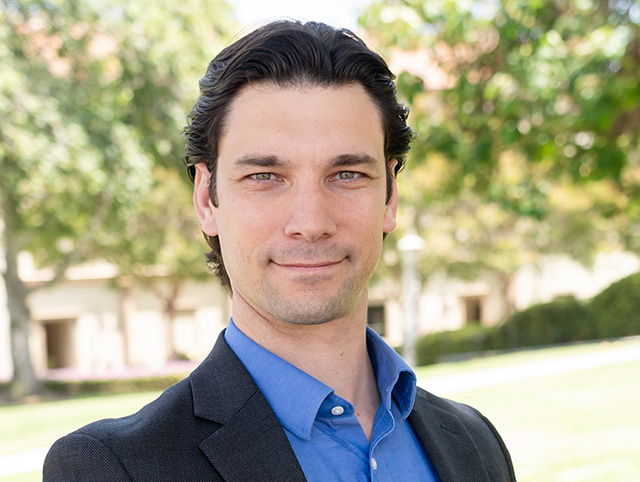
SAN DIEGO (May 21, 2026) – The University of San Diego (USD) School of Law Consumer Protection Policy Center’s (CPPC) Administrative Director Marcus Friedman was featured in ABC 10News in an article titled, “Doctor sexual misconduct bill introduced after Team 10 exposes loophole in state law.” The article covers the introduction of SB 849, a bill aimed at strengthening California’s physician sexual misconduct law following a Team 10 investigation that revealed significant gaps in the existing statute, AB 1636.
According to the article, a prior Team 10 investigation found that AB 1636, a law authored by Senator Akilah Weber Pierson and touted as a measure to prevent doctors who sexually abuse patients from continuing to practice, contained a loophole that allowed several physicians to keep or regain their medical licenses even after disciplinary findings. In one case, an OB/GYN whose license had been revoked had it reinstated just weeks after AB 1636 took effect. In another, a gynecologist convicted of felony sexual assault was permitted to have his license restored after completing probation.
SB 849 would require the Medical Board of California to automatically revoke the license of any physician whose license was reinstated on or after January 1, 2020, following a finding of sexual misconduct with a patient. The Medical Board has acknowledged it supports the spirit of the bill but has asked Senator Weber Pierson to broaden the legislation, noting that, as currently written, it would affect only one physician statewide. The Board also raised concerns that the bill’s retroactive approach could expose the agency to costly litigation.
“I think it’s possible for this to end up in the courts for an argument as to whether or not the legislature can retroactively turn back decisions made by a regulatory agency in distributing licenses to practice a profession,” Friedman said.
Friedman also noted that the Medical Board continues to impose penalties below the levels recommended by administrative law judges, relying on minimum disciplinary guidelines. “Until the legislature addresses that problem,” he said, “I believe that the Medical Board will continue to discipline at its lowest guideline levels.”
CPPC has been actively engaged on issues of physician discipline and patient protection before the Medical Board of California. The Center has consistently urged the Legislature and the Medical Board to prioritize meaningful accountability measures that protect patients from physicians who engage in sexual misconduct.
Read the full article: ABC 10News: Doctor sexual misconduct bill introduced after Team 10 exposes loophole in state law
Related Story: June 4, 2026, Plastic surgeon on probation with medical board ordered to stop working, ABC 10News San Diego
About Consumer Protection Policy Center
Founded in 1980, the University of San Diego School of Law’s Consumer Protection Policy Center (CPPC) at the Centers for Public Interest Law (CPIL) serves as an academic center of research and advocacy in regulatory and public interest law. CPPC focuses its efforts on the study of an extremely powerful, yet often overlooked, level of government: state regulatory agencies. Under the supervision of experienced public interest attorneys and advocates, CPPC law student interns study California agencies that regulate business, professions, and trades.
CPPC publishes the California Regulatory Law Reporter, a unique legal journal that covers the activities and decisions of over 13 major California regulatory agencies.
In addition to its academic program, CPPC has an advocacy component. Center faculty, professional staff, and interns represent the interests of the unorganized and underrepresented in California’s legislature, courts, and regulatory agencies. CPPC attempts to make the regulatory functions of California government more efficient and visible by serving as a public monitor of state regulatory activity. The Center has been particularly active in reforming the state’s professional discipline systems for attorneys and physicians, and in advocating public interest reforms to the state’s open meetings and public records statutes.
About the School of Law
Each year, USD Law educates approximately 800 Juris Doctor and graduate law students from throughout the United States and around the world. The law school is best known for its offerings in the areas of business and corporate law, constitutional law, intellectual property, international and comparative law, public interest law and taxation.
USD School of Law is one of the 88 law schools elected to the Order of the Coif, a national honor society for law school graduates. The law school’s faculty is a strong group of outstanding scholars and teachers with national and international reputations. The school is accredited by the American Bar Association and is a member of the Association of American Law Schools. Founded in 1954, the law school is part of the University of San Diego, a private, independent, Roman Catholic university chartered in 1949.