
Financial Wellness is one of the seven pillars of Wellness and in order to practice healthy wellness, students must engage into one's literacy and understand their financial pathway.
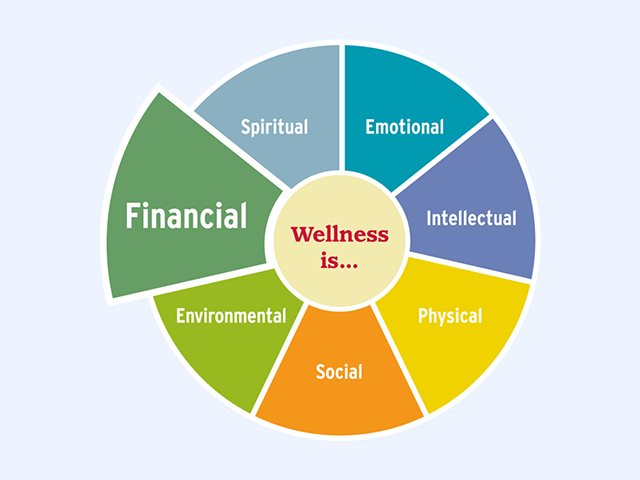
What is Financial Wellness
Financial Wellness is an on-going process and combination of increasing awareness of your current financial state, strengthening your knowledge of Financial Literacy, making well-informed decisions, and taking intentional and mindful steps towards achieving financial well-being. As a college student, an emerging young adult or working professional, personal finances can be a stressful area to manage. However, with the right tools, resources, and education, you can learn how to manage your finances and improve your overall financial well-being.
Breaking the Boundaries of Financial Wellness
Coming from various backgrounds, every student has a different financial pathway and consciousness. To understand your own pathway, it is favorable to engage early, get organized, and connect to the various resources offered on campus. By understanding your own position and beliefs about Financial Wellness, you will be able to conceptualize your own goals to achieve a healthy Financial Wellness. As one of the Wellness pillars, Financial Wellness is a growing discussion not only for students alike, but also for majority of the working public. With growing demands for improvements and attainable goals, kick-starting your discussion of your own personal Financial Wellness will provide the necessary tools you need to succeed.
Financial Literacy relates to how you understand and engage with your relationship to finances. Financial Literacy is a life-long skill, during which you continue to increase your knowledge and acquire new information about various financial topics in order to make well informed decisions. Whether it’s understanding how to complete your taxes, effectively educating yourself before buying a new car, or gaining new tools to sustain a monthly budget, Financial Literacy provides you with an educational lens before you decide to take an action and make a financial decision.
It can be achieved formally and informally by taking a financial workshop, course, reading books, subscribing to online articles and newsletters, or speaking to a financial advisor. By discovering opportunities and resources on campus such as USD's Torero Hub or attending financial wellness workshops hosted by the Commuter Commons and student organizations, being proactive towards learning can help you take one step further in achieving Financial Literacy.
Financial Knowledge
Measure their progression toward higher-order thinking skills.
Financial Sentiment
Indicators to understand a person's feelings and attitudes toward money.
Financial Behaviors
Stages of Change model used to measure financial behaviors.
Financial Systems
Review of their financial accounts, management systems and team.
Overall Results
Measures that quantify a person's overall financial results achieved.