
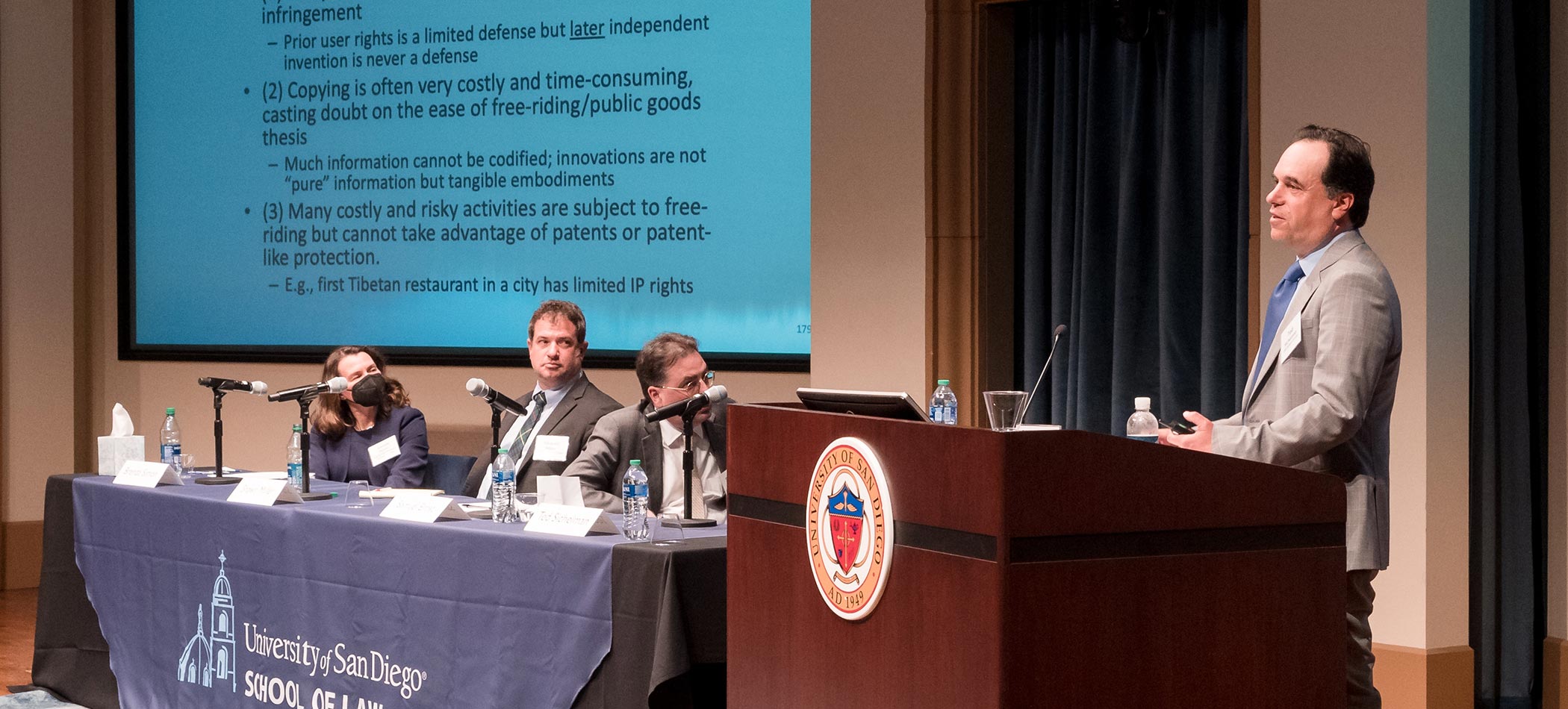
The Center for Computation, Mathematics and the Law (CCML) examines and develops applications of cutting-edge computational and mathematical theory and techniques for the solution of legal problems and the practice of law.
Areas of interest include the application of computational techniques and artificial intelligence to law in eDiscovery, legal search, caselaw analysis, contracting, legal reasoning and argumentation, evidentiary analysis, litigation and settlement, intellectual property and regulatory compliance. Additionally, the Center for Computation, Mathematics & the Law investigates more mathematically oriented approaches to topics such as complexity in the law, legal uncertainty, legal networks and game theoretic models in the law. The center regularly holds workshops and conferences to explore these areas of interest.
Leadership
Directors
Racing with the Legal Computation Machine at the Inaugural Center for Computation, Mathematics & the Law Workshop
by J.B Ruhl, Law 2050: A Forum about the Legal Future
SAN DIEGO (March 24, 2014) – I took a deep dive last week into the world of legal computation, to see just how far it has come, where it is going, and how transformative it will be as a force in legal thought and practice. I was provided this opportunity as a participant in the inaugural workshop of the University of San Diego Law School's new Center for Computation, Mathematics & the Law (CCML). (Before going into the details, let me add that if one is going to attend a workshop, USD is one heck of a nice place to do it! To emphasize the point, and to highlight the impact the CCML already is having, the International Conference on Artificial Intelligence and Law has selected USD as the site for its 2015 annual meeting.)