
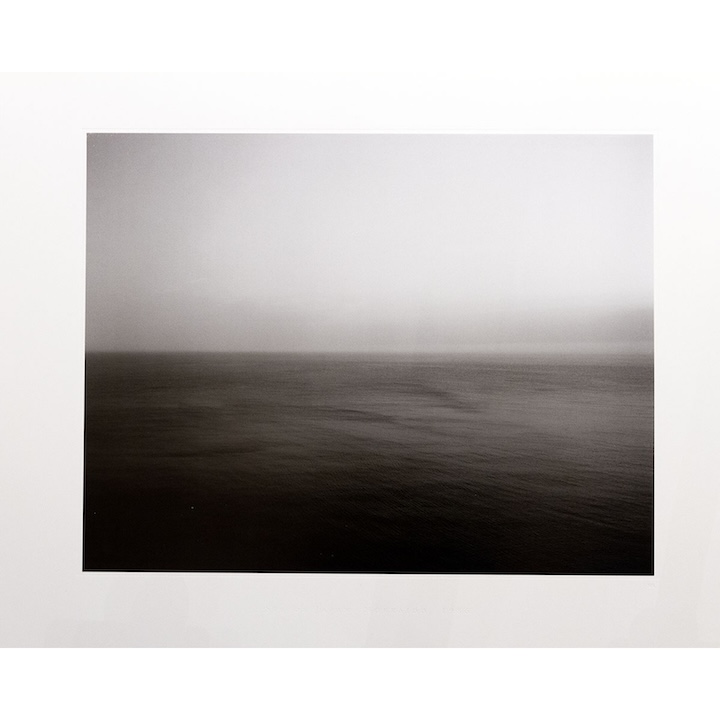
September 10 - November 25
Centering Art: Acquisitions, 2016-2026
From the beginning, USD's Humanities Center has placed critical study of images near the heart of its overall programming efforts. Since opening in Fall of 2016, forty exhibitions have taken place in the small gallery adjacent to the Center's main "salon" space. Recently, several small-scale exhibitions have been curated within the Center by art history students working outside of the gallery itself as part of the "Trivium" series. This commitment to careful inspection of visual culture owes a great deal to the direction of Brian Clack and Lindy Villa. Quietly, they have piloted an ambitious acquisition effort in support of the displays mounted in the gallery, adding essential works that have enriched curatorial perspectives within these projects as well as their associated programs. Centering Art: Acquisitions 2016-2026 offers an opportunity to take stock of accomplishments. Indeed, reviewing the variety of art that has helped make the Humanities Center a vibrant intellectual hub for the entire university also provides an occasion for considering these works as a unique collection. Assessing, rethinking, and imagining future directions for this essential academic resource is a primary goal for the tenth anniversary year. All the works displayed in this exhibition are housed in the University Galleries' Print Study Room but belong to the Humanities Center/College of Arts and Sciences.
November 30 - December 11
Screenings 17: Kay Rosen
Kay Rosen (b. 1943) trained as a professor of Linguistics and taught that discipline for several years at the University of Indiana before taking courses at The School of The Art Institute of Chicago. Rosen left academia in the 1980s to devote herself full-time to a career as an exhibiting artist. Her creative interrogations of ordinary language have since won her international renown. Today Rosen's work can be found in permanent collections of major museums, including the Metropolitan Museum of Art, New York and the Art Gallery of New South Wales, Sydney. The brightly colored installations she produces tug new meanings from of everyday phrases through typographical shifts, word play, and poetic intent. Her 1991 video, Sisyphus is a telling example of this practice. Rosen tackles the common mis-spellings of a famous character from Greek mythology: Sisyphus. He is said to have angered Zeus and received perpetual punishment in return. Sisyphus is commanded to push a boulder up a mountain, only to have it tumble back to the bottom as soon as he reaches the top. Rosen's stark video rehearses the myth in slapstick terms, suggesting the frustrations involved in working hard to attain success alongside the commonplace of mistaken communication.
On View
Gallery Hours
Monday - Friday, 11am-4pm
Location
Humanities Center Gallery, Sts. Tekakwitha and Serra Hall, 200
Screenings 16: Yvonne Rainer
Yvonne Rainer (b. 1934) is a dancer and filmmaker whose interdisciplinary practice has achieved legendary status. Starting with her early performances at the Judson Memorial Church in New York City, Rainer challenged reigning ideas about what dance should look like, incorporating everyday actions and non-traditional performers into her highly intellectual choreography. Trio A is one of her most celebrated works. Conceived in 1965, Trio A was danced in discrete sections, each lasting 4 ½ to 5 minutes, all without musical accompaniment. The idea of a “silent” dance performance was something Rainer had absorbed from her close association with John Cage. Over the years, Trio A has evolved into something like a standard in Rainer’s repertoire. On occasion it is intended to be overtly political, as when it was performed by naked dancers draped in American flags, while at other times it has been staged in stark, minimalist terms. Trio A was filmed by Sally Banes, an important dance critic, in 1978. Banes captured Rainer’s solo performance in black and white, 16mm film at Merce Cunningham’s rehearsal studio. Rainer had been on a five-year hiatus from all performing when this film was made.
On View
Gallery Hours
Monday - Friday, 11am-4pm
Location
Humanities Center Gallery, Sts. Tekakwitha and Serra Hall, 200
Galleries are closed for university holidays.
Related Events
COVID-19 Safety Measures
The University continues to update its COVID-19 guidelines. Please check the Onward USD website prior to your visit for current face covering and vaccination protocols.