
Participating in research activities fosters critical thinking skills, prepares students for the workforce and helps them decide whether or not to include research in their academic and professional careers. Lab and field work is an asset for any student and is particularly important for those interested in graduate school.
Research and Fieldwork
Our students and faculty are conducting exciting research. Here is a sample of the research by the Department of Ethnic Studies.

Mobile Classroom
The Turning Wheel Project
El Pueblo En Movimiento - A Community In Movement
The Turning Wheel Project is designed as a hub to serve, inspire and inform the community through the power of education. Turning Wheel will work closely with schools to teach youth about the power of art, science and engineering knowledge, and all aspect of wisdom that will inspire and serve to transform communities.
Event
Day of Indigenous Resistance
(De)Colonizing Universal thought
The naming of the past bears a mark on our present. This conversation and roundtable reflects on the meaning of "Columbus Day," and honors the resistance of first peoples and nations of the Americas. While questioning narratives of "discovery," this dialogue historicizes the cultural, socioeconomic and educational dimensions of decolonization, and considers the current implications of a contested naming today.
Student Project
Whose land is it anyway?
Spring 2015 Student project by Justin Marcum, Paige Vogel, Jake Wittwer and Tiana Bonn
The University of San Diego is located on prime, coastal real estate. Who did the land initially belong to, and how did it come to be the home of a private Catholic university?
Since 10,000 BC, at least 600 generations of Kumeyaay peoples occupied what is now known as San Diego County. They lived peaceful and fulfilled lives until a Spanish sailing expedition landed in San Diego in 1542, comprised of explorers, soldiers and missionaries. Over the centuries, Europeans carried out genocide on these Native Americans in the name of the Catholic Church. A majority of the Kumeyaay peoples did not survive the colonization of the Europeans. We as faculty and students at USD need to be aware of how this land was achieved, and conscious of respecting the Kumeyaay peoples still living in the area.
American Indian Studies Short Films
Students document Chicano history
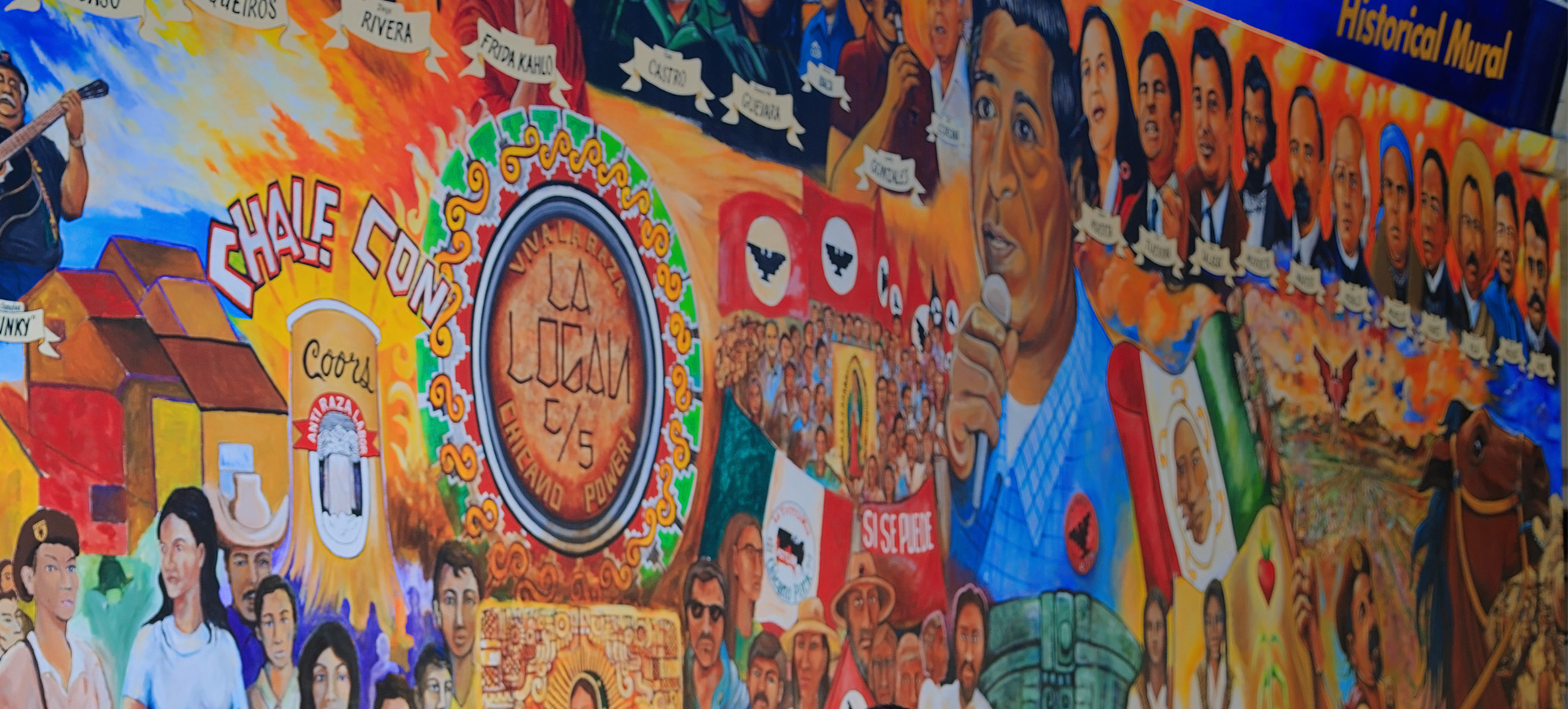
A group of USD students, under the guidance of Professor Alberto Pulido, PhD, have volunteered to be a part of the Chicano Park-University of San Diego Documentation Project.
Pulido developed the project with a group of both USD and Chicano community members, including Chris Nayve, Director of Community Service Learning and Creative Collaborations. The idea was to tell the history of Chicano Park through the lives of individuals who were a part of a cultural struggle for self-determination and dignity.
The students were each assigned a mentor from the community, with whom they have been working closely for four months. They have created a public and political biography of each of these community members lives. Through the collection of oral histories, students have documented the history of Chicano Park, Chicano/a history, and five unique aspects of Chicano/a cultural expression that emerged as a result of the establishment of Chicano Park.
Courses
ETHN 495
Capstone Seminar
A seminar devoted to advanced study in the field. Students will conduct community-based research, applying theoretical perspectives to experiences with various local groups, organizations, collectives or neighborhoods.
Showcases
Creative Collaborations Undergraduate Research Conference
Creative Collaborations Undergraduate Research Conference (CC URC) showcases undergraduate research, scholarly activities and creative works from all disciplines conducted in partnership with faculty mentors. The high-quality work of our students reflects the intellectual curiosity of our undergraduate students, the outstanding abilities of the research mentors, as well as USD's commitment to academic excellence and experiential learning opportunities.
Many of the students who participate in Creative Collaborations also publish their work in academic journals and present their projects at regional, national and international conferences. Participating in research activities fosters critical thinking skills, prepares students for the 21st century workforce and helps them decide whether or not to include research in their academic and professional careers.
For details on research registration, students should go to the Office of Undergraduate Research.