Congratulations to the Class of 2013
Now What? Hints and tips for Living Your Faith After College
Join a local parish -- soon!
Community is essential to a living faith. Joining a parish and becoming an active member is critically important to your ongoing faith development and to deepening your spirituality. Ask other Catholics in your area where they worship and visit different parishes to see what they are like. Try to meet the pastor and staff. Don’t be intimidated by unfamiliar parishes or people. Most likely, they will be delighted to meet a young person who takes his or her faith life seriously. Take the time and make the effort to find a parish community where you can be supported and challenged the way you were at USD. It will require work, but your time and effort will pay off when you find a parish community that helps you grow closer to God. Remember that you have gifts, talents, and experiences that every parish needs. When you find a parish, don’t wait to be asked to get involved. Volunteer! Offer to serve as a Eucharistic Minister, join the choir, help with the religious education program, sign-up for service activities, become a member of a small group. In whatever way is right for you, step forward and offer yourself to the parish community. Just as it took time and initiative to get involved with and connected to the USD community, dedicate the time and initiative it will take to get involved with a parish community. It will make the world of difference. If you are in San Diego this summer or beyond, consider checking out St. Brigid’s parish in Pacific Beach. They have an active young group that facilitates a variety of fun and meaningful experiences. You can learn more about St. Brigid’s at www.saintbrigidparish.org.
Seek out a Young Adult Ministry program.
In addition to joining a parish, contact your local diocese to see if they have a Young Adult Ministry program. Here in San Diego, we have a wonderful connection with the diocese’s program which is led by USD graduate, Carrie Giebel. You can learn more about all of the events and activities of the program at www.sandiegoyam.org. Or, feel free to call Carrie at (858) 490-8260; she would love to talk with you and welcome you to whatever events and gatherings in which you are most interested. Whether you’re here in San Diego or in some other diocese, a young adult ministry program will offer many opportunities to continue the faith development and spiritual growth you experienced while on campus. Getting connected to these programs is also a very effective way to find a healthy, life-giving community -- even if you find yourself living in a new city for the first time. Don’t wait to get connected! Make it a priority to do so during the summer.
Deepen your spirituality.
Pray. Every day. As you know, there are many different ways to pray; find those that work for you and which bring you closer to God. If you don’t know where or how to begin, start by structuring 5 minutes of silence into your day. Or, try reflecting on all the things and people for which you are grateful. You might deepen your prayer life through reading, reflection, or joining a prayer group. Many dioceses have Young Adult Ministries designed to help foster the spirituality of recent college graduates. Many offer retreats geared to meet the needs and interests of young adults. If you’re in a new environment, or returning to a familiar environment in a new way, seek out prayerful places where you can nurture your relationship with God. Whether it’s the beach, a park, the woods, or a church sanctuary, find a place where you can listen for God’s voice and express your desires to God.
Live Simply.
For many recent graduates, especially those still searching for work, living simply may not feel like a choice. But living simply is not just a requirement of being unemployed or a burden to be endured. Making the decision to live simply, refusing to be controlled by possessions or the desire for material goods, provides the kind of freedom that we most deeply want. Countless people have discovered that simple living brings joy! Find ways of celebrating life without using money. Appreciate the beauty of nature, friendship, exercise, reading, storytelling, or allowing yourself to be interrupted and surprised by others. The more you are able to simplify your life now, the better off you will be in the future, both spiritually and financially. More importantly, the less you decide to buy, the more time you will have for the things that matter more and which bring greater satisfaction. The more you unburden yourself of possessions, and the desire for them, the more open you will be to God and to other people. Remember: you’ll never have enough of what you don’t really want. Don’t fall into the trap of wanting what the popular, materialistic culture tells you to want and which in the end just clutters your life making true joy and peace more difficult to find.
Spend time reading and reflecting on Scripture.
Buy yourself a good Bible and educate yourself on Catholic approaches to reading and interpreting the scriptures. There are many translations of the Bible. The one used at Mass is the New American Bible. Don’t be intimidated. Try starting with a Gospel or the Prophets or one of Paul’s letters. Read a few passages each day and reflect on them. It’s rarely a good idea to read the Bible from cover to cover like a novel. A much better approach is to read the scripture texts used at daily Mass. You can find these readings at the website of the United States Conference of Catholic Bishops: www.usccb.org/nab/index.htm
Become a volunteer.
Graduating from college doesn’t mean you must begin work right away or require that you immediately enter graduate school. Explore full-time volunteer opportunities. There are hundreds or programs, including the Jesuit Volunteer Corps, Augustinian Volunteer Corps, Teach for America, Peace Corps, AmeriCorps, and the Providence Alliance for Catholic Education. For a great list of Catholic organizations, visit the Catholic Network of Volunteer Service at https://catholicvolunteernetwork.org.
Surf the Web.
There are many educational and deeply spiritual web sites you can work into your internet browsing. The Online Ministries home page, published by Creighton University, for example, provides a reflection each day, weekly prayer guides, and a variety of audio retreats. You can find the Online Ministries home page at www.onlineministries.creighton.edu/CollaborativeMinistry. Another great resource is Busted Halo, an online resource for spiritual seekers: www.bustedhalo.com. There you will find all sorts of blogs, columns, and resources designed exclusively for young adults. Two other high quality web sites are Catholic Relief Services (www.crs.org) and Education for Justice (www.educationforjustice.org).
Read.
Now that you don’t have to study for tests or write papers, turn off the TV and enjoy the books you really want to read. Reading about other people’s spiritual journey is a powerful way to gain insight into your own and to deepen your own faith. Perhaps there was a book (or two or three or…) that you were assigned to read for class but that you never quite got around to. Take the time to do that reading. Or, ask friends, University Ministers, priests, and teachers for their recommendations. You can find great books on church history, theology, spirituality, social justice, and everything in between. If you need a place to start, try Becoming Who You Are by James Martin, S.J. or Tattoos on the Heart by Greg Boyle, S.J.
Join a faith sharing group or small Christian community.
While finding a parish community is essential, connecting with a small group of other Catholics or Christians can be very helpful. Ideally, the other people in the small group will have similar interests, share similar values, live nearby, and be in roughly the same life situation. Many parishes have already established groups, including those designed especially for young adults. Contact your parish or the diocesan office to see how you can get involved with a small Christian community. If there isn’t one in your area for young adults, offer to start one! By journeying together with people going through similar events and facing comparable challenges, you will find the same sort of encouragement, wisdom, and support which was typical of the USD experience -- especially if you were a part of one of our Emmaus groups. Small groups have the added benefit of providing a sense of intimacy and deep fellowship that can be difficult to create after college. If you find yourself longing for the many close friendships you enjoyed on campus, seriously consider the benefits that a small Christian community might offer.
Prepare for your life’s vocation.
A vocation is more than a job. In the words of theologian Frederick Buechner, “the place God calls you to is the place where your deep gladness and the world’s great hunger meet.” Don’t stop learning about yourself and what it is that brings you deep gladness or joy. Likewise, don’t stop learning about the world and the issues, places, and people that cry out to you in a particularly strong way. Striving toward your vocation will transform work into what you have to do to what you would do even if you didn’t have to do it. There’s nothing more freeing or more exhilarating. Friends, relatives, University Ministers, parish priests, teachers, coaches -- anyone who knows you well can help you discern where God is calling you. As you make decisions about the future, be sure to incorporate prayer and reflection, choosing what brings you the greatest peace and joy, not just want seems practical or what will be financially rewarding.
Structure generosity into your life.
You are now among the elite 1% of the world’s population that has a college education. No matter how unsure you might be about what comes next, remember that your college degree is a tremendous blessing. As the Gospel of Luke tells us, “To whom much is given, much is expected.” Remember how generous God has been to you. Strive to donate, 10% of your income, giving 5% to your parish and 5% to the poor and the organizations that support the poor. In all that you do, cultivate a sense of generosity and expansiveness of heart. Remember that life itself is a gift and each day is precious. All that we have and possess is available to be offered to others in love.
Make the world a better place.
Make a commitment to do at least one thing to help the poor and the oppressed. Assess what you are good at and where you can be the most effective. You might not be able to volunteer for a year or to donate a large sum of money, but you can do something. Keep informed about the world and, in particular, on one issue or area that matters to you the most. Watch the news; listen to the radio; read newspapers; access information on the internet. Influence your world and help change the structures that keep people from expressing and enjoying the fullness of their human dignity. Make justice and the practice of living justly a part of your life. Find out about the Catholic tradition of social justice teaching in documents from the Pope and the U.S. bishops by visiting http://www.usccb.org/beliefs-and-teachings/what-we-believe/catholic-social-teaching/seven-themes-of-catholic-social-teaching.cfm.
Become a witness in the world.
Integrate your faith into all you do. Faith is not something that should be practiced only on Sunday mornings and then left at the church when you leave. Bring the Catholic vision -- especially the habit of looking for and recognizing God’s presence in all aspects of life -- to your friendships, family life, job, dating life, and every other part of your day. Remember the words of Matthew’s Gospel, “You are the light of the world.” Take your light and make the world a brighter, more loving, compassionate, and forgiving place.
-Adapted from Villanova University’s Campus Ministry
Founders Chapel Mass Schedule
Daily Mass
Monday - Friday, 12:15 p.m.
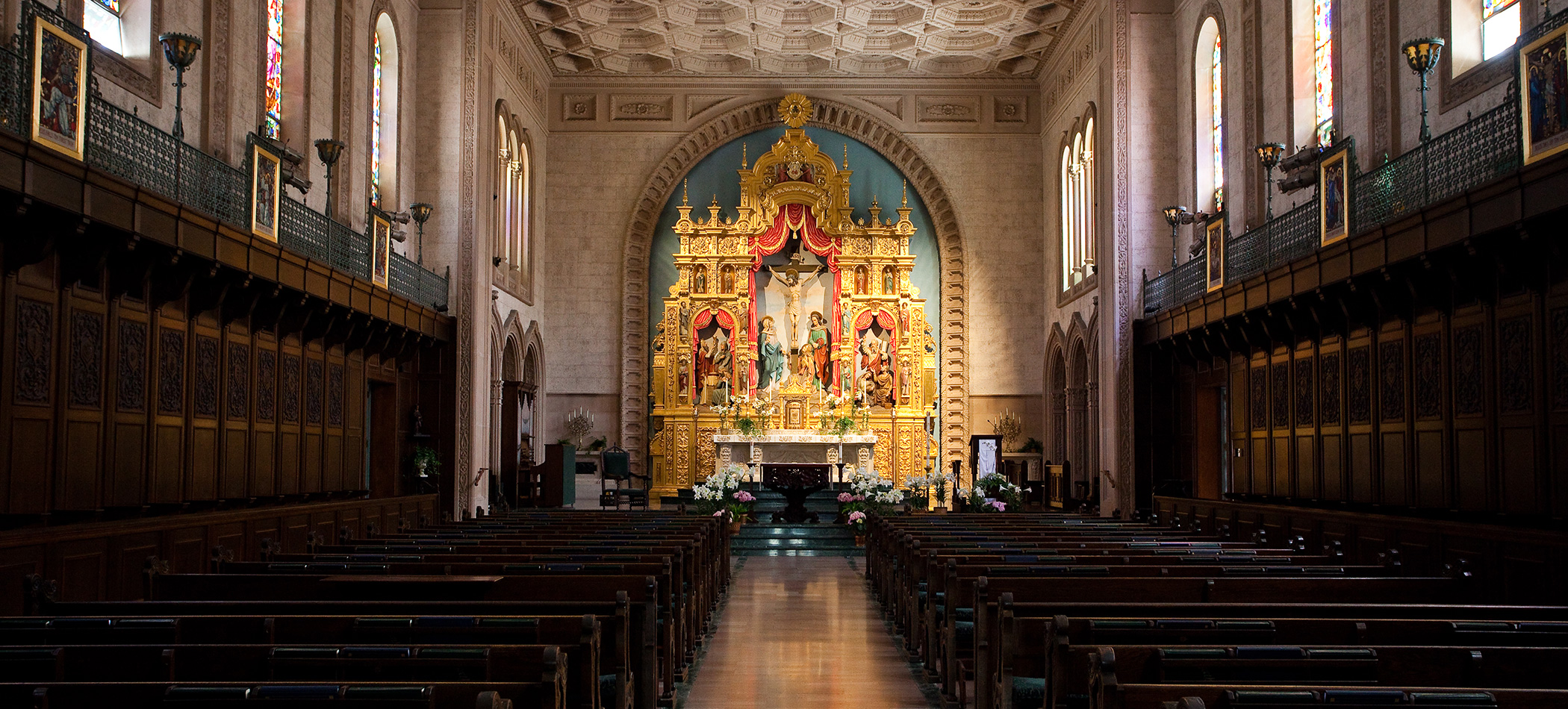
Founders Chapel in Founders Hall. Held year-round.
Sunday Mass
7:00 p.m. and 9 p.m.
Held each Sunday while classes are in session.
Mass for Peace
Wednesday, 9:00 p.m.
Founders Chapel in Founders Hall. Held each Wednesday while classes are in session.