
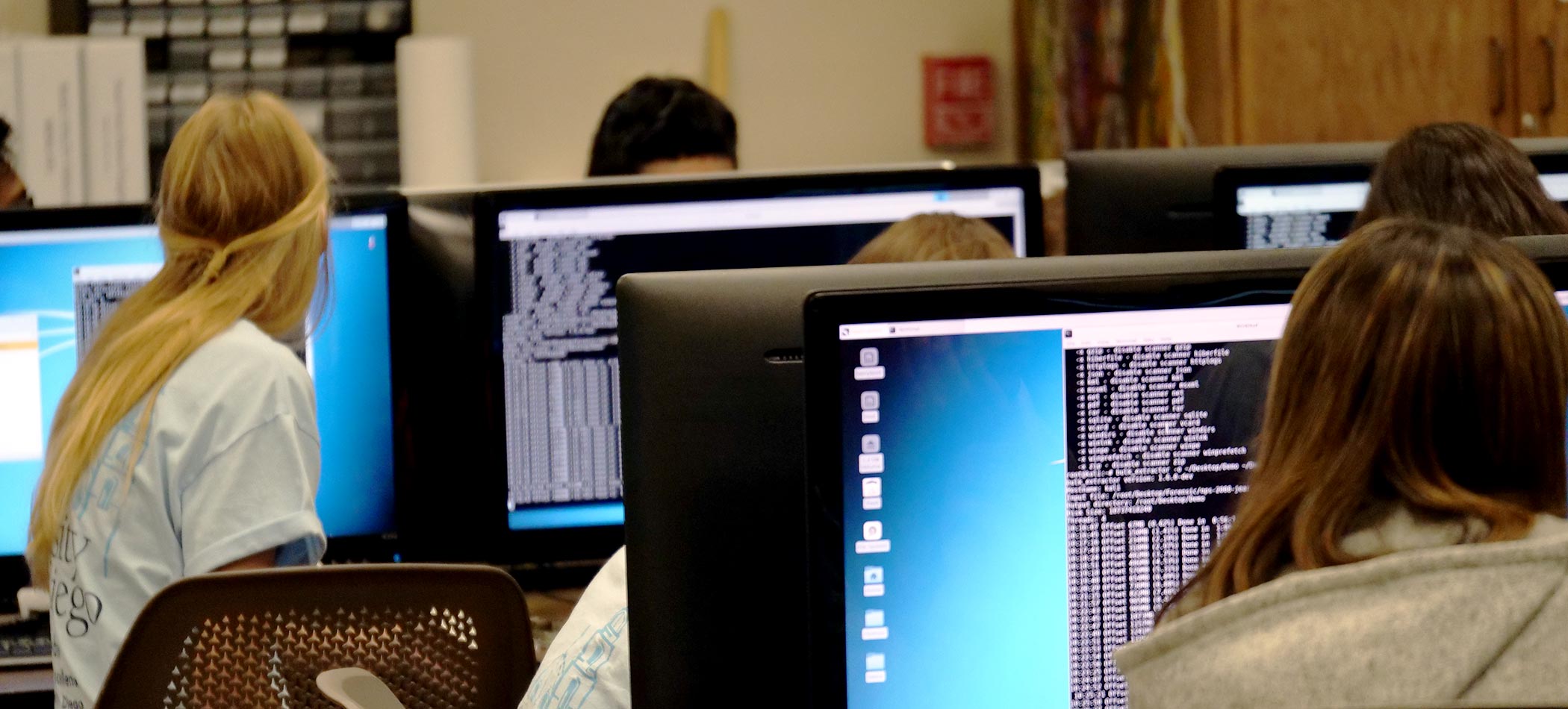
Computer science (CS) studies the theory and practice of software development. One of the most important skills of a successful computer scientist is the ability to problem solve. As a USD computer science student, you will learn to compute technical solutions across a wide range of disciplines by applying the principles of mathematics, logic and engineering to algorithms, data structures, computer and network design, machine learning, artificial intelligence and more. Learn how to use both computational thinking and abstract reasoning to help hone your problem solving skills and execute software solutions that advance our society.
3
Degree Options
1
Minor Option
4
Concentrations
124
Units (hours)
Explore Your Options
Where do your interests lie?
The best way for students to discover if they like computer science is to try it out — take a class or two. The first two classes in the computer science program are Computational Problem Solving (COMP 110) and Programming Abstractions and Methodologies (COMP 120). If you find you enjoy programming, you're an excellent candidate for majoring in computer science. And if your main interests lie elsewhere but you do like programming, you might consider a double-major or a computer science minor. Since software is used in nearly any job, your software development skills will boost your value in your future field. In fact, just taking a course or two will set you up to learn programming skills specific to your discipline.
Your Pathway to Success
See what it takes to be a computer scientist
With dedicated faculty who are invested in their students, small class sizes, a background in the liberal arts and a solid foundation of analytical, computational and hands-on skills, our graduates emerge from the computer science program prepared with confidence and the technical prowess to launch their careers. See what's in store for you.
COMP 110 Computational Problem Solving
An introduction to computational problem solving using the Python programming language. Students will learn the basic elements of programming, modular program design and the basics of data abstraction.
COMP 331 User-Centered Design and Prototyping
Learn how to use Human-Computer Interaction (HCI) methods to align user needs with software design.
COMP 421 Embedded Software Development
Students work on the development of "bare metal" embedded software, running on a microcontroller with no operating system support.
Concentrations in Computer Science
USD offers four concentrations within the computer science degree program: Embedded software development, data science and artificial intelligence, human-computer interaction and cybersecurity. Concentrations allow majors to develop a level of depth in a particular area of computer science. Concentrations are optional, and are not required by the computer science major.
Torero Spotlight
Hear from our computer scientists
Become a Computer Scientist
Our career professionals, advisors and faculty are here to help you navigate and access the multitude of resources you'll need to thrive academically. They'll help you map out the right path for you, from your first year through graduation — and beyond.